













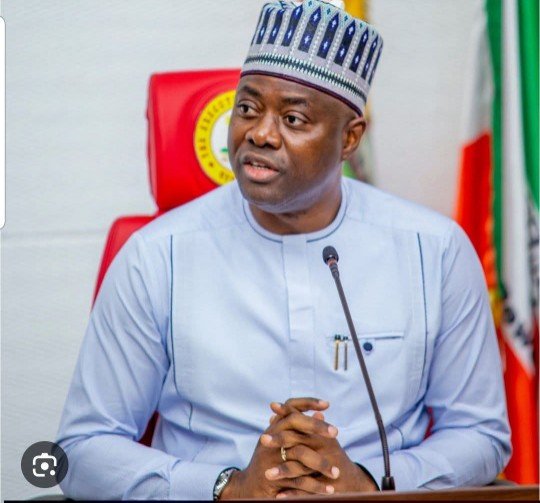
Oyo State governor, ‘Seyi Makinde, said, on Friday, that his administration has positioned the state for international Trade.
He added that Oyo State has been well prepared as a global player in the exporting business and as a strategic connecting hub for other states seeking access to international markets.
Makinde noted that this was made possible following the implementation of the African Continental Free Trade Area (AfCFTA) strategy by Oyo State in 2025.
The governor made this known during a “Training of Trainers Workshop”, organised for stakeholders involved in the implementation of the AfCFTA strategy in the state, held at the Local Government Staff Training School, Secretariat, Agodi, Ibadan.

Makinde, represented at the event by the Secretary to the State Government, Professor Musibau Babatunde, stated that Oyo State chose to be the first sub-national government in Africa to sign and domesticate the AfCFTA sttrategy.
This, he said, was because the state government decided to be deliberate and forward-looking in unlocking the massive opportunities in trades, export business and industrialisation.
Makinde explained that the state keyed into the initiative because of its vast potential to expand market access, remove tariff barriers, and create new opportunities for Oyo State products across African countries.
He added that the AfCFTA framework would significantly enhance agricultural business in Oyo State, particularly in terms of export volumes and rising demand for agricultural produce.
According to the governor, the initiative would also provide a platform to promote the service sector in the state, including education, healthcare, tourism, and other service-based industries within the state.
He described the initiative as an integrated opportunity that brought together both state and non-state actors. He stressed that effective implementation depends largely on capacity-building, which according to him, informed the decision to organise the Training of Trainers Workshop.
He said: “As you know, Oyo State is the first sub-national in the whole of Africa to design this implementation strategy for AfCFTA.
“We keyed into this because we know it is going to expand the market access opportunities for Oyo State in terms of our products getting into other countries free of tariff since we developed our implementation strategy.
“We also know that this is going to enhance our agribusiness and agricultural sector in terms of the exports that we are going to bring about and the demand that is going to come in for our exports.
“Also, I see our state as a connective hub within the West African zone that other states and other countries will be relating with in terms of exports.”
Makinde explained further that participants at the workshop would be exposed to the opportunities available in the AfCFTA Implementation Strategy, the integrated value chain, regulatory mechanisms, and the critical roles regulators must play to ensure compliance and success.
According to him, the trainees were expected to return to their respective associations and disseminate the knowledge gained, thereby ensuring a broad-based understanding and effective grassroots implementation of the AfCFTA Strategy across the state.
“For the state actors and the non-state actors to be able to implement these strategies, we need to enhance their capacity. That’s actually why we are building their capacity at this particular Train the Trainers Workshop.
“Different professional associations and different government agencies will be involved in carrying out these implementation strategies. So, we need to enhance their capacities and make them realise what they need to do,” he said.
Earlier in her welcome address, Special Adviser on International Trade and African Continental Free Trade Area, Ms Neo Theodore Tlhaselo, congratulated the AfCFTA Secretariat, Oyo State Government, partners and participants at the workshop on their dedication and commitment to the implementation of the AfCFTA in Oyo state.
She noted that no government could implement the strategy without substantial investment in the AfCFTA by non-state actors. She, therefore, charged government partners to invest in the implementation of AfCFTA without depending on the government.
She said further: “This Train the Trainers Workshop will equip us to be able to articulate that which we intend to achieve. And to also align whatever strategies and plans that you have within your organisations to what we intend to achieve as a state.
“This workshop is mandatory. It is what is expected of us by the AfCFTA Secretariat. So, we are ensuring that we are compliant to every exercise that is expected of us.”