















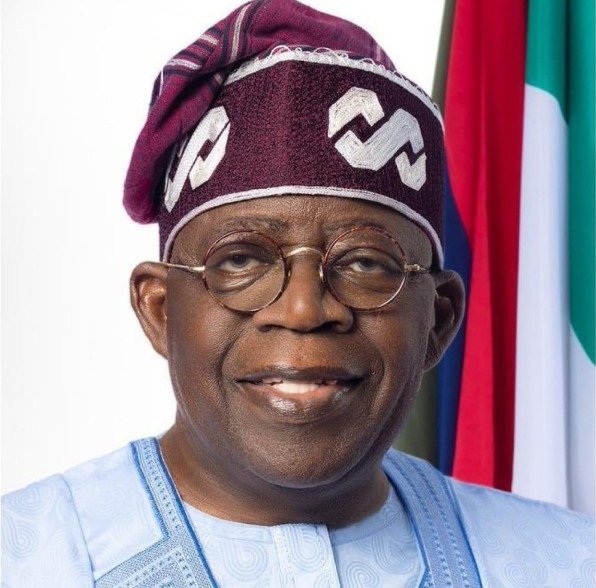
“Of course, the introduction of state police by President Tinubu will not solve every security problem overnight. The system must be backed by clear laws, proper training, accountability, and strong oversight to prevent abuse.”
The decision by President Bola Ahmed Tinubu to introduce state police may eventually be remembered as one of the most important security reforms in Nigeria’s democratic history.
Whether people support him politically or not, the reality is that Nigeria’s security situation has reached a point where something has to change.

The Necessity of State Police
Without bold action, the country was gradually drifting toward anarchy, with many communities becoming unsafe and illegal arms spreading at an alarming rate.
For years, terrorism, banditry, kidnapping, armed robbery, communal clashes, and farmer-herder conflicts have overwhelmed the country’s security system.
The Nigeria Police Force, operating under a centralised structure, has simply been overstretched. In many places, security agencies arrive long after attacks have taken place, leaving innocent citizens to fend for themselves.
As insecurity worsened, both villagers and wealthy Nigerians began looking for ways to protect themselves. Some hired private security, while others relied on local vigilante groups and hunters.
Across the country, different security outfits sprang up to fill the vacuum left by the overstretched police.
While many of these groups genuinely wanted to defend their communities, the unintended consequence was the increasing circulation of arms and ammunition.
Unfortunately, not every weapon ended up in responsible hands. Today, it has become almost impossible to know how many illegal weapons are in circulation or who possesses them.
There are widespread concerns that some politicians and their loyalists have also acquired arms, making the situation even more dangerous.
When weapons become easily accessible outside government control, insecurity only grows worse.
History has shown that when citizens lose confidence in the government’s ability to protect lives and property, they begin to rely on self-help.
That is how nations gradually slide toward instability. Investors lose confidence, farmers abandon their land, businesses shut down, schools are forced to close in troubled areas, and thousands of families are displaced.
These are the warning signs of a country heading in the wrong direction!!!
This is why many Nigerians see the introduction of state police as a necessary step, rather than a political slogan.
Security is local. Officers who understand the language, culture, terrain, and people in their communities are often in a better position to gather intelligence and respond quickly to threats.
A security challenge in Zamfara is not the same as one in Lagos, Oyo, or Rivers, and policing should reflect those realities.
Of course, the introduction of state police by President Bola Ahmed Tinubu will not solve every security problem overnight. The system must be backed by clear laws, proper training, accountability, and strong oversight to prevent abuse.
But refusing to reform a system that has struggled for years would only allow the security crisis to deepen.
No single reform is a magic solution. However, introducing state police could become one of the major steps toward restoring public confidence, strengthening law enforcement at the grassroots, reducing the dependence on unauthorised armed groups, and preventing Nigeria from sliding further toward chaos.
If implemented properly and managed responsibly, it could help preserve national unity, protect lives and property, and build a more secure future for every Nigerian.
•Mogaji Arisekola writes from Ibadan.