













Newscoven
  • Home
  • News
    • All
    • Analysis
    • Feature
    • Interviews
    • Politics
    • Science
    • World
    Makinde Has Built Institutional, Physical Structures For Long-Term Economic Growth Of Oyo State -Aduwo

    Makinde Has Built Institutional, Physical Structures For Long-Term Economic Growth Of Oyo State -Aduwo

    Soldiers Bar Makinde’s Delegation Bar From Seeing Released Victims At Military Hospital

    Soldiers Bar Makinde’s Delegation From Seeing Released Victims At Military Hospital

    Release Of Abducted Pupils, Teachers: Yilwatda Commends FG, Security Agencies

    Release Of Abducted Pupils, Teachers: Yilwatda Commends FG, Security Agencies

    Rescue Of Oriire Abductees: Olugbon Commends Tinubu, Makinde, Security Forces

    Rescue Of Oriire Abductees: Olugbon Commends Tinubu, Makinde, Security Forces

    SEE VIDEO: Makinde Confirms Release Of Abducted Oriire School Pupils, Teachers

    SEE VIDEO: Makinde Confirms Release Of Abducted Oriire School Pupils, Teachers

    Agbakoba: State Police Must Be Insulated From Executive Interference

    Agbakoba: State Police Must Be Insulated From Executive Interference

    When Project Elevate Took Advocacy Over Airport Barriers Against PWDs To FAAN

    When Project Elevate Took Advocacy Over Airport Barriers Against PWDs To FAAN

  • Entertainment
    EMHF Heritage Event Hall Open To Public

    EMHF Heritage Event Hall Opens To Public

    Historic Send-Forth For Professor YK Ajao As Iseyin Honours Its Musical Pride

    Historic Send-Forth For Professor YK Ajao As Iseyin Honours Its Musical Pride

    Olukoya Builds Heritage Event Hall In Memory Of Music Aficionado, Femi Esho

    Olukoya Builds Heritage Event Hall In Memory Of Music Aficionado, Femi Esho

    Sanusi, Atlético Berja Board, Berja Mayor, Seal Strategic Partnership

    Sanusi, Atlético Berja Board, Berja Mayor, Seal Strategic Partnership

    From Church Keys Too Global Stage, Pheelz Takes Over The Spotlight On CNN African Voices

    From Church Keys To Global Stage, Pheelz Takes Over The Spotlight On CNN African Voices

    Fela Lives: Tinubu On Grammy Lifetime Achievement Award

    Fela Lives: Tinubu On Grammy Lifetime Achievement Award

    Ilaji Assumes Ownership Of Interlink •Takes Over Atlético Berja

    Ilaji Assumes Ownership Of Interlink •Takes Over Atlético Berja

  • About Us
  • Contact Us
  • More
    • Advertisement
    • Disclaimer
    • Privacy Policy
    • Terms of Use
Sunday, July 12, 2026
No Result
View All Result
  • Home
  • News
    • All
    • Analysis
    • Feature
    • Interviews
    • Politics
    • Science
    • World
    Makinde Has Built Institutional, Physical Structures For Long-Term Economic Growth Of Oyo State -Aduwo

    Makinde Has Built Institutional, Physical Structures For Long-Term Economic Growth Of Oyo State -Aduwo

    Soldiers Bar Makinde’s Delegation Bar From Seeing Released Victims At Military Hospital

    Soldiers Bar Makinde’s Delegation From Seeing Released Victims At Military Hospital

    Release Of Abducted Pupils, Teachers: Yilwatda Commends FG, Security Agencies

    Release Of Abducted Pupils, Teachers: Yilwatda Commends FG, Security Agencies

    Rescue Of Oriire Abductees: Olugbon Commends Tinubu, Makinde, Security Forces

    Rescue Of Oriire Abductees: Olugbon Commends Tinubu, Makinde, Security Forces

    SEE VIDEO: Makinde Confirms Release Of Abducted Oriire School Pupils, Teachers

    SEE VIDEO: Makinde Confirms Release Of Abducted Oriire School Pupils, Teachers

    Agbakoba: State Police Must Be Insulated From Executive Interference

    Agbakoba: State Police Must Be Insulated From Executive Interference

    When Project Elevate Took Advocacy Over Airport Barriers Against PWDs To FAAN

    When Project Elevate Took Advocacy Over Airport Barriers Against PWDs To FAAN

  • Entertainment
    EMHF Heritage Event Hall Open To Public

    EMHF Heritage Event Hall Opens To Public

    Historic Send-Forth For Professor YK Ajao As Iseyin Honours Its Musical Pride

    Historic Send-Forth For Professor YK Ajao As Iseyin Honours Its Musical Pride

    Olukoya Builds Heritage Event Hall In Memory Of Music Aficionado, Femi Esho

    Olukoya Builds Heritage Event Hall In Memory Of Music Aficionado, Femi Esho

    Sanusi, Atlético Berja Board, Berja Mayor, Seal Strategic Partnership

    Sanusi, Atlético Berja Board, Berja Mayor, Seal Strategic Partnership

    From Church Keys Too Global Stage, Pheelz Takes Over The Spotlight On CNN African Voices

    From Church Keys To Global Stage, Pheelz Takes Over The Spotlight On CNN African Voices

    Fela Lives: Tinubu On Grammy Lifetime Achievement Award

    Fela Lives: Tinubu On Grammy Lifetime Achievement Award

    Ilaji Assumes Ownership Of Interlink •Takes Over Atlético Berja

    Ilaji Assumes Ownership Of Interlink •Takes Over Atlético Berja

  • About Us
  • Contact Us
  • More
    • Advertisement
    • Disclaimer
    • Privacy Policy
    • Terms of Use
No Result
View All Result
Newscoven
No Result
View All Result
Home Editorial | Discourse | Opinion VOXPOPULI

Beyond State Police: The Real Question Of Security Reform

by Newscoven
June 13, 2026
in VOXPOPULI
Reading Time: 4 mins read
2 0
A A
0
Beyond State Police: The Real Question Of Security Reform
3
SHARES
36
VIEWS
Share on WhatsappShare on FacebookShare on Twitter

The debate over Nigeria’s security architecture has once again intensified, with renewed calls for state police, forest guards and expanded vigilante formations as responses to worsening insecurity.

While these proposals are often presented as pragmatic solutions, they raise a deeper constitutional question: whether Nigeria’s security crisis is best addressed through further fragmentation of policing authority or through comprehensive restructuring of the federation itself.

Fundamental Issues Beyond State Police

Nigeria’s current insecurity, insurgency, banditry, kidnapping, piracy, oil theft and communal violence, are not ordinary criminality.
These are organised, adaptive and often trans-regional threats that demand coordinated national responses. In most established federal systems, such offences fall under centralised or federal jurisdiction precisely because they exceed the capacity of local policing structures.

RelatedPosts

Nigeria’s Missing National Database: The Security Risk We Can No Longer Ignore

Interrogating Nigeria: A Nation Without A Plan

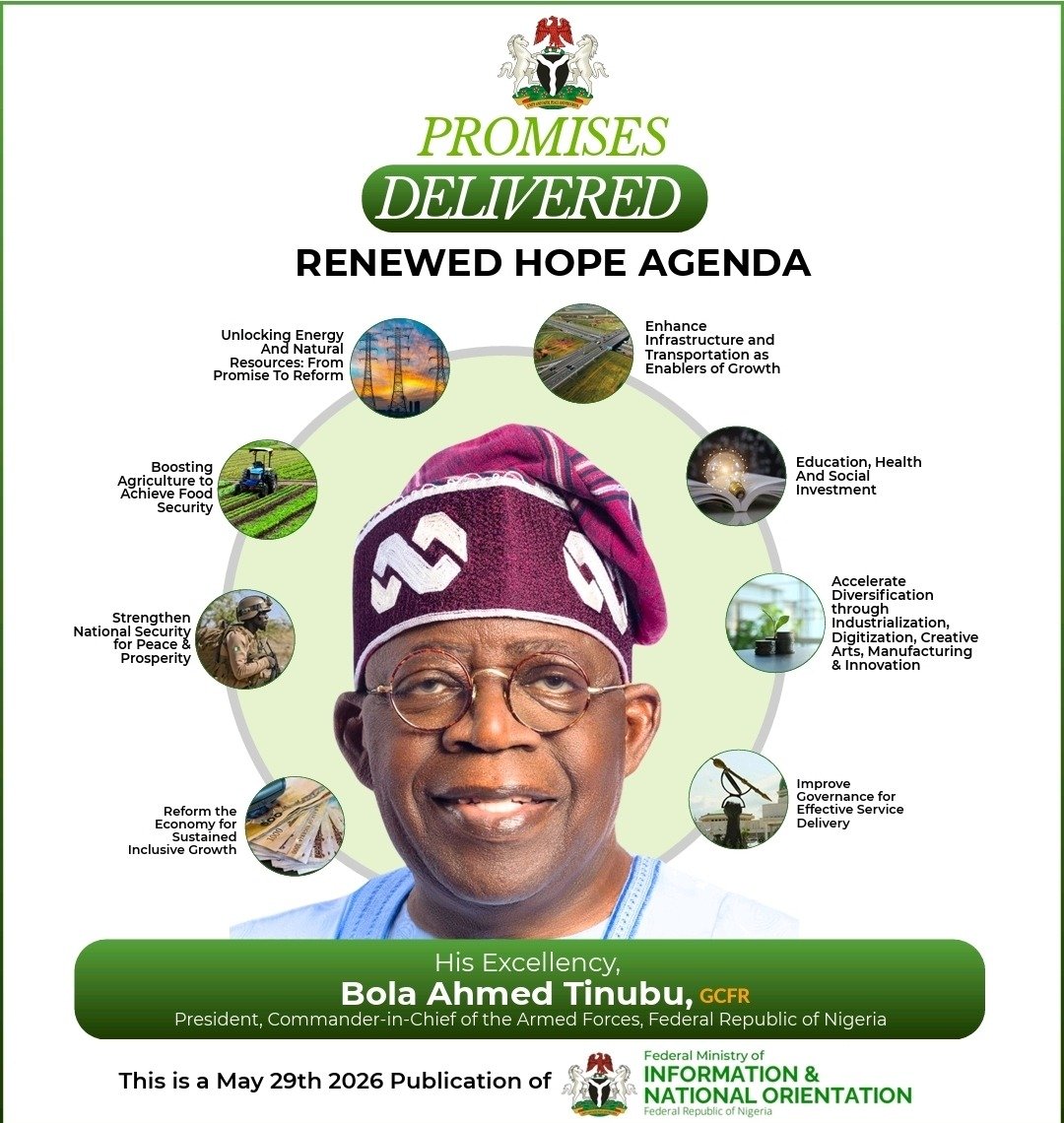
From Hope ’93 To Renewed Hope: Abiola And Tinubu In Historical Conversation

In the United States, for example, although policing is decentralised, serious offences such as terrorism, organised crime, money laundering and crimes crossing state boundaries fall under federal agencies such as the FBI and DEA.

Similarly, in the United Kingdom, while local police forces exist, national threats are handled by central institutions such as Counter Terrorism Policing and the National Crime Agency. The guiding principle is consistent,where threats transcend local boundaries, response must be unified, well resourced and insulated from local political pressures.

Nigeria’s security challenges clearly fall within this category. Terrorism, insurgency and piracy in the Gulf of Guinea and large-scale oil theft in the Niger Delta are not isolated disturbances but structured criminal economies requiring strategic national coordination. It is within this context that proposals for state police must be assessed.

Advocates argue that decentralisation would improve responsiveness, strengthen intelligence gathering and align policing with local realities. In principle, these arguments are valid. Nigeria’s centralised policing system is over-stretched, under-resourced and often distant from the communities it is meant to serve.

However, the key issue is not whether reform is necessary, but what form it should take. Would state police forces genuinely be better equipped and more effective than existing federal institutions or would they replicate current weaknesses at sub-national level, while introducing new risks such as politicisation, uneven capacity and abuse of authority.

Nigeria already struggles with inequality in governance capacity across states. Introducing state controlled security forces without addressing fiscal and institutional disparities risks widening these imbalances. Wealthier states may develop relatively effective forces, while poorer ones may be left with poorly trained and under equipped units, further deepening insecurity gaps.

There is also the question of jurisdiction. In federal systems, offences such as terrorism, insurgency, piracy, and large scale financial crimes are treated as federal matters because they require unified intelligence, operational coordination and legal authority. Fragmenting this responsibility may weaken coordination and create operational inefficiencies.

For this reason, some analysts proposed an alternative model, a specialised national internal security structure, often described as a National Guard type formation.

Such a force would be dedicated to internal security threats including insurgency, piracy, oil theft and organised armed violence. It would sit between the military and the police, relieving the armed forces of prolonged domestic deployments, while ensuring a more focused internal security capability.

The prolonged use of the military in internal security operations highlights structural limitations in Nigeria’s current framework. While the armed forces have recorded operational gains, they are primarily designed for external defence. Their sustained deployment in civilian environments risks over-stretching their mandate and blurring institutional roles.

In the Niger Delta, reliance on private contractors to secure critical oil infrastructure further reflects these limitations. While such arrangements may provide short term solutions, they raise concerns about accountability and underscore the state’s dependence on non-state actors for essential security functions.

Nevertheless, these challenges do not automatically justify the creation of state police forces as a comprehensive solution. Nigeria’s insecurity is fundamentally structural, rooted in governance design, economic inequality and the centralisation of both fiscal and security authority. This is where the argument for restructuring becomes central.

Proponents of restructuring, often referencing the 1963 Constitution, argue that Nigeria once operated a more genuinely federal system in which regions enjoyed substantial autonomy over policing, taxation and resource management. This arrangement, they contend, encouraged competition, innovation and regionally-driven development.

By contrast, the 1979 and 1999 constitutional frameworks, both emerging from military rule, centralised significant authority at the federal level, particularly over revenue allocation and internal security. As a result, states have become heavily dependent on monthly federal allocations, limiting fiscal independence and weakening accountability.

A more decentralised federation, its advocates argue, would allow states greater control over resources and development priorities while contributing an agreed share to the federal centre. This, in theory, would strengthen efficiency and improve governance outcomes.

However, restructuring also presents serious challenges. Effective decentralisation requires strong institutional capacity at state level, robust legal safeguards, and mechanisms to prevent abuse of authority. Without these, decentralisation may deepen inequality, weaken coordination, and produce uneven development across the federation.

The challenge, therefore, is not ideological but structural…how to balance national cohesion with regional autonomy and central coordination with local effectiveness.

What is clear is that Nigeria’s current security and governance framework is under significant strain. Whether through state police, specialised national security formations or broader constitutional restructuring, there is widespread agreement that the existing structure requires urgent reform.

Ultimately, the debate is not about whether change is necessary, but about its direction and depth. Incremental adjustments may provide temporary relief, but they are unlikely to resolve the deeper contradictions embedded in Nigeria’s federal design.

Nigeria therefore stands at a critical juncture. It must either continue to patch an over-stretched system or confront the structural foundations of its governance crisis.

The choice between centralisation, decentralisation or full restructuring will determine not only the future of its security architecture but also the stability of the federation itself.


Tags: NigeriaReformSecurityState Police
SendShare1Tweet1

Related Posts

Nigeria's Missing National Database: The Security Risk We Can No Longer Ignore

Nigeria’s Missing National Database: The Security Risk We Can No Longer Ignore

by Newscoven
July 11, 2026
0
7

"The debate should therefore move beyond whether Nigeria needs a comprehensive national database. Experience has already answered that question." When...

Interrogating Nigeria: A Nation Without A Plan

Interrogating Nigeria: A Nation Without A Plan

by Newscoven
June 28, 2026
0
25

"No functioning country plans schools, hospitals, infrastructure, security or social programmes without reliable population data. In Nigeria, however, planning has...

From Hope ’93 To Renewed Hope: Abiola And Tinubu In Historical Conversation

From Hope ’93 To Renewed Hope: Abiola And Tinubu In Historical Conversation

by Newscoven
June 20, 2026
0
21

"Hope '93 was not a slogan; it was a social contract. We declared a covenant with the Nigerian people, farewell...

Newscoven

NewsCoven.com is an independent and unbiased online news medium determined to take a holistic approach to reportage of events, covering all spheres of human activities, with refreshed zeal and vigour.

Contact: +234-805-732-0978

Categories

  • Achievers | Appointments
  • Agriculture
  • Analysis
  • Arts | Book Review
  • Banking & Finance
  • Business
  • Church
  • Crime | Court | Judiciary | Security
  • Culture | Religion
  • Editorial | Discourse | Opinion
  • Education
  • Energy | Oil & Gas
  • Entertainment | Sports
  • Environment | Community | Eye Report | Metro
  • Feature
  • Health
  • Health Law & Human Dignity
  • Hotels | Travels | Tourism
  • ICT | Science | Technology
  • In The Eyes of the News
  • Interviews
  • Islam
  • Kaleidoscope With Anike
  • News
  • Peoples | Events
  • Politics
  • Reflections With Dapo Falade
  • Science
  • The Ethics Pulse
  • Uncategorized
  • VOXPOPULI
  • Woman's Essence by Motunrayo Busari
  • World

Recent News

Your Card Is Valid, Your Clinic Is Empty

Your Card Is Valid, Your Clinic Is Empty

July 12, 2026
Makinde Has Built Institutional, Physical Structures For Long-Term Economic Growth Of Oyo State -Aduwo

Makinde Has Built Institutional, Physical Structures For Long-Term Economic Growth Of Oyo State -Aduwo

July 12, 2026
Soldiers Bar Makinde’s Delegation Bar From Seeing Released Victims At Military Hospital

Soldiers Bar Makinde’s Delegation From Seeing Released Victims At Military Hospital

July 11, 2026

© 2024 NewsCoven - Beyond the Surface by DF Global Resources Enterprises.

Welcome Back!

Login to your account below

Forgotten Password? Sign Up

Create New Account!

Fill the forms below to register

All fields are required. Log In

Retrieve your password

Please enter your username or email address to reset your password.

Log In

Add New Playlist

No Result
View All Result
  • About Us
  • Advertisement
  • Breaking News | Latest Nigerian News Today
  • Checkout
  • Contact Us
  • Disclaimer
  • Home
  • Login/Register
  • My account
  • Privacy Policy
  • Terms of Use

© 2024 NewsCoven - Beyond the Surface by DF Global Resources Enterprises.