













“In March 2012, Shell Petroleum Development Company (SPDC) dissuaded Jonathan from continuing with idea of new refineries, citing global surplus in refining capacity.”
He who dares wins. I have also read that brave leadership is not the absence of fear, but the triumph over it. It is the courageous choice to take risks, stand alone for principles, and act with integrity when it is difficult. It transforms potential into action, prioritising long-term progress over short-term comfort.
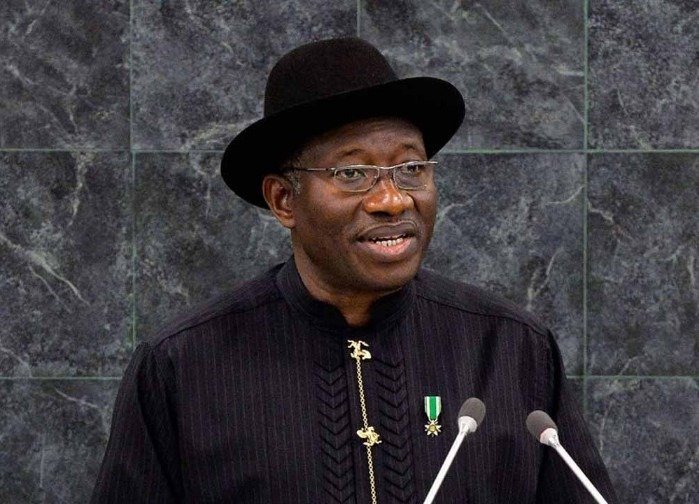
Early in the administration of President Goodluck Jonathan and the frustration of endless NNPC Ltd turnaround contracts for refineries, he decided to construct some greenfield refineries. They were to be located in Kogi, Bayelsa and Lagos states.

The proposed refineries had total designed capacity of approximately 400,000–550,000 barrels per day, with an estimated cost of $23 billion, which was later raised to $28.5 billion.
Contracts were already awarded to the Chinese State Construction and Engineering Corporation Limited (CSCEC), designed as a public-private partnership under the Subsidy Reinvestment and Empowerment Programme (SURE-P).
In the end nothing was built. Why?
In March 2012, Shell Petroleum Development Company (SPDC) dissuaded Jonathan from continuing with the idea, citing global surplus in refining capacity.
While speaking with State House correspondents after a meeting with Jonathan, Malcolm Brindle, then Executive Director of Shell, canvassed that running refineries were no longer profitable globally because of a supposed glut in the market.
According to him, there was a significant surplus of refinery capacity worldwide and so, building new refineries was not a good investment and that refining was generally not profitable.
He advised Nigeria to rather continue to import refined products as it would be cheaper than producing them locally, making new builds economically unviable.
Notably, Mrs. Diezani Alison-Madueke was the Minister of Petroleum at this period who had her early education in Shell camp, Port Harcourt and whose only 9 to 5 work experience was limited to Shell.
After returning to Nigeria in 1992 Alison-Madueke joined Shell Petroleum, working in the estates area of operations in the Lagos office of Shell as well as acting as an architectural consultant according to her Wikipedia page.
Allison-Madueke rose to the position of Head of Civil Infrastructures and then became Head of Corporate Issues and Crisis Management Unit in 1997.
Upon completion of her MBA program at Cambridge, she was made Lead Joint Ventures Representation Adviser in 2004.
She was appointed as an executive director of Shell in 2006, the first woman ever to hold such office in Nigeria. It could then be reasonably inferred that she was a representative of Shell in government.
And so, Jonathan and Nigeria continued with the culture of exporting cheap crude while importing expensive refined products with the resultant devastating effects on the economy.
For instance, while the country exported an estimated ₦29 trillion worth of crude between 2020 and 2023, it spent ₦35 trillion on importation of refined products within the same period.
Contrastingly, however, Nigeria has now become a net exporter of refined petroleum products, with the coming on stream of Dangote Refinery and other refineries in the last three years.