








“Nigeria’s crisis: Where political will exists, decisive reform is possible. The restoration of genuine fiscal federalism, as constitutionally practised at independence, is a political decision.”
It is historically inaccurate to attribute Nigeria’s economic malaise exclusively to military rule. The persistent and decisive factor in the nation’s decline has been systemic corruption, a vice cultivated and sustained with equal enthusiasm by both civilian and military administrations.
Had the military not intervened in January 1966, the political crisis in the Western Region between 1964-1965, already marked by organised violence, electoral fraud and constitutional paralysis, could well have precipitated an even earlier civil war.
Historical records confirm that Senator Nwafor Orizu, in his capacity as Acting President, formally transferred power to General Johnson Aguiyi-Ironsi on 16 January 1966, thereby establishing civilian complicity in the collapse of the First Republic.

The Nzeogwu led coup of 15 January, 1966 did not occur in isolation; it was provoked by political breakdown, pervasive corruption and the unjust persecution of Chief Obafemi Awolowo by the political establishment, rather than by mere personal ambition. It must also be stated plainly that successive military regimes were neither self-generated, nor sustained in a vacuum; they were actively invited, legitimised and encouraged by politicians.
Nigeria’s most sustained period of economic expansion, particularly during the oil boom of the 1970s and extending into the early 1980s, occurred under military administrations. This growth was driven by oil revenue windfalls, infrastructure expansion, sectoral consolidation and state led economic planning.
Notably, Nigeria never experienced a purely military government. From Gowon through Babangida, civilian technocrats, politicians and professionals were deeply embedded in governance, policy formulation and implementation. Indeed, it was a senior civil servant who persuaded General Gowon to repudiate the Aburi Agreement, with catastrophic consequences.
Military governments are condemned primarily on grounds of legitimacy rather than performance, as they were unelected. This invites a fundamental question: what substantive distinction exists between a military takeover and electoral processes that are neither free, nor fair?
In both instances, the sovereignty of the people is effectively subverted. It is, therefore, not unreasonable to question whether electoral malpractice should be legally equated with a coup d’état, with commensurate sanctions for those involved, even if such a proposition may appear severe.
The tragedies of 1966 and the ensuing civil war were products of political immaturity and the absence of a coherent ideological framework. The principal actors, Gowon, Ojukwu and Nzeogwu, were young men operating under extreme pressure. Their courage must be acknowledged, yet their errors demand honest and unsentimental appraisal. Regrettably, the lessons of that era were never fully internalised.
If military rules were truly the root cause of Nigeria’s structural dysfunction, civilian administrations since 1999 would have corrected these deficiencies. Instead, genuine federalism and fiscal autonomy, as practised in 1960, remain unrealised. The enduring obstacle has never been the nature of the regime, but entrenched corruption and elite self-interest.
I, therefore, strongly reject Chief Ayo Opadokun’s assertion that President Tinubu cannot remedy 57 years of misrule within three years. Where political will exists, decisive reform is possible. The restoration of genuine fiscal federalism, as constitutionally practised at independence, is a political decision.
There is no need for another constitutional conference; the requisite materials already exist for presidential action. Unfortunately, what has been lacking is sincerity of purpose. Were this reform implemented, it would recalibrate governance incentives and allow all other reforms to fall into place.
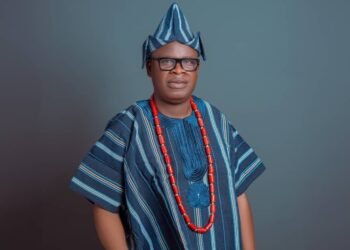
•Aduwo is the President, Center for Convention on Democratic Integrity (CCDI), State of Maryland, US.