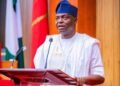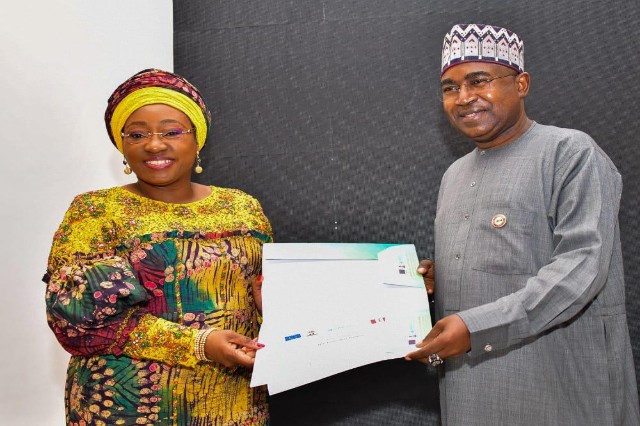
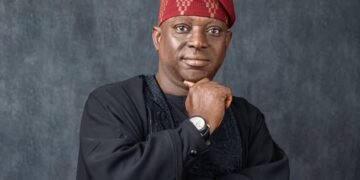


Chief Femi Adesina, former Special Adviser (Media and Publicity) to the late President Muhammadu Buhari, has called on journalists to practice journalism with utmost integrity.
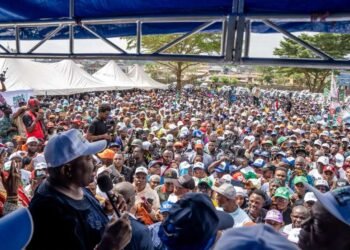
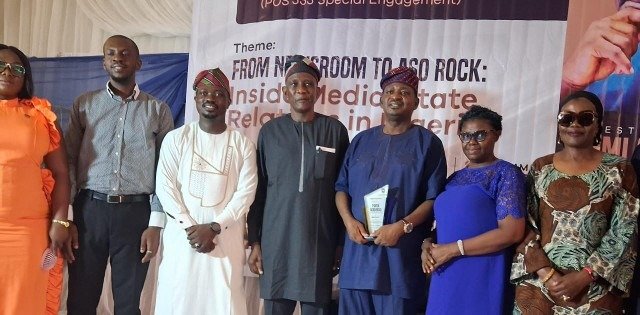
He made the call while speaking at a media dialogue, organised by the Department of Political Science, and held at the Faculty of Social Sciences Large Lecture Theatre, University of Ibadan, on Wednesday.
The dialogue was the first edition of the Media-State Dialogue Series organised by the Department as part of its POS 353 (Special Engagement).
The dialogue, put together by the Coordinator of POS 353, Dr Kingsley Ogunne, was tailored as a career reflection lecture.
It laid emphasis on from the newsroom to government; managing narratives in power; ethics under pressure; and lessons for young professionals (journalist, spokesperson, public officials).
Adesina, who was the Guest Speaker at the dialogue, spoke on the theme, “From Newsroom To Aso Rock: Inside Media-State Relations In Nigeria.”
He counseled established journalists and intending practitioners to embrace responsible journalism and make reputation and integrity their watchwords in the course of their practices.
The former presidential media aide urged journalists to build their career with integrity, declaring that a good reputation will surely open doors for them in the public space and all sectors.
“There are similarities between being a media manager and a public media officer. Reputation and integrity in the media is very important. It goes before you; you don’t know that people watch you do. Make sure you build a career of integrity,” he added.
Adesina, narrating how got the job as the Special Adviser (Media and Publicity) to the late President Buhari, said it was purely on merit and the integrity he had built over the years.
“There is no way the State will ignore you, if you are good at what you do. If they want to meet with media leaders, they will call you.
“There is a saying that ‘whatever you want to be, try to be the best of it’. If you are the best in your career, the government will recognise you.
“But it does not mean that you are going to be in bed with them. It does not mean you kowtow to them. If you do that, you have lost it.
As a journalist, you must be independent. It is important that you build your career in a way that will give you a good reputation. Whatever you do, just know that the big brother is there, watching you,” he declared.
Adesina, a journalist with 40 years experience, described journalism as a nomadic profession, saying media practitioners always move from one job to another within their profession.
“There is nothing wrong in moving when it is to better one’s lot. Where you will get to, you will get there without lobbying or necessarily pulling the strings,” he said.
Adesina, however, cautioned journalists wishing to take up employment from public office holders must not be subservient to their would-be employers, but rather see them as accessible friends with whom they can directly relate with.
“To be an effective media manager, make sure you have a direct access to your boss. Don’t take up any job, knowing that you will not be able to talk to your boss and take him or her as your friend,” he said.
In his welcome address, Head, Department of Political Science, Professor Dhikru Adewale Yagboyaju, said the Media-State Dialogue Series is part of the effort to marry the town and the gown.
Speaking in the same vein, Dean, Faculty of Social Sciences, Professor Benjamin Osayawe Ehigie, said the dialogue was labeled “Theory and Practice”.
He added that it was advantageous to students to know that what they were being taught were actually practicable, adding that the essence of the programme was to relate theory to practical experience.