






“The Divine did not decree a Fulani Sultan as the perpetual vanguard of Nigerian Muslims. Historical contingency did. And history, when antithetical to equity, is amenable to emendation. A progressive Nigeria must privilege justice over an ossified tradition where the latter engenders exclusion.”
The Christian Association of Nigeria (CAN) adheres to a rotational presidency among its constituent blocs, a mechanism that has traversed denominations and regions over the decades, embodying a resolute dedication to equilibrium, inclusivity and the nation’s multifaceted ethos. No solitary ethnic cohort or dynastic lineage perpetually commandeers the representation of Christianity in Nigeria.
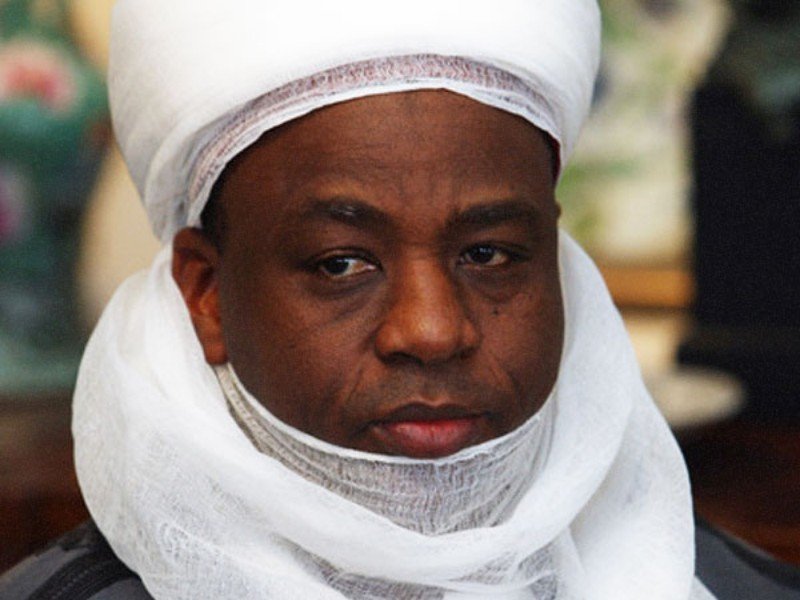
In stark juxtaposition, the architecture of Muslim leadership in Nigeria evinces a profound disparity. Since the inception of pre-eminent Islamic institutions such as the Nigerian Supreme Council for Islamic Affairs (NSCIA), authority has been entrenched in a de facto perpetual and hereditary fashion, reposed in the Sultan of Sokoto a Fulani potentate of traditional eminence.
This configuration engenders profound interrogations concerning equity, representativeness, and its congruence with the constitutional imperatives of a polyethnic republic.
How many Yoruba Muslims have ascended to the helm of Nigeria’s Muslim councils? How many Nupe or Igbo adherents? The unequivocal response is none.
Why does the stewardship of Nigerian Muslims inexorably devolve upon the Sultan? What doctrinal precept enshrines a singular ethnic lineage as the perpetual guardian of Islam in a polity encompassing over 250 ethnicities? Did the Divine ordain a Fulani sovereign to preside over Nigerian Muslims?
Islam furnishes no sanction for ethnic hegemony. The Qur’an elucidates unequivocally: “Indeed, the most noble of you in the sight of Allah is the most righteous of you” (Qur’an 49:13).
Islamic leadership is predicated upon moral rectitude and erudition, not ancestral pedigree. The Sultan of Sokoto claims no descent from the Prophet Muhammad (peace be upon him), nor does he wield caliphal prerogative. His station emanates from the 19th-Century Sokoto Caliphate, a parochial political dominion, rather than from celestial edict or extant Islamic jurisprudence. Contemporary Nigeria constitutes a constitutional democracy, not a relic caliphate.
On the global stage, paradigms of Muslim governance diverge markedly. In Indonesia, the globe’s most populous Muslim nation, ecclesiastical authority is institutionalised and pluralistic, eschewing heredity.
Malaysia’s Islamic councils effectuate rotational presidencies among its federated states. Turkey vests oversight in scholars appointed via its Presidency of Religious Affairs. Egypt’s venerable Al-Azhar is helmed by savants elected for scholarly prowess, not lineage.
In South Africa, the United Kingdom, and the United States, Muslim assemblies are democratically elected or broadly representational. Nowhere in modern Islamic polities is national religious suzerainty immutably reserved for a solitary ethnic sovereign.
Only in Nigeria has this aberration been entrenched as orthodoxy. This perpetuates a structural disequilibrium. Nigeria’s Muslim populace is a tapestry of diversity: Yoruba, Hausa, Fulani, Kanuri, Nupe, Igbo, Ebira and myriad others embrace Islam. Yet, a single cadre monopolises the zenith of religious authority.
Such oligarchic concentration estranges multitudes of southern and Middle Belt Muslims, fortifying apprehensions of Fulani ascendancy within Islamic edifices. Faith transmutes into an adjunct of hegemonic regionalism, rather than a transcendent spiritual nexus.
The inexorable quandary persists: what arcane exigency at the pinnacle of Muslim leadership precludes others from participation? Is piety an ethnic endowment? Is erudition heritable? Is authority tribally decreed? If CAN can institute rotational stewardship in the ethos of inclusivity, why cannot Muslim institutions emulate this paradigm?
Nigeria imperatively requires a contemporary framework for Muslim leadership, predicated upon representativeness, meritocracy, and national ethos divorced from inherited prerogative. Such a paradigm ought to encompass rotational presidencies, inclusive assemblies, scholarly acumen, and constitutional fidelity.
Islam is universal and Nigeria is pluralistic. Leadership must mirror both verities. Until this asymmetry is rectified, national Muslim institutions will endure as perceived extensions of a historical dynasty, rather than ecumenical spiritual fora. This perception erodes trust and attenuates national solidarity.
The Divine did not decree a Fulani Sultan as the perpetual vanguard of Nigerian Muslims. Historical contingency did. And history, when antithetical to equity, is amenable to emendation. A progressive Nigeria must privilege justice over an ossified tradition where the latter engenders exclusion. Faith ought to coalesce and not subjugate. Representation must supplant inheritance. Only thus can religious leadership authentically encapsulate the diversity and dignity of the Nigerian polity.
•Aduwo is the Permanent Representative of Centre for Convention on Democratic Integrity (CCDI), a non-profit organisation registered with Nigeria and the United States, with Consultative Status of ECOSOC/United Nations.