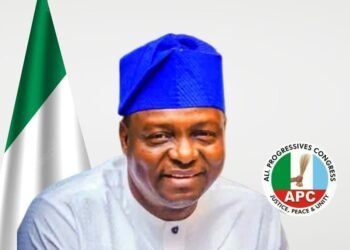





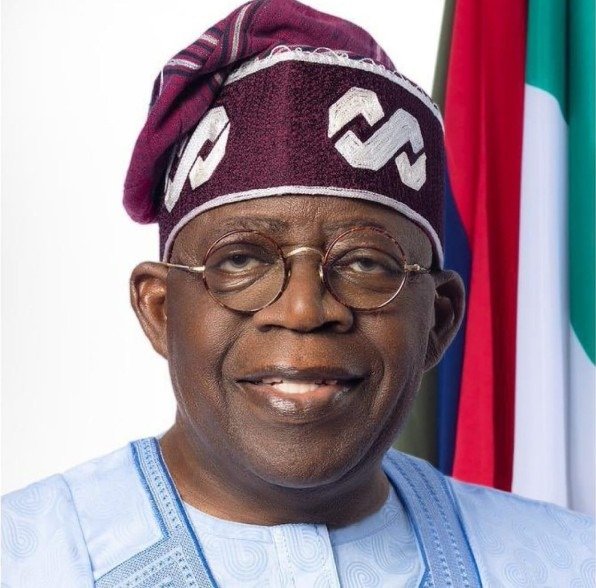
All Progressives Congress (APC) National Chairman, Professor Netanwe Yilwatda, has disclosed that President Bola Tinubu was working to make Kano State the next commercial gateway in Northern Nigeria and West Africa.
He added that the president was implementing a historic and deliberate economic masterplan to transform the state into the foremost regional hub for commerce, manufacturing, logistics and transnational trade in Nigeria and across West Africa.
Yilwatda stated this in Abuja, at the weekend, disclosing that the ongoing infrastructure and industrial investments by the Tinubu administration across Kano and the wider northern corridor were neither accidental, nor isolated projects.
He stated that they were part of a coordinated strategy to restore Kano to its historic status as the economic heartbeat of Northern Nigeria and one of Africa’s most strategic inland commercial centres.

“President Bola Ahmed Tinubu is not merely developing Kano State; he is redesigning the economic future of Northern Nigeria through Kano.
“His administration understands clearly that Kano is the natural commercial nerve centre of the North and the gateway between Nigeria and the wider West African hinterland,” Yilwatda added.
The APC national chairman stated these in a statement, on Monday, by his special adviser on Media and Communications Strategy, Abimbola Tooki.
He disclosed that the strategic economic vision of President Tinubu is to make the state the largest business and industrial hub in Nigeria after Lagos, while establishing it as the principal gateway for trade into the Sahel and Francophone West Africa.
Yilwatda highlighted several landmark infrastructure projects currently being executed by the Tinubu administration which were expected to transform the state into a mega commercial city.
According to him, the Federal Government was fast-tracking the completion of the Kaduna–Kano standard gauge railway.
He described it as a critical project that will connect the state directly to Abuja and Southern Nigeria through modern rail logistics, drastically reducing the cost and time of moving goods and passengers.
The line, according to Yilwatda, was expected to be operational this year.
“The Kano–Maradi rail line will connect Kano to Niger Republic and the broader Sahel trade belt, opening vast export and import corridors into Francophone West Africa.
“This project will significantly expand Kano’s role as Nigeria’s principal inland export gateway. The Federal Government has targeted completion by 2026/2027.
“The recently-approved Kano Metropolitan Rail Service will modernise transportation within Kano metropolis, decongest urban movement, improve logistics efficiency and support Kano’s emergence as a modern mega-city.
“The AKK Gas Pipeline will deliver industrial gas to Kano and the wider North, powering factories, industrial parks, fertiliser plants and gas-fired power generation, thereby reviving manufacturing and attracting new industries to Kano.
“Strategic investments in power generation and transmission across the northern industrial belt, including projects tied to the Kaduna–Kano axis, will improve electricity reliability and support industrialisation.
“Ongoing rehabilitation and expansion of the key Abuja–Kaduna–Zaria–Kano Road corridor will improve connectivity between Kano and the rest of the federation, boosting trade efficiency.
“The Sokoto–Badagry Super Highway will create a new economic corridor linking Northern agricultural belts to Southern export markets and ports, unlocking business opportunities across the entire North-West,” it stated.
Professor Yilwatda explained that the heavy investment in the state by President Tinubu was driven by strategic national economic considerations namely:
As Northern Nigeria’s Largest Commercial Ecosystem
Kano hosts one of the biggest market and manufacturing clusters in Africa and remains the natural business capital of Northern Nigeria.
As Nigeria’s Gateway to the Sahel
Its geographical location makes it the ideal export and logistics hub for trade with Niger, Chad and wider Francophone West Africa.
Reviving Kano Means Reviving Northern Industry
The historical strength of the state in textiles, leather, agro-processing and commerce makes it critical to the North’s industrial rebirth.
It Can Become Nigeria’s Second Mega Commercial City
President Tinubu’s administration seeks to reduce over-dependence on Lagos by building Kano into a second dominant commercial powerhouse.
Northern Prosperity Is Critical to National Stability
Expanding commerce, industry and employment in Kano and the wider North is essential to reducing poverty, unemployment and insecurity.
Professor Yilwatda declared that no previous administration has assembled such a comprehensive and interconnected infrastructure strategy for Northern Nigeria.
“Who before now conceived this scale of integrated development for the North: rail lines, gas pipelines, metropolitan transit, industrial power, superhighways and regional trade corridors, all designed to work together?
“This is vision. This is strategic leadership. This is what President Bola Ahmed Tinubu is delivering,” he declared.
The APC National Chairman criticised opposition parties for what he described as their obsession with insults, propaganda and power politics rather than national development.
“While President Tinubu is building the infrastructure backbone that will transform the North for generations, the opposition is busy chasing personal ambition and power for its own sake.
“They offer no ideas, no blueprint, no alternative vision. Their only manifesto is to insult the APC and attack every development initiative because they lack the capacity to think beyond politics,” he added.
Yilwatda noted that President Tinubu’s infrastructure and industrial strategy will fundamentally alter the economic destiny of Northern Nigeria and reposition Kano as the undisputed economic capital of the North.
“History will remember President Bola Tinubu as the leader who restored Kano to greatness, industrialised the North, and built the infrastructure backbone for Nigeria’s next era of prosperity,” he declared.