











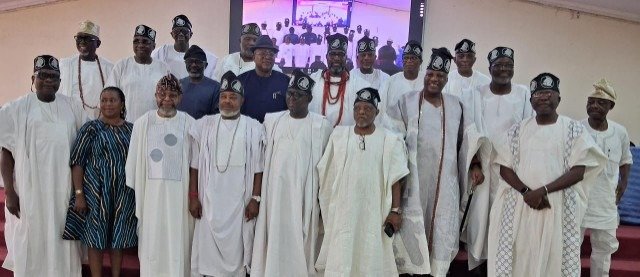
Managing Director/CEO of the South-West Development Commission (SWDC), Dr Charles Akinola, has described the five pillars of the Commission as key essential to an improved governance in Nigeria.
He stated this while speaking as a panelist at the 2026 Annual May Day Lecture of the Silver Knights, Ibadan, held at the Lead City University (LCU), Ibadan, on Friday.
The SWDC is a regional development platform, established by the Federal Government in 2025 to coordinate large-scale growth initiatives, and as a strategic investment vehicle for attracting public, private, diaspora, and development finance into the zone.
The SWDC MD/CEO, delivered a paper: The South West Development Commission As An Institutional Innovation For Improved Governance In Nigeria.”
Dr Akinola disclosed that the SWDC has, since its formation in 2025, been working in accordance with its mission and vision to ensure the development of the South-West and, by extension, Nigeria.
According to him, the work of the Commission has been concentrated on pipeline consolidation, stakeholder alignment, technical scoping, institutional readiness, and early coordination.
“Our strategic orientation is
anchored on five pillars: Social and Human Capital Development;
Infrastructure Development and Mobility; Commerce, Industry and
Innovation; Peace, Security and Harmonious Co-existence; and Agricultural Value Chain Enhancement and Value Addition,” he said.
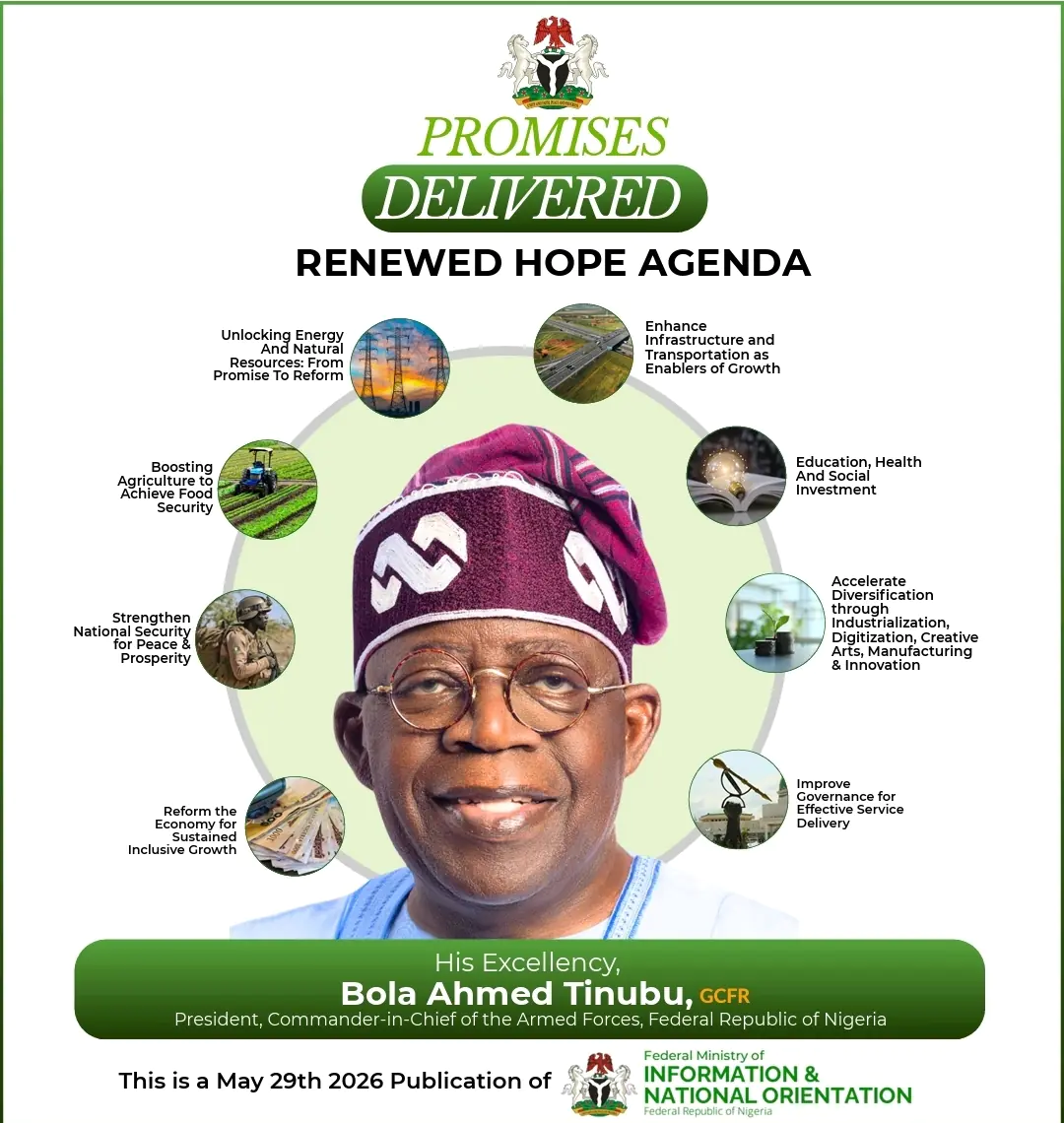
The five pillars, he said, aligned with the Renewed Hope Agenda of President Bola Tinubu, adding that the SWDC was to localise those national priorities into a coordinated regional delivery framework in the South-West.
“The South-West’s rapid population expansion requires structured housing solutions, resilient construction ecosystems, and infrastructure-led city development.
“Affordable housing, mass transit, water systems, and ICT infrastructure are not standalone interventions in our thinking. They are interconnected foundations of a well-governed region.
“Unstructured congestion is not an inevitable consequence of growth. It is a consequence of inadequate planning, and the Commission is determined to help change that,” the SWDC MD said.
He said SWDC has prioritised a connected South-West economy through regional rail coordination, a superhighway, logistics systems, inland trade routes, broadband fibre-optic infrastructure,
and regional mobility solutions.
Akinola disclosed that engagements were underway with the Nigerian Railway Corporation, the DAWN Commission, and private-sector partners to identify viable rail routes and establish the coordinating role the Commission should play.
In the area of human capital, technology and innovation, he said the strategic thrust of the Commission included technical and vocational skills development, youth enterprise, digital innovation, job creation platforms, university-linked incubation, and civil service modernisation.
“The Commission’s strategic framework proposes a regional network of technical and vocational colleges, a South-West Technology Innovation Hub, and start-up incubation units embedded within
universities.
“We are also in advanced discussions with the National Open University of Nigeria toward a partnership that will significantly expand access to affordable, flexible education for south-westerners,” he added.
As regards industrialisation and investment mobilisation, he made it known that the Commission was focused on converting the region into a stronger production-driven regional economy through industrial parks, SME ecosystems, export-focused zones, and investment-ready project pipelines.
“Management has advanced early-stage planning for the South-West Investment Fund, conceived as a catalytic financing mechanism to attract private capital, Diaspora investment, and blended finance into infrastructure,
agro-industrial, manufacturing, and innovation projects.
“This reflects the understanding that government resources alone are insufficient and that private capital must be systematically mobilised for national transformation,” he said.
He asserted that development cannot thrive where there was insecurity, adding: “The Commission’s approach is not to duplicate existing state security institutions but to support, enhance, and connect them through technology, data systems, and regional coordination.
“Proposals under development include early warning platforms, intelligence-sharing frameworks, collaboration with Amotekun,
partnerships with traditional institutions, and alignment with national security agencies.”
On agriculture and food security in the South-West, he said the strategy of the SWDC was to move agriculture beyond fragmented production into an integrated regional value-chain system, such that creates jobs, strengthens rural incomes, and supports exports.
“One of our flagship near-term initiatives is the upcoming TRANSCOMS Roundtable, a
strategic platform for rural transformation through commercially viable agricultural ecosystems.
“TRANSCOMS connects agriculture, housing, logistics, enterprise development, infrastructure, and youth employment, positioning agriculture as the anchor of broader community prosperity rather
than a stand-alone activity,” he added.
The SWDC MD/CEO disclosed that the Commission was working on partnership with the six South-West governors, noting that they “occupy a central place within the governance architecture of the Commission, and that centrality is deliberate.
“As democratically-elected leaders, they carry the direct mandate of their people and possess first-hand understanding of local priorities,
developmental gaps, economic opportunities, and security realities within their jurisdictions.
“Their involvement ensures that the SWDC remains connected to the aspirations of the South-West people and responsive to state level development realities.
“Our position as a Commission is clear. We pursue partnership rather than competition, consultation rather than imposition, alignment rather than duplication, and delivery rather than bureaucracy.
“We do not see the governors as spectators to the Commission’s work. We see them as strategic partners whose insights, priorities, and support are essential to successful implementation.
“When governors align, the region accelerates. When institutions collaborate, citizens benefit. The Commission’s continuous
engagement with Their Excellencies is not merely desirable. It is fundamental to fulfilling our mandate.”
Mr Babatunde Ogala, SAN, another panelist at the 2026 Annual May Day Lecture of the Silver Knights, spoke on “Innovative Strategies For Improved Governance in Nigeria Since 2023: From Courage To Consolidation.”
Ogala, a former National Legal Adviser of the All Progressives Congress (APC), said governance was beyond comfort, adding: “Every nation eventually arrives at a moment where it must choose between comfort and correction. Nigeria arrived at that moment in 2033 and, to its credit the current administration chose correction.”
He said the President Bola Tinubu administration, right from its inauguration on 29 May, 2023, took a decisive step by removing fuel subsidy and thus “ending a fiscal illusion.”
Ogala said the subsidy removal was not an incremental reform, but a structural surgery, adding “surgery is rarely painless but it is often necessary. This was a decision from populism to realism.”
He said the monetary and exchange rate unification reform introduced by the Tinubu administration was a matter of choosing credibility over convenience.
He added that the monetary reform has reinforced the commitment of Nigeria to transparency, investor credibility and market discipline.
Ogala also listed other achievements of the administration, pointing out that the reforms and policies of the Tinubu administration will guide Nigeria and Nigerians to a better tomorrow.
He was, however, not oblivious of the pains and hardships that came with the reforms, saying: “Now, let us acknowledge reality. Yes, there are challenges; cost of living has increased; inflation has been felt; adjustments have been difficult.”
But he averred that “there is a difference between a system in crisis and a system in transition. Nigeria, today, is not avoiding its challenges; it is working through them. And that is a far stronger position.”
The third panelist, Dr Adebola Alade, Head of Department, Politics and International Relations, LCU, delivered a paper on the issue of governance.
She said the issue of governance has continued to be a key determinant of state performance, impacting economic growth, political stability, and social welfare.
“In Nigeria, the national development outcomes have been limited by the persistence of governance issues like corruption, lack of institutional capacity, and poor accountability with lots of natural and human resources.
“The effectiveness of the public institutions in providing services, law enforcement, and handling the public resources is closely connected with the quality of governance.
“According to the World Bank (2020), weak governance structures are a major deterrent to development in terms of ineffective policies and deterrence of investment, especially in developing economies,” she said.
Dr Alade said historical, political and socio-economic forces, including lack of political elites’ consensus, military rule, power centralisation, and rent-seeking behaviour related to oil dependency have influenced the governance environment in Nigeria.
“These structural problems have led to inefficiencies in government administration and lack of trust of the government.
“Nigeria is a nation that has always appeared in the list of countries with high perceived corruption, and it is based on lack of systemic governance (Transparency International 2023).
“Likewise, United Nations Development Programme (2022) highlights that a lack of governance in Nigeria is manifested in low service delivery, inequality, and the lack of involvement of citizens in decision-making processes.
“As a reaction to these issues, the necessity to address the challenges with innovative perspectives and solutions to governance has become more pronounced.
“Innovation in this respect is not limited to the use of technology alone, but also to institutional reforms, participative governance systems, and data-driven policy systems.
“In specific, digital governance has become a revolutionary instrument to improve transparency and efficiency in government activities (United Nations, 2022).
“But the success of such innovations can be determined by the congruence of technology, institutional structures and political will.
“This discussion places innovative governance strategies as important avenues towards resolving the deficits in governance in Nigeria.
“It adds to the existing debate on the ways to reshape governance systems to enhance accountability, responsiveness and development outcomes in Nigeria by emphasising contemporary strategies and practices suitable for the peculiarity of the country,” she said.
Concluding, Dr Alade opined that governance in Nigeria needed a multidimensional solution that involves political elites’ transformation, the use of technology, institutional reforms, and citizen participation.
“Such innovations as e-governance, policy-making based on data, and decentralised accountability can provide the possible ways of change.
“Its success however, requires political commitment, institutional capacity and long-term implementation,” she added.
Earlier in his welcome address, the first Club Chief, SK Tokunbo Fabanwo who conceived the idea of the club in 1982, said the annual Silver Knights’ May Day Lecture was usually an opportunity to appreciate the strength, dedication and ingenuity of the Nigerian workforce.
“So, once every years, we gather to review the state of our nation and its impact on the well-being of the Nigerian people.
“The theme of this year’s discourse –”Innovative Strategies For Improved Governance In Nigeria –reflects our collective desire to move beyond traditional frameworks.
“In an era defined by rapid technological advancement and complex socio-economic shifts, governance must be agile, transparent, and, mostly importantly, innovative.
“We are therefore privileged to host a truly impressive panel of thought leaders who will bring robust perspectives to this important conversation,” he said.
SK Fabanwo expressed optimism to consolidate and expand the scope of the annual lecture, adding: “The Silver Knights Annual will soon become a vital document of record and a critical companion to decision-makers across our country.
“The walk towards a better-governed Nigeria is a marathon. The strategies we discuss here today should help to fuel that journey. I therefore thank you for being a part of of this important dialogue. Enjoy the feast.”
The 2026 edition of the Silver Knights’ Annual May Day Lecture had the theme, “Innovative Strategies For Improved Governance in Nigeria.”
Conceived and founded in 1982 as family club, the Silver Knights metamorphosed into a socio-philanthropic organisation with annual donations to motherless babies’ homes and students of schools for the physically challenged.
Demonstrating its commitment to higher communal goals, it established its annual public interaction forum and, in 1995, began the annual lecture series, known as the Silver Knights’ Annual May Day Lecture.