











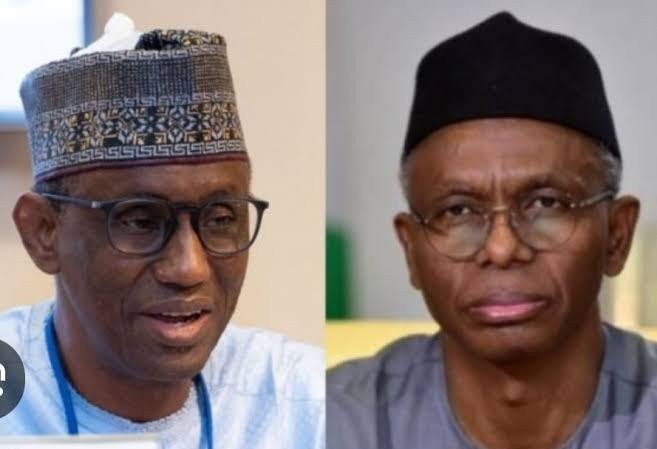
The audacious claim by Nasir el-Rufai that the telephone line of Nigeria’s National Security Adviser (NSA), Nuhu Ribadu, was illicitly intercepted exposes a scandalous vulnerability at the very heart of the nation’s security architecture.
el-Rufai’s assertion, made during an interview on Arise Television on 13 February, 2026, and subsequently rebroadcast by the station on Sunday, 15 February, implies prolonged and possibly routine surveillance of senior state officials, allegedly carried out by a professional criminal. If accurate, this is not merely a technical lapse; it is a national security scandal.
Such susceptibility can only arise from deficient encryption protocols, obsolete telecommunications infrastructure, or insidious insider complicity. Any of these scenarios renders supposedly secured government channels dangerously porous, inviting unauthorised interception and hostile exploitation.
The Implications Are Grave

A compromised NSA line imperils classified intelligence, facilitates espionage, and weakens national sovereignty. For President Bola Tinubu, it undermines executive authority and risks breeding paranoia and factional rivalry ahead of the 2027 elections, a fertile ground for political instability.
Task Before DSS
The Department of State Services (DSS) must urgently institute a comprehensive investigation to determine how such a breach could occur and, more disturbingly, how it escaped detection. Whether this reflects complacency, institutional decay, or deliberate sabotage remains to be established.
History offers sobering parallels. The disclosures by Edward Snowden in 2013 revealed systemic surveillance failures that compelled the United States to expend billions on cybersecurity remediation.
Comparable breaches in Nigeria could expose military strategy and diplomatic communications, while forcing defence outlays potentially exceeding ₦500 billion annually at a time when the economy can scarcely absorb such shocks. Investor confidence would inevitably suffer.
Accountability Must Follow
If Ribadu’s communications were indeed compromised under his watch, resignation for dereliction of duty is not excessive; it is proper. An NSA who cannot protect his own communications system can hardly be expected to safeguard the president’s lines.
Should el-Rufai’s claims be substantiated, then he and any collaborators must face prosecution under Nigeria’s Cybercrimes framework. A state that tolerates unauthorised surveillance of its highest security official advertises weakness to adversaries and invites further subversion.
Impunity, in matters of national security, is an existential luxury Nigeria cannot afford.
************************************
el-Rufai: Ribadu And Tinubu… Matters Arising
Mallam Nasir el-Rufai is undoubtedly old enough to comprehend the consequences of his words and actions. Yet, allegations of phone tapping, if true, constitute a criminal intrusion into communication systems and demand rigorous legal scrutiny. As Nigerians clamour for a probe, it would be imprudent to limit inquiry solely to this single issue.
Equally pressing are el-Rufai’s other declarations, the purported authorisation by the National Security Adviser (NSA), Nuhu Ribadu, of payments to terrorists and bandits and the alleged unlawful diversion by President Bola Tinubu of ₦100 billion monthly from the Federation Account. These are serious accusations that go to the heart of governance, security and fiscal accountability.
It would be both morally and politically unsound for presidential aides to dismiss the claims, glorify Ribadu and denounce el-Rufai without due process.
As Immanuel Kant famously observed, “Act in such a way that you treat humanity, whether in your own person or in that of another, always as an end and never merely as a means.”
Nigeria’s institutions must treat these allegations as ends in themselves, subject to comprehensive and transparent investigation, rather than instruments for political theatre. Only a disciplined, impartial inquiry can safeguard law, public trust and moral rectitude.
•Aduwo is the Permanent Representative of the Centre for Convention on Democratic Integrity (CCDI) to the ECOSOC/United Nations. CCDI is a non-profit organisation with Consultative Status of United Nations.