
















“The maxim, “all is fair in politics“, should therefore be understood as a descriptive observation about the intensity of political contest rather than as a licence for unethical conduct.”
Few political expressions have provoked as much controversy as the often quoted maxim, “all is fair in politics.”
The phrase is frequently invoked whenever politicians forge unexpected alliances, abandon old loyalties, adopt aggressive campaign strategies or pursue victory with relentless determination.
To some, it reflects the realities of political competition. To others, it appears to legitimise dishonesty, manipulation and the abandonment of ethical restraint. Both interpretations, however, overlook the expression’s historical evolution and its proper place within democratic governance.
Understanding Tinubu’s “All Is Fair In Politics”
Contrary to popular belief, “all is fair in politics” has no identifiable author. It did not originate with Aristotle, Machiavelli, Burke or any renowned political philosopher. Rather, it evolved gradually during the 19th Century, drawing inspiration from the much older English proverb, “all is fair in love and war.”
That earlier saying acknowledged that certain forms of competition demand strategy, ingenuity and resilience. In time, politics came to be viewed as another arena of intense rivalry, giving rise to its political adaptation.
The absence of a recognised author is significant. It reminds us that the expression is neither a philosophical doctrine nor a constitutional principle, but a popular maxim whose meaning depends upon context.
Like many proverbs, it describes a perception of political life, rather than prescribing a moral code. To treat it as an ethical licence is to misunderstand both its history and its purpose.
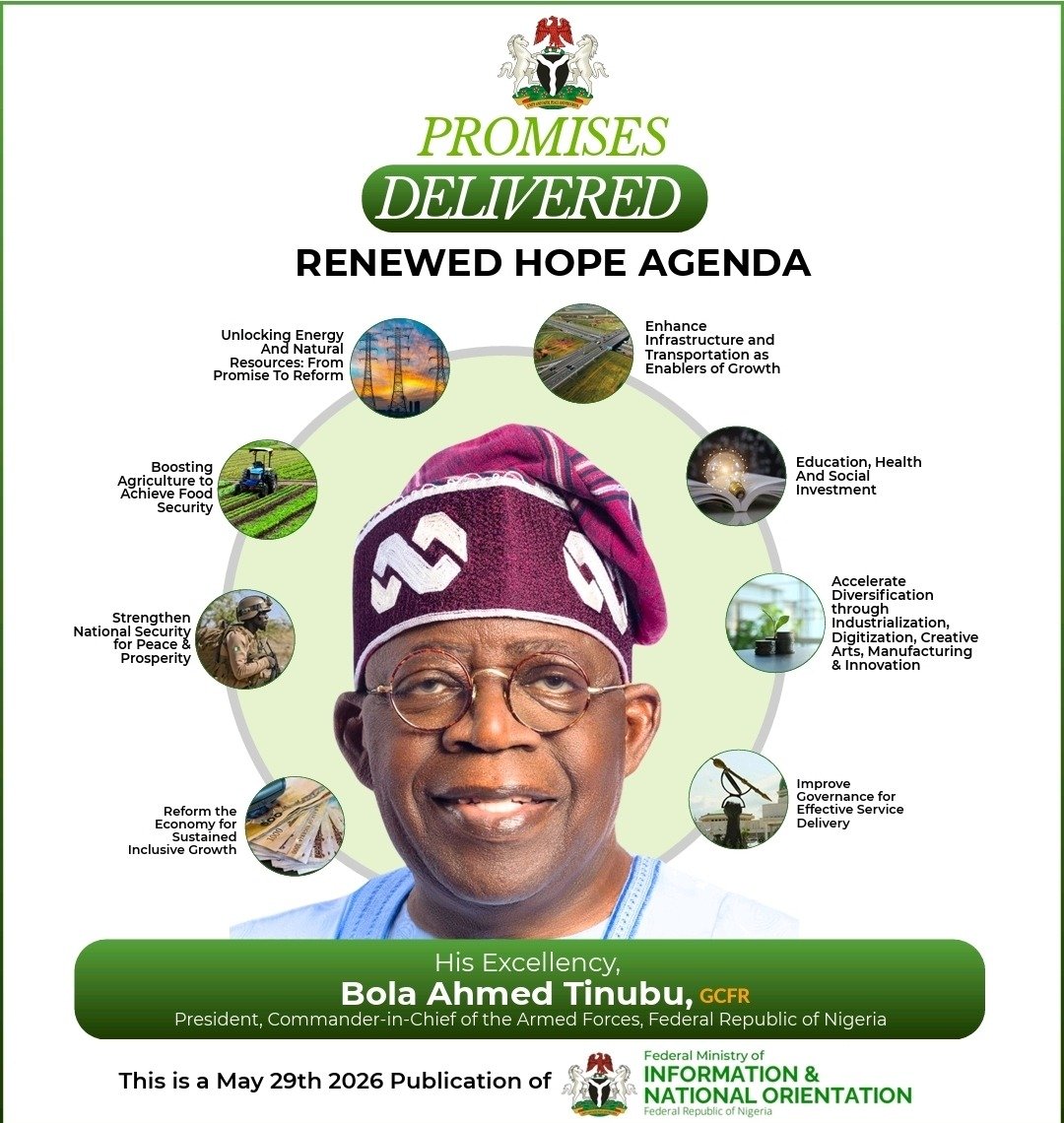
President Bola Tinubu’s reported remark that “all is fair in politics” should therefore be interpreted with care. It ought not to be construed as an endorsement of corruption, electoral malpractice, intimidation or constitutional abuse.
Politics is, by its very nature, competitive. Elections are contests of ideas, personalities, organisation and persuasion. Political parties seek advantage; candidates build alliances, persuade undecided voters and adapt their strategies to changing circumstances. None of these activities is inherently unethical, they are integral to the democratic process.
The distinguished British political philosopher, Bernard Crick, captured this reality with characteristic clarity: “Politics is the activity by which differing interests within a given unit of rule are conciliated.”
Crick regarded politics not as warfare but as the civilised management of disagreement. Compromise, negotiation and persuasion are not signs of weakness; they are the very foundations of democratic government. Politics succeeds because it substitutes ballots for bullets and dialogue for violence.
Similarly, the German sociologist, Max Weber, in Politics As A Vocation, argued that political leadership demands both conviction and responsibility. Leaders must pursue their objectives with determination while remaining mindful of the moral and institutional consequences of their actions. Strategy is indispensable, but so too is accountability. Neither can endure without the other.
Unfortunately, public discourse often treats the maxim “all is fair in politics” as though it sanctions unlimited conduct. Such an interpretation is historically unfounded and constitutionally indefensible.
Every democracy establishes boundaries beyond which political competition cannot legitimately extend. Electoral fraud, violence, bribery, intimidation, abuse of state institutions and violations of constitutional rights are not examples of political skill; they are direct assaults on democratic governance.
The American statesman, Daniel Webster, warned against precisely this misconception. Rejecting the notion that politics should operate under a separate moral code, he insisted that public life must remain subject to the same ethical standards that govern private conduct. His broader philosophy was clear, political office imposes higher obligations, not lower ones.
History offers countless examples of the distinction between legitimate political strategy and political misconduct. Successful democratic leaders have demonstrated exceptional tactical ability without abandoning constitutional principles.
Coalition building, parliamentary negotiation, policy compromise and effective electoral organisation have long been recognised as legitimate instruments of democratic success. By contrast, governments that rely upon repression, manipulation or institutional capture may secure temporary victories, but they invariably weaken their own legitimacy.
The Italian political thinker, Niccolo Machiavelli, is frequently invoked in discussions of political ruthlessness, yet he remains one of history’s most misunderstood writers. Contrary to popular belief, he never wrote the famous phrase, “the end justifies the means.” His work sought to explain the practical realities confronting rulers rather than to advocate criminality or moral nihilism. Reducing Machiavelli to a champion of political wickedness does a profound disservice to his scholarship.
Politics has always demanded sound judgment. Campaigns must be organised, alliances negotiated, resources mobilised and opponents challenged through reasoned argument and persuasion.
These realities explain why politics often appears uncompromising. Yet, democratic competition retains its legitimacy only when conducted within constitutional and legal boundaries accepted by all participants.
The British statesman, Edmund Burke, recognised that public office carries obligations far beyond personal ambition. He famously reminded elected representatives that they owe their constituents not merely their industry but their judgment. That judgment requires integrity, prudence and an unwavering commitment to constitutional government, even amidst intense political rivalry.
Against this backdrop, President Tinubu’s reported remark may reasonably be understood as acknowledging that politics demands resilience, adaptability and strategic judgement. Such an interpretation is entirely consistent with democratic practice across the world.
Political leaders are expected to campaign vigorously, defend their records robustly and compete energetically for public support. What they are never entitled to do, however, is disregard the rule of law or undermine the institutions upon which democracy depends.
The distinction is crucial because political rhetoric is often interpreted more literally than intended. Expressions such as “politics is not a tea party” or “all is fair in politics” are rhetorical devices that convey the intensity of political competition. They should never be mistaken for constitutional doctrines or ethical principles.
Democracies are sustained not by slogans but by strong institutions, independent courts, credible elections, a free press and an informed electorate. Public confidence in democratic government rests largely upon the belief that political competition is conducted fairly and lawfully. Citizens are far more willing to accept electoral defeat when they trust the integrity of the process.
Conversely, where institutions lose credibility, even legitimate victories become clouded by suspicion. Political success, therefore, depends, not only upon winning elections, but also upon strengthening public confidence in democratic institutions.
For that reason, ethical politics remains indispensable. Integrity is not an obstacle to effective leadership; it is one of its essential foundations. Strategy without principle becomes opportunism. Power without accountability drifts towards authoritarianism and victory without legitimacy ultimately proves hollow.
The enduring lesson lies between naive idealism and cynical realism. Politics is undeniably competitive, requiring intelligence, courage and strategic skill. Yet democratic politics also demands restraint, constitutional fidelity and respect for the rights of opponents. These principles distinguish democratic competition from the mere pursuit of power.
The maxim, “all is fair in politics”, should therefore be understood as a descriptive observation about the intensity of political contest rather than as a licence for unethical conduct. It acknowledges that politics is seldom gentle, but it does not suspend moral responsibility.
Democratic leaders remain accountable to the law, constitutional norms and, ultimately, the judgement of the electorate. President Tinubu’s reported remark should thus be interpreted within this broader historical and constitutional tradition.
Politics may indeed be a demanding contest in which strategy, negotiation and resilience are indispensable. Nevertheless, democratic legitimacy depends upon recognising that not everything which is politically advantageous is morally or legally permissible.
Elections may be won through superior organisation and persuasion, but enduring statesmanship is measured by respect for the Constitution, fidelity to democratic values and an unwavering commitment to the public good.
In the final analysis, politics is not exempt from morality; it is one of the principal arenas in which moral character is tested. The true statesman is not the one who secures victory at any cost, but the one who demonstrates that political success and ethical responsibility are not competing ideals but inseparable pillars of constitutional democracy.
•Aduwo is the Permanent Representative of Centre for Convention on Democratic Integrity (CCDI) –a non-profit organisation with United Nations Consultative Status –to the United Nations on Economic and Social Council.