











“An ethical rebirth—anchored on knowledge, tolerance, and accountability—is the surest path to overcoming religious bigotry and building a more united, forward-looking society, the one we are aspiring to in Oyo State.”
As the contest for party tickets ahead of the 2027 gubernatorial race intensifies, an issue that should be peripheral has taken centre stage: religion. Its growing prominence in political discourse is not only unnecessary, but potentially dangerous.
Politics and Ethical Rebirth in Oyo
Religion should not just promise hope. It should create it through the mobilisation of human intelligence.
Religion, for many, offers moral guidance and personal comfort.
But in governance, it must remain secondary. Religion in governance is like what Shakespeare described as “a scar that never felt a wound.”
Politics is not a test of piety; it is a test of performance. Competence, integrity, vision, and measurable impact—not religious identity—should guide our choices.
Those who stir religious sentiments in politics often do so to mask a lack of substance. When debates shift from policy to identity, it is usually because concrete ideas are in short supply. Leadership should not be about what a candidate professes but about what they can deliver.
The realities facing Oyo State demand seriousness, not sentiment. Poverty does not ask for one’s religion before it strikes. As Ola Rotimi aptly captured, it is like a night rain that leaves no roof untouched.
The pressing challenges—economic strain, inadequate infrastructure, gaps in healthcare and education, youth unemployment—cut across all divides. They require practical, inclusive solutions.
It follows, therefore, that leadership must be entrusted to individuals of proven competence and ethical grounding.
Governance should be assessed through clear outcomes: better roads, stronger institutions, accessible healthcare, improved schools, agricultural growth, and meaningful opportunities for youth and women. These are the real indicators of progress.
History warns us of leaders who elevated sectarian loyalties above collective good. Such tendencies fracture societies and weaken development. Religion is a two-edged sword – while it can be used to shape personal values, it can also be weaponized—to excuse failure or shield mediocrity from scrutiny.
As Professor Godwin Sogolo of the University of Ibadan observed, the challenge lies not in belief itself but in its misuse as a tool for personal and political advantage. When religion becomes a means of influence, rather than a compass for integrity, it undermines both governance and faith.
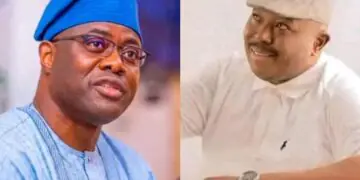
Oyo State offers a practical reminder that leadership can rise above religious bias. The administration of ‘Seyi Makinde is often cited as one that has maintained a measure of balance and inclusivity without overt religious favouritism. From time, there is a mosque in his house where Muslims observe their prayers without much ado. Whilst it can’t be contradicted that he dispenses dividends of democracy to everyone, irrespective of their religion, this reinforces a simple truth: good governance speaks through fairness, not affiliation.
Against this backdrop, calls that the next governor of the state “must” belong to a particular religion are misguided. Such assertions risk deepening divisions in a state known for its diversity and political awareness. They distract from the central question: who is best equipped—by character and capacity—to lead?
Encouragingly, groups like the Pacesetter Muslim Professionals for Good Governance have pushed back against the use of religion as a shield for incompetence. “Oyo State is too educated, too mixed and too wise to be fooled again,” the group stated.
The stance of the group reflects a broader reality: Oyo’s electorate is informed, diverse, and increasingly resistant to sectarian manipulation.
In the end, the choice before the people is clear…
Ethical judgment must outweigh inordinate political sentiment. Competence must prevail over creed. The collective advancement of Oyo State must remain the ultimate standard in selecting its new political leaders.
Interestingly, we are, in this part of the world, often blinded by religious fundamentalism to the extent that we fail to properly situate our problems and offer fitting solutions.
This misplacement of focus has become one of the greatest impediments to our collective progress. It echoes what Fela Anikulapo Kuti metaphorically described as “faring the air around us”—engaging in distractions while the real issues remain unattended.
It is quite appalling that these days, some politicians hide under the cloak of religion to curry public sympathy. They inadvertently choose the marking of Islamic occasion to meet religious leaders and stakeholders to convince them that choosing a Muslim as the next governor will bode well for them. Their mere presence in such a gathering speak eloquently of their mission.
At the heart of this challenge lies the urgent need for value-based education as the National Orientation Agency (NOA) always canvass. Too often, religion is blamed for what are fundamentally failures of governance and accountability.
Rather than confronting incompetence, we retreat into religious sentiments. This is where Plato’s concept of ethical intellectualism becomes instructive—the idea that ignorance is the root cause of most wrongdoing. When citizens are not properly enlightened, they become susceptible to manipulation along religious lines.
The responsibility, therefore, falls heavily on the elite, who must lead a deliberate campaign of civic and ethical reorientation. Through proper education about religion—its place, limits, and moral essence—citizens can be extricated from the shackles of fanaticism and division.
It is troubling that, in some quarters, leadership succession is still reduced to religious sentiments. The suggestion that a Muslim must succeed a Christian simply because the incumbent has nearly completed two terms is a clear example of misplaced priorities. Leadership should never be determined by creed but by competence, vision, and the capacity to deliver.
Citizens must look inward and embrace what philosophers describe as an “internal remedy”—a conscious shift in values and expectations. Instead of using religion as a shield for poor performance, there must be a collective insistence on results, accountability, and service.
This point was once underscored by the incumbent governor of Oyo State, ‘Seyi Makinde, “I, as a Christian, have contributed more than all Muslim governors in Oyo State towards the development of Islam.”
Beyond its immediate context, this statement reinforces a gospel truth: governance, at its best, transcends religious identity. A Muslim in office can do more for the Christian sects and vice versa. As it is the case of GSM cited above.
Religion is, and should remain, a private matter. What must take precedence in public life is a leader’s commitment to the welfare of the people—the ability to inspire hope, deliver progress, and put smiles on the faces of citizens.
An ethical rebirth—anchored on knowledge, tolerance, and accountability—is the surest path to overcoming religious bigotry and building a more united, forward-looking society, the one we are aspiring to in Oyo State.
As the late reggae maestro, Majek Fashek, sang in one of his famous albums, titled “Religion is politics”, one needs to be wary not to fall into political snare while attending what is ostensibly meant to be a soul-purification events.
“Lots of people know all the tricks
Religion is politics
Some of them are the Pharisees
Religion na politics
They are hypocrite and fanatics
Religion religion is politics”- Majek Fashek.
•Kehinde writes from Ibadan.