













“Under Governor Makinde, there has been a conscious effort to build the institutional and physical structures for long-term economic growth of Oyo State.”
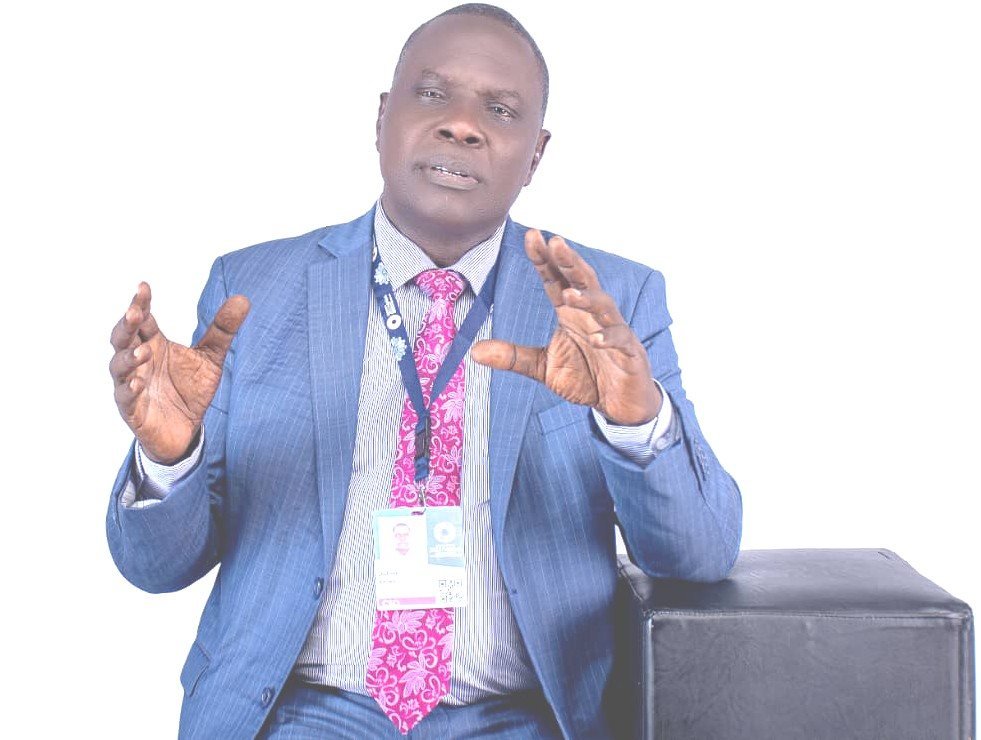
Mr. Olufemi Aduwo is the Permanent Representative of Centre for Convention on Democratic Integrity, CCDI to ECOSOC/United Nations and Chairman, CSO-African Countries Group of World Bank, Civil Society Policy Forum (CSPF). In this appraisal of the two-term tenure of the governor of Oyo State, Engineer ‘Seyi Makinde, he declared that his administration is leaving a legacy of positive developments.
The two-term tenure of the Governor ‘Seyi Makinde-led administration will come to an end in less than 11 months. What is your general assessment of Oyo State in the past seven years, in terms of socio-economic and infrastructural development?
My overall assessment is that Oyo State has undergone one of the most deliberate and structured transformations since the return to democratic rule in 1999.
Every administration leaves its imprint, but what distinguishes Governor ‘Seyi Makinde’s tenure is that development has not been approached as a collection of isolated projects. Rather, there has been a conscious effort to build the institutional and physical foundations for long-term economic growth.
Makinde and the institutional and physical structures
Infrastructure has been used as a catalyst for development, rather than as an end in itself. Roads have not merely connected towns; they have linked agricultural belts with processing centres, markets and industrial corridors. This has improved mobility, reduced travel time and lowered transportation costs for businesses and farmers alike.
The Governor Makinde administration has also invested in sectors that are critical to sustainable development. Agriculture has been repositioned from a largely subsistence activity towards commercial production. Education has witnessed significant interventions through school rehabilitation and teacher recruitment, while the health sector has benefited from renewed attention to both primary and secondary healthcare.
Equally important is the state’s relatively stable fiscal management which has enabled it to undertake ambitious projects without creating the kind of financial distress that often accompanies large-scale public spending.
No government is without shortcomings, and it would be unrealistic to suggest otherwise. Certain sectors will always require further improvement, while citizens naturally expect faster results in areas such as employment and urban renewal.
Nevertheless, when the Makinde administration is assessed against its stated objectives and the scale of projects delivered over the past seven years, the overall trajectory has been decidedly positive. The state today is more economically competitive, better connected and more strategically positioned than it was in 2019.
The administration heavily prioritised linking agricultural zones to urban centres, notably with the 76km Ogbomoso-Iseyin Road and the 32km South-East Wing of the 110km Rashidi Ladoja Circular Road in Ibadan. Critics argue that massive ring roads push development too far into peri-urban areas. What is your view on this?
I respectfully disagree with that criticism because it reflects a rather narrow understanding of how modern cities expand and how regional economies evolve. Around the world, major ring roads are designed precisely to anticipate future growth rather than merely respond to existing congestion.
The Ogbomoso-Iseyin Road serves a much broader purpose than connecting two locations on a map. It opens up vast agricultural communities, shortens access to markets and processing facilities, and encourages private investment in areas that were previously underserved.
For farmers, logistics often determine profitability. Better roads reduce post-harvest losses, improve supply chains and make rural production commercially viable.
Similarly, the Rashidi Ladoja Circular Road should be viewed as a strategic economic corridor, rather than just simply another highway. Circular roads help decongest city centres by diverting heavy traffic, while simultaneously creating new corridors for residential, commercial and industrial development. Over time, businesses naturally gravitate towards such transport networks because accessibility reduces operating costs and attracts investment.
Urban expansion into peri-urban areas is not inherently negative, if it is guided by proper planning. In fact, unmanaged urban concentration creates its own problems, including overcrowding, rising land prices, traffic congestion and pressure on public services. Well-planned outward expansion distributes economic activity more evenly across the state.
What is essential is ensuring that physical infrastructure is complemented by effective land-use planning, environmental protection and the provision of essential public services. If those elements are sustained, these transport corridors are likely to become engines of economic activity rather than mere road projects.
On the upgrade of the Samuel Ladoke Akintola Airport, many are of the view that it was a deep commitment to one project to the detriment of the development of other critical sectors. Do you think the airport project can propel Foreign Direct Investments (FDIs), particularly in driving the export capacity of the state under the African Continental Free Trade Area (AfCFTA) framework?
I believe the airport project should be viewed through a long-term economic lens, rather than solely in terms of its construction cost. Major infrastructure projects often attract criticism during implementation because their full economic value only becomes evident over time.
An international airport is not merely a transport facility. It is an economic asset capable of supporting trade, tourism, manufacturing, logistics and investment. Investors increasingly consider connectivity when making location decisions. Efficient air transport enhances the ease of doing business, particularly for sectors dealing in time-sensitive goods and high-value products.
Under the African Continental Free Trade Area, sub-national governments that possess efficient transport infrastructure are likely to enjoy a competitive advantage. Oyo State has considerable strengths in agribusiness, agro-processing, solid minerals and light manufacturing. These sectors require dependable logistics if they are to compete effectively within regional markets.
The upgraded Samuel Ladoke Akintola Airport has the potential to facilitate cargo operations, improve export logistics and reduce dependence on airports outside the state. For exporters of horticultural produce, processed foods and other perishable commodities, time is often the difference between profitability and loss. Enhanced air cargo capacity could therefore strengthen the state’s export ecosystem.
It is also worth noting that the airport has not existed in isolation. During the same period, the Makinde administration invested in roads, healthcare, education, agriculture and security. It is therefore inaccurate to suggest that one project consumed the government’s entire development agenda.
Ultimately, infrastructure should be seen as an interconnected ecosystem. Roads feed industrial zones, agricultural production feeds export markets, while an international airport provides access to regional and global commerce. If effectively managed and supported by private sector participation, the airport could become one of the defining economic assets of Oyo State over the next two decades, particularly as Nigeria seeks to maximise the opportunities presented by the AfCFTA.
On agribusiness and rural-urban migration, the Makinde administration clearly shifted the state’s focus from subsistence farming to structured commercial productivity. But do you see this industrialisation strategy successfully checking rural-urban migration within the state?
To a significant extent, yes. Rural-urban migration is fundamentally driven by economic opportunity. People leave rural communities not because they necessarily prefer city life, but because employment, infrastructure and access to markets are often concentrated in urban centres. Any government that genuinely intends to moderate such migration must therefore create viable economic alternatives in rural areas.
The Makinde administration appears to have recognised this reality by treating agriculture as a business, rather than merely a social intervention. Commercial agriculture requires reliable road networks, mechanisation, storage facilities, processing plants, access to finance and dependable markets. These are the components of a modern agricultural value chain, and the administration has sought to strengthen several of them.
Once rural communities become centres of production, processing and commerce, they begin to generate employment beyond farming itself. Opportunities emerge in transportation, equipment maintenance, packaging, warehousing, food processing, logistics and other supporting industries. This creates a broader rural economy capable of retaining young people who might otherwise migrate to Ibadan or other major cities in search of work.
That said, no single administration can completely reverse decades of rural-urban migration. Such demographic patterns evolve over many years and are influenced by education, healthcare, housing, digital connectivity and access to financial services.
However, the current strategy lays a credible foundation. By investing simultaneously in rural infrastructure and commercial agriculture, the Governor Makinde-led government is making rural communities more economically attractive than they previously were.
The long-term success of this policy will ultimately depend on continuity. Future administrations should consolidate these gains by encouraging agro-industrial investments, supporting small and medium-sized enterprises, and ensuring that private capital continues to flow into rural economies. If that happens, rural development will become self-sustaining rather than dependent solely on government expenditure.
During the recent Third International Tourism Summit, the governor launched an ambitious 25-Year Tourism Master Plan. This has been criticised as too futuristic and may be abandoned by his successor. What do you think the governor should do to ensure a sustainable tourism plan, even years after he would have left office?
Long-term planning should never be mistaken for political ambition. Indeed, one of the enduring challenges of governance in Nigeria is that development strategies are often designed around electoral cycles rather than generational progress. A 25-five-year tourism master plan should therefore be viewed as an attempt to provide continuity beyond a single administration.
Tourism is unlike many other sectors. It requires years of sustained investment in infrastructure, heritage conservation, hospitality, security, environmental management and destination marketing before meaningful returns are realised. No state can establish itself as a leading tourism destination through short-term initiatives alone.
To improve the prospects of continuity, the administration should institutionalise the master plan, rather than allow it to remain a policy document associated with one governor. This can be achieved by embedding key elements within legislation, strengthening the relevant institutions responsible for implementation and ensuring that the private sector has substantial ownership of the projects envisaged under the plan.
Equally important is broad stakeholder engagement. Traditional institutions, local communities, investors, hospitality operators, cultural organisations and civil society should all see themselves as partners in the implementation process. Once multiple stakeholders have invested financially and institutionally in the strategy, it becomes considerably more difficult for any future administration to discard it without any compelling justification.
The plan should also incorporate measurable milestones that can be assessed every few years. Periodic evaluation allows future governments to refine implementation without abandoning the broader vision. Development plans should evolve in response to changing realities, but the overarching objective of positioning Oyo State as a competitive cultural and tourism destination ought to remain constant.
If implemented with discipline and bipartisan support, the tourism master plan could become one of the administration’s most enduring legacies, extending well beyond Governor Makinde’s tenure.
The administration prioritised primary healthcare centres (PHCs) across the 33 local government areas during its first term and pivoted toward upgrading secondary healthcare facilities in his second term, such as the ongoing LAUTECH Teaching Hospital Annexe in Oyo. Do you see this systemic shift to secondary facilities as capable of reducing the pressure on tertiary health institutions like UCH?
I believe the strategy reflects a more mature understanding of how an effective healthcare system should function. Healthcare is structured as a referral system, with each level designed to perform specific functions. Problems arise when primary and secondary facilities are unable to deliver appropriate care, forcing patients to seek treatment directly at tertiary hospitals.
By strengthening Primary Healthcare Centres during its first term, the Makinde administration sought to improve access to basic healthcare services at the community level. Preventive care, maternal and child health services, immunisation, treatment of common illnesses and early diagnosis are all more efficiently delivered through well-equipped primary facilities.
The subsequent emphasis on secondary healthcare is therefore a logical progression. General hospitals and specialist secondary facilities should be capable of managing a wide range of medical conditions that do not necessarily require the sophisticated expertise of tertiary institutions.
When these hospitals are properly staffed, equipped and managed, they reduce unnecessary referrals and allow teaching hospitals to focus on highly specialised cases, medical research and the training of healthcare professionals.
The ongoing development of the LAUTECH Teaching Hospital Annexe in Oyo has the potential to further strengthen this referral network by expanding specialist healthcare services beyond Ibadan. This could improve geographical access to quality healthcare, while easing patient volumes at institutions such as the University College Hospital.
However, infrastructure alone is insufficient. Sustainable healthcare reform also depends on recruiting and retaining qualified medical personnel, maintaining modern equipment, ensuring a reliable supply of essential medicines and strengthening health insurance coverage so that quality healthcare remains affordable.
Overall, the administration’s phased approach—from revitalising primary healthcare to expanding secondary and specialist services—demonstrates strategic planning rather than isolated intervention. If sustained by future governments, it has the potential to produce a more balanced healthcare system, improve patient outcomes and significantly reduce avoidable pressure on tertiary institutions.
Governor ‘Seyi Makinde recently cautioned against any return to the era of the “Wild Wild West”, popularly associated with the “Operation Wetie” incident of the 1960s, stressing that Nigeria must never revisit such political violence. However, the ruling party criticised his remarks, describing it as inflammatory. Do you believe the governor’s comments were a legitimate historical warning against political violence, or open to misinterpretation? How should political leaders communicate such concerns without escalating political tensions?
I believe Governor ‘Seyi Makinde’s remarks should be understood in their proper context. There is a fundamental distinction between issuing a warning and instigating violence. A warning is intended to avert a crisis; instigation is designed to provoke one. The two should never be confused.
Nigeria’s political history contains painful lessons that no responsible leader should ignore. References to the “Wild Wild West” or “Operation Wetie” should not automatically be construed as inflammatory. They can, and often do, serve as reminders of the tragic consequences of political intolerance, reckless rhetoric and the collapse of democratic restraint. History is valuable only if we are prepared to learn from it.
For that reason, I regard Governor Makinde’s comments as a legitimate and responsible caution. Such warnings should be taken seriously by government, irrespective of the political affiliation of the person making them. Governments have a duty, not only to respond to crises after they occur but, more importantly, to prevent them. Ignoring early warnings because they are politically inconvenient is neither prudent nor statesmanlike.
Conflict prevention is a recognised principle of good governance across the world. Security agencies routinely assess risks, identify potential flashpoints and act to prevent violence before it erupts. Political leaders should be encouraged to raise concerns where they perceive emerging threats to public peace. Doing so should not be mistaken for an attempt to incite disorder, provided their message is clearly one of restraint and peaceful democratic engagement.
Of course, every public office holder should choose words carefully, especially in a politically charged environment. However, careful language should not come at the expense of honest conversations about the country’s democratic health. It is entirely possible to warn against violence without promoting it, just as it is possible to caution against history repeating itself without invoking fear.
Ultimately, the focus should not be on politicising the governor’s remarks but on the substance of his message. Nigeria has paid a heavy price for political violence in the past, and no responsible leader should wish to see even the slightest return to those dark chapters. If a warning encourages greater vigilance, moderation and respect for democratic values, then it has served the public interest. Warning is not instigation; it is, in fact, one of the most responsible acts of leadership when exercised in the interest of preserving peace.