




Alleged Defilement: Court Rules On Baba Ijesa’s Statement On December 15
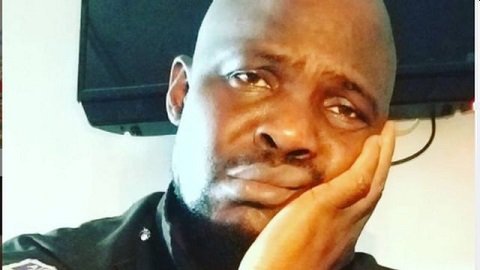
A Special Offences Court, sitting at Ikeja, Lagos State, has fixed Wednesday, 15 December, 2021 to rule on the admissibility of the confessional statement of Nollywood actor Olanrewaju James (aka Baba Ijesa), who is facing allegations of defilement.
The trial judge, Justice Oluwatoyin Taiwo, fixed the date on Thursday after the prosecution and defence teams adopted their written addresses on the trial-within-trial.

Recalled that during the court proceedings on 19 November, 2021, the defence, led by Mr Babatunde Ogala SAN and Mr Dada Awosika SAN, had objected to the confessional statement of Baba Ijesa being admitted as evidence.
The objection was predicated on the ground that the Nollywood actor made the statement to the police under duress.
Baba Ijesa faces a six-count charge bordering on indecent treatment of a child, sexual assault, attempted sexual assault by penetration and sexual assault by penetration.
The offences contravene Sections 135, 259, 262, 263 and 262 of the Criminal Law of Lagos State, 2015.
Taiwo, during the proceedings, on 19 November, had granted the request of the defence counsel for a trial-within-trial to determine the voluntariness of the statement and, after the trial-within-trial, had adjourned for adoption of written addresses.
On Thursday, Awosika, while adopting his written address, told the court that the defence had filed a response to that of the prosecution and objected to the submission that the defendant was not tortured.
Citing Section 35(1) of the Evidence Act, Awosika argued that, in criminal matters, there are two burdens of proof, noting that “one can change and the other doesn’t change.”
He said the defendant had put forward facts before the court which substantiate the use of oppression, adding: “It is for the court to look at evidence by the defendant that he was handcuffed, beaten and forced to sit on ground. Does that not qualify as evidence of oppression?”
Citing Section 29(5) of the Evidence Act, Awosika argued further: “Even from the prosecution’s evidence, the defendant was sitting on the ground and shaking. one cannot make statement under that condition.”
Awosika therefore urged the court to discountenance the submission of the prosecution.
Responding, the lead state prosecutor, Mr Yusuf Sule, however contended that there was no evidence before the court that the defendant was oppressed while making his confessional statement.
Sule said the defendant told the court that he was beaten before he was brought to the police station, noting that this “means it was a mob attack from which he was rescued.”
He said the defendant was only trying to mislead the court and urged the court to uphold that the confessional statement of Baba Ijesha was voluntarily made.
Following the adoption of the written addresses, Taiwo ordered a witness summon to be issued for a prosecution witness, Mr Brown Asuquo, mandating him to appear in court at the next adjourned date.