









“Parties are built. They are not bought. Yet a disturbing phenomenon has taken root in Nigerian politics. Political parties are increasingly treated as commodities. They are bought, leased, borrowed, rented, hijacked, or acquired for immediate electoral purposes.”
Nations are not transformed by men who buy parties, but by generations who build institutions.
When the military government of General Olusegun Obasanjo announced a transition programme in the late 1970s, many politicians began preparing for the return to civilian rule. Among them was Chief Obafemi Awolowo.
Awolowo did not wait for the starting gun before thinking about the race ahead. Years earlier, he had looked into the future and concluded that military rule, however long it lasted, could not endure forever.
Essence of building political parties
One day, the soldiers would return to the barracks. When that day came, those who wished to shape the future would need more than ambition. They would need organisation, ideas, structures, and people.
Awolowo summoned men and women of like mind. They met, argued, debated, reflected, and planned. What emerged became known as the Committee of Friends. It was not merely a political gathering. It was a laboratory of ideas. It was a school of nation-building.
Out of those years of preparation emerged the Unity Party of Nigeria (UPN), armed not only with a name, a logo, and a constitution, but also with a coherent vision for society embodied in its famous Five Cardinal Programmes.
This was not new.
Two decades earlier, Awolowo and his associates had followed a similar path in building the Action Group (AG).
That party was not simply created to contest elections. It was built around ideas and convictions, most notably the transformative programme of free and compulsory education. The impact of that policy continues to shape the South-West today, despite subsequent neglect and erosion.
The lesson is simple.
They are not bought.
Yet a disturbing phenomenon has taken root in Nigerian politics.
Political parties are increasingly treated as commodities. They are bought, leased, borrowed, rented, hijacked, or acquired for immediate electoral purposes.
A politician wakes up in one party and sleeps in another.
A party that struggled for years to build structures suddenly discovers that a newcomer has become its presidential candidate, governorship candidate, or political leader.
Men who never attended meetings, participated in struggles, recruited members, funded activities, or shared in sacrifices suddenly emerge as standard-bearers.
This is not merely a Nigerian problem.
And history warns us that democracies built on such foundations rarely endure.
Political parties were never intended to be taxis waiting at a motor park for the highest bidder.
They are institutions. They are schools of leadership. They are vehicles through which societies organise ideas, aggregate interests, train future leaders, and provide citizens with meaningful choices.
Long before a leader becomes president, governor, prime minister, or parliamentarian, the party is expected to have shaped him.
The party teaches discipline. It teaches patience. It teaches compromise. It teaches coalition-building. It teaches the difficult art of managing conflicting interests.
The best leaders are often products of this long apprenticeship.
That is why the story of democracy is also the story of party-building.
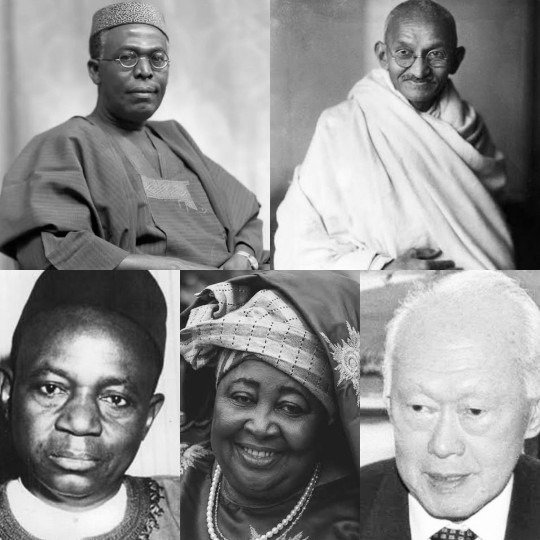
Awolowo did not inherit a ready-made political machine. He helped create one.
The Action Group was not merely an election platform. It was the political expression of a coherent worldview.
It had an ideology…It had programmes…It had structures. It had intellectual foundations…Its members could explain what they believed.
On university campuses and in communities, AG nurtured a generation of future leaders. Men, such as Bola Ige, Banji Akintoye, and Ebenezer Babatope, emerged from its ranks. Even its opponents knew precisely what it stood for.
Its policies transformed Western Nigeria because the party itself possessed clarity of purpose.
Awolowo did not buy a party. He built one.
He never wandered from platform to platform in search of convenience. He was forthright about his goals—the welfare, dignity, and prosperity of the majority.
The process of building the party helped shape the leader he became.
The same applies to Aminu Kano.
For decades, Aminu Kano identified with the talakawa—the ordinary people of Northern Nigeria.
His politics was not transactional. It was rooted in conviction.
He organised. He educated. He mobilised. He suffered persecution. He endured defeats. And after every setback, he returned to organise again.
One of the most remarkable stories from that era involved Hajia Sawaba Gambo. Recognising her potential, Aminu Kano encouraged and facilitated her political development.
Gambo travelled to Abeokuta to learn grassroots mobilisation under the legendary Funmilayo Ransome-Kuti, one of the most formidable political organisers in Nigerian history.
That is what movements do. They produce leaders. Aminu Kano did not simply lead the talakawa. The talakawa helped make Aminu Kano.
The relationship was reciprocal.
The movement produced the leader, and the leader strengthened the movement.
The same pattern appears throughout history.
Mahatma Gandhi did not simply emerge from nowhere.
Before Gandhi stood Gopal Krishna Gokhale, one of the foremost leaders of the Indian nationalist movement and founder of the Servants of India Society.
When Gandhi decided to return to India from South Africa, he sought out Gokhale. The older man had spent years thinking, organising, writing, and preparing the intellectual foundations of a future India.
Before handing over the baton, Gokhale offered Gandhi a piece of advice that would prove decisive: do not plunge immediately into politics. Travel across India. Observe. Listen. Learn. Understand the people before attempting to lead them.
Gandhi followed that advice faithfully. The future leader of India first became a student of India.
That apprenticeship mattered. So did the movement that produced him.
Likewise, Nelson Mandela emerged from a political tradition painstakingly built by generations of activists in the African National Congress (ANC).
The ANC existed long before Mandela became its most famous member. It shaped him just as he later shaped it.
In Britain, the Labour Party emerged from trade unions, workers’ associations, and decades of social agitation. It was not created for one election. It was built to represent a class, a cause, and a vision of society.
In Germany, Konrad Adenauer and his contemporaries built the Christian Democratic Union (CDU) after the devastation of war. Their objective was not merely electoral victory. It was national reconstruction.
In Poland, the Solidarity movement became a political force because workers, intellectuals, and activists spent years building an organisation capable of challenging authoritarian rule.
Even the great American parties evolved over generations through networks of activists, local leaders, community organisers, elected officials, and volunteers.
In Singapore, Lee Kuan Yew gathered a disciplined band of talented young men and women under the People’s Action Party and used that platform to transform a vulnerable city-state into one of the world’s most successful nations.
No serious democracy survives without strong political institutions.
And among those institutions, political parties occupy a central place.
Unfortunately, Nigeria appears to be moving in the opposite direction.
Political parties are increasingly becoming empty shells—mere popcorn that rises briefly under heat and disappears just as quickly.
Many have no discernible ideology.
No philosophical orientation.
No identifiable constituency.
No enduring programme.
The only constant is the ambition of those seeking office.
Parties emerge a few months before elections. Some disappear shortly thereafter. Others exist only on paper.
Many are little more than special-purpose vehicles created for the acquisition of power.
They resemble fast-food restaurants: quickly assembled, attractively packaged, immediately consumed, no nutrients, and soon forgotten.
But nations are not built through fast-food politics. Democracy requires slow cooking. It requires patient institution-building.
It requires years of recruitment, education, persuasion, and organisation.
It requires leaders willing to build structures they may never personally benefit from.
This is why party-building matters. The process itself shapes character.
A man who spends 20 years organising meetings, resolving disputes, raising funds, persuading sceptics, mentoring younger members, surviving setbacks, and holding together competing interests acquires invaluable leadership skills…
He learns how to manage people before he is asked to manage a state.
He learns how to build consensus before he is asked to govern a nation.
He learns humility because leadership was earned rather than purchased.
By contrast, those who merely acquire parties often bypass this apprenticeship.
They may know how to accumulate power.
They may know how to command resources.
They may know how to negotiate elite alliances.
But governing a people requires a deeper education.
Leadership is not merely about arriving.
It is about becoming.
And political parties, at their best, are institutions of becoming.
This is why the current trend should concern every democrat.
The issue is bigger than any politician.
Bigger than any election cycle.
Bigger than any party presently in existence.
The real question is this:
Who is building the leaders that Nigeria will need 20 years from now?
Who is gathering young men and women of conviction and teaching them the values of public service, sacrifice, discipline, and nation-building?
Who is building institutions that can outlive their founders?
Our politics today is crowded with aspirants but desperately short of apprentices.
We have too many people seeking office and too few preparing themselves for leadership.
The consequence is visible everywhere.
Parties have become election vehicles, rather than schools of citizenship.
Politics has become a marketplace rather than a movement.
Ambition has replaced ideology.
Personality has displaced principle.
Yet history teaches a different lesson.
Before there was Awolowo; there was the painstaking work of building the Action Group.
Before there was Aminu Kano; there was the long struggle to organise and awaken the talakawa.
Before there was Indira Gandhi; there was Jawaharlal Nehru. Before Nehru, there was Mahatma Gandhi. Before Gandhi, there was Gokhale.
And before Gokhale, there were others whose names have faded from public memory but whose labour made India’s freedom possible.
That is how nations are built.
Not by political merchants searching for the next available platform.
Not by coalitions assembled in haste and dissolved in disappointment. Not by parties purchased like real estate.
But by men and women willing to dedicate themselves to a cause greater than themselves.
This is the challenge before a new generation of Nigerians.
Perhaps, your task is not to win the next election.
Perhaps, your task is to build the movement that will produce the leaders who will win the right elections in the future.
Perhaps, your assignment is not to become president, governor, senator, or minister.
Perhaps, it is to create the institution that will produce better presidents, better governors, better senators, and better ministers long after you are gone.
The builders of enduring democracies often do not live to enjoy the full fruits of their labour.
Yet history remembers them because they understood a profound truth:
A nation rises not on the strength of its heroes alone, but on the strength of the institutions that produce them.
Strong democracies are built by strong parties.
Strong parties are built by patient organisers.
Patient organisers become leaders.
And leaders build nations.
The sequence matters.
When we reverse it—when leaders simply acquire parties rather than build them—we may still conduct elections, but we gradually destroy the foundations upon which democracy rests.
And when institutions die, democracies become little more than contests between powerful individuals.
That is not democracy.
It is merely politics without institutions.
And politics without institutions is often the first step toward national decline.
Nigeria deserves better.
The work of building that better future must begin now.