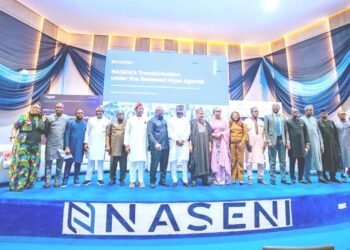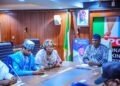
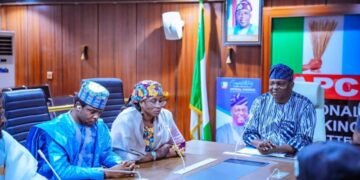










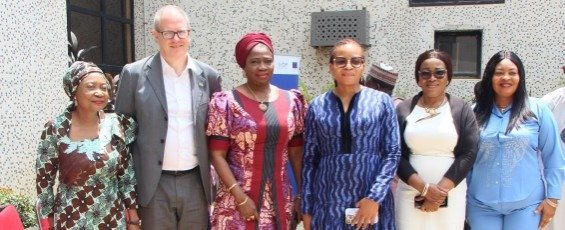
The Nigerians in Diaspora Commission (NiDCOM), on Monday, convened a high-level meeting of the Standing Committee on Diaspora Matters (SCDM) to review and strengthen the implementation of the National Diaspora Policy 2021.
The meeting was held in Abuja, in collaboration with the International Organisation for Migration (IOM), under the European Union funded-programme.
The strategic engagement brought together key stakeholders to assess progress, identify gaps, and develop actionable pathways for a more structured, inclusive, and results-driven diaspora engagement framework.
Speaking at the event, Chairman/CEO of NiDCOM, Hon Abike Dabiri-Erewa, stated the urgent need to move beyond rhetoric to measurable outcomes.
The NiDCOM boss, in a release by Violet Nwosu of the Media, Public Relations and Protocols Unit, described the Diaspora as a critical development partner whose contributions extended far beyond remittances to that of investment.
“The Diaspora is not just a community abroad, but a development partner, a force for progress and a force for development,” she stated.
“We keep talking about potential, it is time to harness that potential deliberately and strategically,” the NiDCOM chairman added.
She acknowledged funding constraints as a major challenge but stressed the importance of sustained institutional support, noting that “NiDCOM is here to stay,” having proven its relevance in coordinating Diaspora engagement across Nigeria.
Highlighting global examples, she noted that even small, coordinated Diaspora efforts can significantly impact national economies.
The NiDCOM boss added that Nigerians abroad possess “enormous resources in knowledge, innovation, and influence” that must be effectively harnessed.
She called for stronger legislative backing for Diaspora-focused initiatives, including diaspora voting, the establishment of a Diaspora Investment Trust Fund, and enhanced funding mechanisms.
According to her, “The Diaspora is very critical, and we need better funding and legal frameworks to fully unlock its potential.”
The NiDCOM boss also noted the importance of sub-national engagement, commending states like Lagos, Abia and Cross River for establishing Diaspora-focused structures, while urging others to follow suit.
She highlighted ongoing initiatives, including the Diaspora Data Portal, National Diaspora Day Celebrations (July 25), and the upcoming Nigeria Diaspora Economic Conference in Canada, as part of efforts to deepen structured Diaspora engagements.
Chief of Mission, International Organisation Migration (IOM) Nigeria, Ms Sharon Dimanche, represented by Ms. Ukamaka Anyanechi, underscored the importance of structured and coordinated Diaspora engagement.
She noted that the Nigerian Diaspora is one of the country’s most significant, yet under-leveraged development partners, highlighting contributions across healthcare, ICT, academia, entrepreneurship, and the creative economy.
She emphasised that, through the EU-funded Support to Migration Governance Programme, IOM was working closely with NiDCOM and other stakeholders to strengthen institutional frameworks, improve coordination mechanisms, and support the ongoing review of the National Diaspora Policy.
The Chief of Mission, IOM Nigeria added: “Harnessing these contributions in a structured and institutionally coordinated manner is essential for sustainable development outcomes.”
She also noted the importance of data systems, Diaspora mapping and global platforms such as i-Diaspora in enhancing engagement.
Representing the Ambassador EU Delegation to Nigeria and ECOWAS, Programme Officer Ron Hendrix, described the Nigerian Diaspora as a powerful driver of global connectivity and national development.
“The Nigerian Diaspora is a global force of progress—a bridge between Nigeria and other countries, a catalyst for innovation, and a cornerstone of socio-economic transformation,” he stated.
He stressed that, while remittances support households and local economies, Diaspora contributions extend to skills transfer, investments, and global advocacy that strengthen Nigeria’s international standing.
On behalf of the Senate Committee on Diaspora and Non-Governmental Organisations, Chairman Aniekan Bassey, represented by the Clerk, Abubakar Adam, reaffirmed the commitment of the National Assembly to Diaspora engagement.
“Nigeria’s Diaspora Community remains one of our greatest national assets,” he said, noting its contributions through remittances, investments, knowledge transfer, and humanitarian support.
He stated the importance of protecting Nigerians abroad and strengthening institutional coordination.
“This meeting provides a valuable platform to develop actionable frameworks that will harness the immense potential of Nigerians in the Diaspora,” he added.
He also called for urgent attention to the welfare of Nigerians in South Africa and other regions facing challenges, stressing the need to prioritise their dignity, safety, and inclusion.
Chairman, House Committee on Diaspora, Hon Tochukwu Okere, represented by Dr Ademola Adewale Taofeek, emphasised the need for measurable outcomes in migration governance.
“Migration, when well governed, is a catalyst for development. When poorly managed, it becomes a source of vulnerability,” he stated.
He stated that Nigeria’s Diaspora remittances exceed Foreign Direct Investment (FDI), but stressed that the country must go beyond financial inflows to harness intellectual capital and global networks.
Also contributing, Catherine Imaji Udida, Director of Migrants Affairs, National Commission for Refugees, Migrants and Internally Displaced Persons, emphasised the importance of inclusive policies that reflect the realities of all Nigerians abroad.
She noted the need to review migration definitions to accommodate diverse categories of diaspora populations, including those in short-term or irregular situations, while maintaining a commitment to safe and regular migration.
She also called for more consistent coordination meetings among thematic groups, stressing that regular engagement is essential to improving migration governance and policy outcomes.
The meeting also featured presentations from State Diaspora Focal Point Officers (SDFPOs), highlighting sub-national efforts in diaspora engagement.
They included Hon Annie N. Onu of Abia State, Dr Jermaine Sanwo-Olu of Lagos State, and Dr Margaret U. Indeed of Cross River State.
The Meeting of the Standing Committee on Diaspora Matters also had interventions from the civil societies and non-governmental organisations.