















The automotive industry has been described as an untapped goldmine and a catalyst for industrial development, but under-reported by the media in Nigeria.
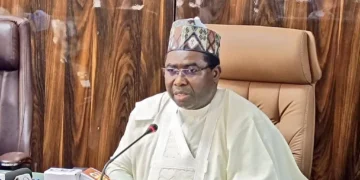
Mr. Tunde Onakoya, Chief Executive Officer of AutoClinicNG, made the disclosure during a specialised training in automotive reporting for practicing journalists in Oyo State.
The training programme, organised by the Nigeria Union of Journalists (NUJ), under the leadership of Comrade Akeem Abas, was held at the Press Centre, Iyaganku, Ibadan, on Wednesday.

Participants drawn from various chapels across the Oyo NUJ Council were exposed to practical knowledge and hands-on sessions aimed at enhancing their understanding of the automotive sector.
The programme was designed to broaden the capacity of journalists and deepen their reporting skills in the specialised beat on the automotive industry.
Onakoya said the logistics and transport sector of the automotive industry alone affect all Nigerians at every facet of the national life,
He lamented that it was a great disservice to the country that such a sector, which has a great potential to transform the national economy, has been under-reported or not reported at all.
Onakoya, described automotive journalism as a critical tool for national development, rather than being seen as just a reporting beat.
“Automotive reporting should not be seen merely as a beat, but as a critical lens for driving national development,” he said.
He emphasised that journalists must approach the sector with depth and a strong sense of responsibility, given its role in economic growth, innovation and public safety.
Onakoya decried what he described as widespread under-reporting in the automotive sector, urging media practitioners to adopt more data-driven approaches in their reportage.
He acknowledged challenges associated with data availability in Nigeria, but added that journalists could rely on reports from reliable international organisations and the National Bureau of Statistics (NBS) to strengthen their stories.
He also encouraged the use of grassroots reporting techniques, including vox pops and engagement with stakeholders such as mechanics, spare parts dealers and regulatory bodies.
According to him, such methods would help bridge data gaps and ensure that journalists amplify the voices of the people while producing credible and balanced reports.
Onakoya further highlighted challenges in the automotive sector, including the proliferation of fake spare parts and poor maintenance culture, attributing the trend to economic realities and weak regulation.
He said the automotive industry has a very strong value-chain and the capacity to engender national growth and industrial development.
Citing the example of South Africa, which is the largest automotive industry in Africa, he noted that rather than concentrating on vehicle assembly plants, the country should concentrate on local production of spare parts and other accessories.
According to him, Nigeria lacked the requisites to support automotive manufacturing factories in the country, hence it would be a fruitless effort inviting vehicle manufacturers to have their assembly plants in the country.
Onakoya said the sector is impactful on the lives and livelihood of Nigerians but it has witnessed stunted growth due to some factors, including policy inconsistency, foreign exchange scarcity, and unabated used vehicle imports which have completely choked local production.
He said professional journalists have been relegated to the background in reporting the automotive industry, noting that social media influencers and tech people have taken over the media space, including reporting the economy and politics
“Nigeria has a big spare parts market, worth between $5 billion and $6 billion, serving the entire West African sub-region. But who is reporting this?
“What is the solution? Journalists needs to be more active. We should be actively involved in shaping opinions on what is going on in the automotive industry.
“We need to re-optimise the eco system. Rather than, dissipating energy on inviting foreign vehicle manufacturers to have their assembly plants here in Nigeria, we should make the raw materials for vehicle manufacturing more accessible.
“Various data have shown that Nigeria, especially the automotive sector, is not manufacture-driven. Our automotive industry is driven by maintenance, serving and adaptation, not by manufacturing.
“We should concentrate more on manufacturing glass, brake pads and other accessories that would make the manufacturing of vehicles cheaper and affordable,” he said.
Earlier in his welcome address, Chairman, NUJ Oyo State Council, Akeem Abas, represented by the vice chairman, Abiodun Atilola, restated the union’s commitment to capacity-building.
Abas described continuous training as central to improving journalistic standards in the state and pledged sustained efforts to equip members with relevant skills.
He noted that the impressive turnout at the latest training session indicated that his administration has, in a few months, surpassed the benchmark of training, at least, 300 journalists within three years.
The training on automotive reporting was part of ongoing initiatives by the NUJ to strengthen professional competence and enhance the quality of reportage in Oyo State, particularly in specialised sectors.