






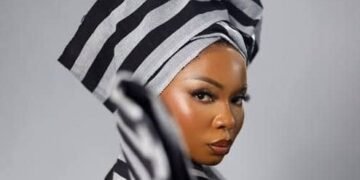



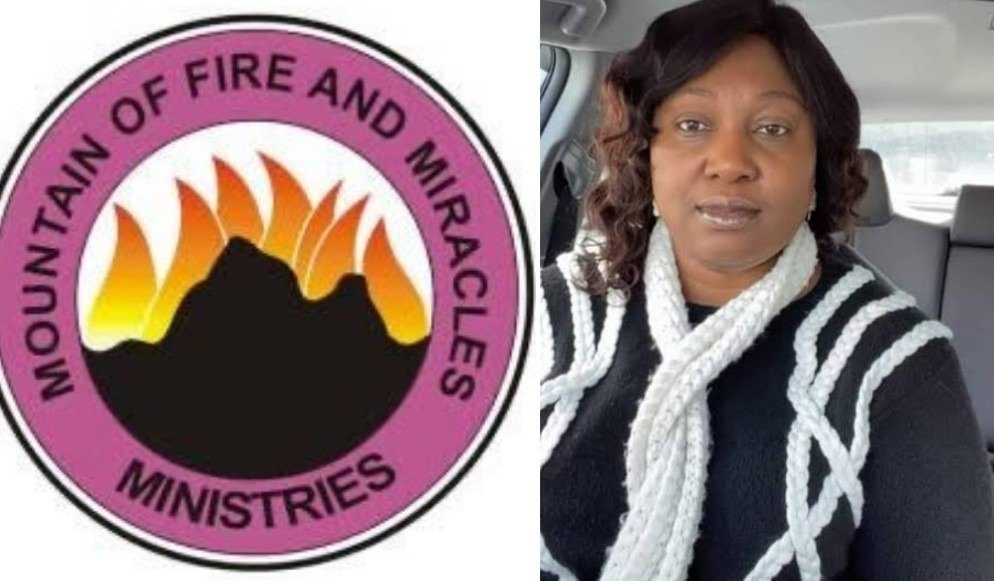
An outspoken individual, Olufunke Ashekun is a US-based blogger and an estranged member of the Mountain of Fire and Miracles Ministry (MFM), one of the fastest-growing pentecostal churches in contemporary Nigeria and beyond, with Dr Daniel Olukoya as its General Overseer.
Ever since she fell out with the MFM and its leadership, Ashekun has imposed it upon herself to be the biggest and unrepentant critic and detractor of the church and its leader, Olukoya.
She Walks Into A Landmine With Her Eyes Wide Open
Bloggers are unlike the trained traditional journalists who can easily manoeuvre their ways out of hot spots by knowing the avoidable in the course of discharging their duties. Yet, most bloggers do function as journalists- reporting, interpreting events, and shaping public perception.
Defamation is a silently dangerous landmine with serious legal implications for bloggers and social media commentators. This is particularly when a false statement is presented as fact and it turns out to harm a person’s reputation.
But either deliberately or oblivious to the legal implications inherent in freedom of speech, Olufunke Ashekun has, by her own making, walked into landmine, a deep dungeon from which she may find difficult to extricate herself soon.
Olufunke And Her Journey To Infamy
Olufunke Ashekun, until a little over one week ago, seems unstoppable in her self-imposed task to pull down the House of MFM, along with its leadership, personified by Dr Olukoya. She has been going about painting the church as devilish and portraying the GO as the devil-reincarnate and a pervert who has been manipulating and molesting female members.
However, and in a twist of fate, Olufunke was brought down from her self-deluding high pedestals as a Baltimore, Maryland US County Circuit Court, in a ruling on 13 March, 2026, ordered her to pay a whopping sum of $300,000 in compensatory damages to MFM USA, Inc and the GO.
A day before the ruling by the jury, Olufunke reportedly slumped, having realised that the case was overwhelmingly against her due to her weak, and inadmissible evidence and witnesses. She was reportedly subsequently taken away from the court by an emergency 911 Ambulance.
Her husband, in an incident likened to the biblical story of Ananiahs and Saphirah, also suffered the same fate the following day (the judgment day) when he came to submit a medical report on behalf of his wife but which did not stop the jury from proceeding with their verdict.
MFM successfully prosecuted its claims of defamation against Olufunke Ashekun. In granting the judgment and damages, the court recognised the prolonged intense and malicious campaign conducted by Olufunke against Dr Olukoya and MFM who were concerned by the reach and extent of her destructive rhetoric.
Olufunke: A Descent Into Vainglorious, Abyss
For some reasons best known to the Asekuns, Olufunke has been boastful, telling whoever that cared to listen that she would bring Olukoya and MFM down. To her, victory at the US court was unassailable. Alas, this was not to be; her dream of victory was shattered as God showed up MFM in faraway Baltimore, US. It brought to an end a protracted legal battle between the cantankerous Funke Ashekun and MFM.
The dust raised by the monumental judgment is yet to settle down. About 10 days later, the ruling remains the subject of discourse in the polity. Both the admirers of the church and those on the other side of the divide are talking about the subject-matter; the defamation and the eventual judgment.
Video: Olufunke And A Shadowy Past That Refused To Be Buried
While the judgment by the Baltimore, US court still remains a subject of discussion, a shadowy past of the loquacious Olufunke has again come alive, bearing a testimony to the dark side of the infamous blogger and her true character. An old video suddenly resurfaced that may hunt Olufunke to her grave. The video may further energise lovers of MFM and followers of Dr Olukoya to continue with their humiliation of the now disgraced and fallen blogger.
In a clear mockery of the invincibility and power of God, a boisterous Olufunke was seen in the old video declaring that she would emerge victorious in the now rested court case because, according to her, the legal battle against MFM was not hers, but that of God.
“God will disgrace all of you!” she boasted in the video. “The way God will disgrace all of you in that court, you will wish you never sued me, by the power of the most high God,” she was heard saying in the video.
In a contraption of faith and an apparent display of over-confidence, Olufunke continued with her outburst in the video: “This is me o, Funke, I am nothing. But, you see, I serve a big God, a great God. That God will show you! He will disgrace you in court! He will defeat you because this is the Lord’s battle!”
Indeed, the old video that resurfaced after the US court judgment has, again, revived the public interest. It has brought up the issue of human confidence, vis-a-vis faith and trust in God’s ability to divinely intervene in human activities.
Undoubtedly, Olufunke had always couched her confidence in her stance against MFM and its leadership and her emerging victorious in the legal issue therein in strong spirituality. Her confidence then and unwavering certainty, often made people to be curious, eagerly anticipating what would be the outcome of the court case.
However, for the discerning members of the public, and most especially MFM members and supporters of Olukoya, the veil is finally off; the truth has come into the open namely, that God cannot be mocked.
The biggest and only loser in the whole issue is the loud-mouth Olufunke. She was not only disgraced; she would be made to pay a whopping $300,000 as compensatory damages for defamation and character assassination.
What is more?
Blogger Olufunke Ashekun has put a question mark on her claim to fighting a God-backed, just cause. Many thanks to the court judgment, her bare-faced claim that God sent her on a mission to battle against MFM and Olukoya, as she espoused in the old video, has turned out to be a farce.
The old video and the eventual court pronouncement clearly established a fact, to wit, that God never sent her on the malicious mission against MFM and Olukoya. The video also shredded her claim to having a call greater than some of the known men of God in Nigeria, and probably beyond.
Above all, the content of the old video and the subsequent court judgment not only absolved MFM and Olukoya of all alleged wrongdoings, but also strongly reaffirmed the evergreen biblical saying that if the mission is truly that of God, it shall stand firmly against all tribulations and trials. This fact will, no doubt, rekindle the faith and trust of MFM members in God, the church and its leadership.
Olufunke Ashekun: Lesson For Other Bloggers
For a fact, the conversations, both in Nigeria and the Diaspora, over the face-off between Olufunke and MFM and its eventual outcome will continue to dominate the public space for quite a while. This is because the lessons, aided by the old video, are enormous and fundamental, particularly for bloggers in the mould of Olufunke and her co-traveler, Maureen Badejo, another popular blogger who is presently on the wrong side of the law for an offence similar to that committed by Mrs Ashekun.
Without any iota of doubt, bloggers and social media influencers all over the world, hold significant power in the modern digital landscape, acting as influential intermediaries between brands and consumers, capable of shaping public opinion, driving social change, and creating lucrative, flexible careers.
However, this power is balanced by notable weaknesses, including the spread of misinformation, intense competition, algorithmic dependency, and potential negative impacts on mental health and privacy.
According to an AI overview, the social media, the instrument of trade by bloggers, holds immense power to transform communication, business, and social dynamics, while also harbouring significant weaknesses that can negatively impact individuals and society. With approximately 5.24 billion users worldwide as of January 2025, its influence is unparalleled, enabling instant global connections and rapid information sharing.
Advantage Of Social Media
What enables the social media to be that powerful? It is a fact that it generates instant communication and global connectivity. Social media transcends geographical barriers, allowing real-time interaction with friends, family, and professionals globally.
Secondly, social media, as a primary source of information sharing and awareness, rapidly disseminates information and increases awareness of social, political, and environmental issues.
As a source of business growth and digital marketing, social media provides a cost-effective platform for targeted advertising, enabling businesses to engage directly with consumers.
For personal branding and networking, the social media offers easy opportunities for professionals and creatives to showcase their work, and build a personal brand.
Social media is unarguably a platform for social change and community building, creating platforms to mobilise communities for social justice, organise activism, and foster support groups for those with shared interests.
Disadvantages Of Social Media
As good as social media is, it is latently laced with some weaknesses that are fast becoming the Achilles Heels of many bloggers. For many bloggers, social media is a window for the spread of unverified fake news, propaganda, and misinformation, causing confusion, public distrust, and potentially dangerous consequences.
Social media accounts for the rising cases of cyberbullying and harassment and trolling. Having disrupted the traditional media, social media has led to the promotion of “tyranny of idiots”, with some bloggers spreading false opinions. While it allows for marginalised voices to be heard, social media can create echo chambers reinforcing extreme, biased viewpoints.
With all the attendant weaknesses of the social media, Anike Oludolapo Olaniyi, on 30 January, 2026, wrote on Social Media And Freedom Of Opinion: Where It Starts And Ends, in the 30 January, 2026 edition of her weekly column, “Kaleidoscope” in Newscoven.com.
She opined: “Social media has done what village squares, newspapers, and roadside debates used to do, only faster, louder, and without closing time. Everyone now has a megaphone, a camera, and an audience. From X threads to Facebook posts, Instagram captions to blogs, opinions travel at the speed of WiFi.”
The creative writer and brilliant legal practitioner further wrote, people say: “I have a right to my opinion.” While not denying the truth of that assertion, she immediately added: “But rights and opinions come with prices called boundaries, consequences, and responsibilities, especially for bloggers and content creators who monetise influence.
“Defamation remains one of the most common legal risks for bloggers and social media commentators. It occurs when a false statement is presented as fact and harms a person’s reputation…
“Freedom of opinion is not the freedom to say anything, anyhow, anywhere, without repercussions. That is not liberty; that is anarchy with a data plan.”
Citing relevant legal provisions, Olaniyi stated that, in Nigeria, as well as in most democratic societies, freedom of expression is constitutionally protected. Such similar protections, she wrote, exist under international instruments like the Universal Declaration of Human Rights and the African Charter on Human and Peoples’ Rights.
She was, however, quick to add a caveat- that the rights are not absolute, noting that “the same laws that grant expression also recognise limitations in the interest of public order, morality, national security, and the rights of others. In simple terms: your right to speak ends where another person’s right to dignity, safety, and reputation begins.”
The fecund legal mind also stated: “The moment you post, blog, livestream, or tweet, you are no longer merely ‘expressing an opinion’; you are publishing content. And publication attracts legal scrutiny.”
Indeed, the Internet may have democratised speech, but it has not suspended accountability. Bloggers and social media users are not speaking into a void; they are speaking into a society governed by laws, ethics, and real human consequences, Olaniyi averred.
According to her, you may have the right to speak, but you also carry the burden of what your words do. In the digital age, freedom of opinion is not about how loud you can shout. It is about how wisely you use your voice.
Bloggers should take a cue from Olufunke Ashekun, a blogger who walked into a landmine with her eyes wide open or learn from Maureen Badejo, another blogger who, exploiting her access to social media, has apparently embarked on a journey from the digital pulpit to the prison.