









From Prime Minister Abubakar Tafawa Balewa in the 1960s, through the period of military interregnum, down to the current democratic dispensation under the Bola Tinubu Presidency, what changed the perception of Nigerians about leadership?
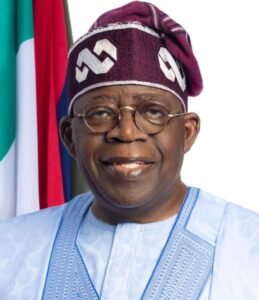
This question was ignited by a piece written by a friend, a publisher of note and a successful businessman, Mogaji Wole Arisekola. In the piece, //newscoven.com/nigerian-leader-in-the-eyes-of-the-citizens/, Arisekola rationalised and condemned (and probably justifiably so) the reaction of Nigerians to the stumble of Mr President during his recent visit to Turkey.
In The Beginning: Nigerians And Leadership
Going down the memory lane, we are repleted with facts of history that Nigerians used to idolised their successive leaders, not only necessarily because the leaders were occupants of public offices, but because of the exemplary leadership traits inherently in them then.
We have it on record of several instances when Nigerians will go to any length to accord their leaders the respect and honour they truly deserved. In that not too distant past, several Nigerians will line up the streets to publicly welcome their leaders, even under the scorching sun.
What then changed the perception of Nigerians about Nigeria’s contemporary leadership?
I was a Primary 2 pupil in 1976 when we were told that Major-General David Jemibewon, then military governor of the old Oyo State, will be visiting my school in Ipetu-Ijesa (now in Osun State).
The pupils were enthusiastically happy staying under the biting sun to receive their governor. They were not disappointed when it was only a representative that showed up eventually. Rather, the pupils were delighted to be chosen, among numerous others, to even receive the representative.
What has changed?
In years past, many school children will return home unhappy, if they are not selected to participate in the Independence Day celebration, in the form of march pasts.
What has changed?
From my personal experience, one of my happiest moments as a Nigerian was the rare opportunity I had, on two different occasions, to touch and hold the feet of the greatest Nigerian ever to live (I don’t owe anybody any apology on this assertion), the Avatar, the Philosopher-King, Chief Obafemi Awolowo, during his presidential campaigns in 1979 and 1983 in Ipetu-Ijesa.
Living in the Palace, I was privileged and placed at a vantage to get to the Great Awo…to get close to the man…to feel his aura and feel what clearly differentiated his from other leaders of his generation. The memory lingers on…and strongly…it explains my personal fulfillment working with and in one of his enduring legacies, the Nigerian Tribune titles.
What I felt during the two milestone events (even when I don’t understand what he was talking about in the 1979 campaigns) was like I had a face-to-face interaction with our Lord Jesus Christ (apologies to adherents of the other fate- I’m not a crazy Christian, anyways).
What has changed?
As recent as 1991, several Nigerians, young and old (and I was part of them) voluntarily lined up at the ever-busy overhead bridge linking Iwo Road/Ojoo Link Road towards Iyana Church/Iwo Road to receive the maradonic, self-styled Evil Genius, gap-toothed Minna-born Military President Ibrahim Badamasi Babangida on his way back from the commissioning of the now moribund ARCEMED (formerly LEYLAND) at the Iwofun-Olodo area of Ibadan, Oyo State.
We happily waved at Babangida as he rolled down the windows of his armoured car to acknowledge his presence. Unmindful of his known atrocities (that is a topic for another day), the then Head of State did this without any intimidating security apparatus, and to the delight of the people who were there on the road, happily waving at him and his convoy.
What has changed?
This piece is not about the person of President Tinubu; it is a truism that the descent into an era when Nigerians treat the leadership with disdain predated the present administration.
Rather, it is about leadership, as presently represented by the occupant of the highest political office in the land; it is about the changing narratives about the perception of Nigerians about leadership and those elected (or appointed) to lead them; it is about understanding what may have happened to made Nigerians to turn into cold silence and negativity whenever anything bad and untoward happens to those in power.
Descent To Lack Of Trust In The Nigerian Leadership
Like I noted earlier, this piece is not about the incumbent President Tinubu. Rather, it is an holistic glimpse into what has changed in the relationship between leadership in Nigeria, the leaders and the people.
Truth must be told: The steady erosion of trust between Nigerians and their leadership is not sudden; it is the outcome of decades of unmet promises, policy inconsistencies, and governance failures.
Trust, once broken repeatedly, becomes difficult to restore, and Nigeria’s political history offers many reasons for citizens’ growing skepticism about the leadership of the country.
Leadership And Persistent Corruption, Lack Of Accountability
One major cause is persistent corruption and the weak accountability of public office holders. Despite abundant natural and human resources, public wealth has often been diverted for private gain, while basic infrastructure, education, healthcare, and security remain inadequate.
When leaders campaign on reform but govern with impunity, citizens naturally lose faith in both institutions and intentions, and the leadership will come out worsted.
Disconnect Between Leadership And Reality
Another factor is the disconnect between leadership rhetoric and lived reality. Successive governments have announced ambitious economic and social programmes, yet unemployment, inflation, and poverty continue to rise for many Nigerians. This gap between official narratives and everyday hardship deepens public cynicism and reinforces the belief that leadership is detached from the people’s struggles.
Unsatisfactory Electoral Process, Political Culture
Electoral processes and political culture have also contributed to this distrust. Allegations of vote manipulation, elite dominance, and exclusionary politics weaken the perception that leaders and leadership truly emerge from the people’s will. When citizens feel their voices do not count, participation declines and suspicion grows.
Leadership And Alienation From The People
Most of these power-drunk individuals, have, over the years, alienated themselves from the realities on ground. They have insulated themselves from the pains and anguishes the common man on the street are going through, on a daily basis.
For all intents and purposes, what an average Nigerian still seek for are the three (3) basic necessities of life- food, shelter and clothing- in era when well-developed countries have gone far beyond the stage of growth to the level of exotic living. Here in Nigeria, leadership is all about self and selfish-interests, to the detriment of the people.
Leadership And Nigerians Living In The State Of Nature
The basic truth is that more than 75 per cent of Nigerians are still living in the era of savagery…the State of Nature, where life and living is Solitary, Brutish, Nasty, Poor and Short. Our leaders are going about, displaying undignifying ostentatious living, going about beating the drum of bamu bamu ni mo yo…
Such people living in that damnable State of Nature can NEVER and will NEVER be sympathetic to a leadership, a ruling elite that has elevated itself from the realm of public service to self-aggrandisement, detrimental to what they were elected to do, namely, promoting the interest, security and welfare of the people who elected them into public offices.
Gone was the era when leadership was seen as a call to service- when you must, as the leader, be a slave to your people. What we have now is a leadership synonymous with personal life-long dream attained, and to the detriment of a people you vaingloriously promised to serve.
Restoring Trust Of Nigerians In Leadership
Nigerians’ descent into mistrust in the leadership is a reflection of a long pattern of broken social contracts. You cannot continuously be beating a child viciously and tell him/her not to cry.
Restoring confidence and trust will require transparent governance, consistent policies, credible elections, and leaders who demonstrate integrity not only in words, but in action. Until then, mistrust will remain a defining feature of Nigeria’s leadership landscape.
•Falade, an Ibadan, Oyo State-based journalist, is the publisher of Newscoven.com