







Newscoven
  • Home
  • News
    • All
    • Analysis
    • Feature
    • Interviews
    • Politics
    • Science
    • World
    EXPOSED: The Many Lies Of Lawyer Turned Blogger, Boluwatife, Against MFM

    EXPOSED: The Many Lies Of Lawyer-Turned-Blogger, Boluwatife, Against MFM

    Fayose Should Channel His Energy, Intellect To Ekiti Development -Igbo Association •Declares Support For Makinde

    Igbo Residents In Ibadan Association: Fayose Should Channel His Energy, Intellect To Ekiti Development •Declares Support For Makinde

    Ogun 2027: IPEF Backs Okubadejo For Joint Ticket With Yayi

    Ogun 2027: IPEF Backs Okubadejo For Joint Ticket With Yayi

    PDP To APC: You Won’t Succeed With Your Plan To Destabilise Oyo State •Urges Olubadan To Live Above Politics

    PDP To APC: You Won’t Succeed With Your Plan To Destabilise Oyo State •Urges Olubadan To Live Above Politics

    APC National Chairman, National Secretary To Feature In Nationwide Live Media Chat Tonight

    APC National Chairman, National Secretary To Feature In Nationwide Live Media Chat Tonight

    Tinubu Remaking Kano As Northern Nigeria, West Africa's Next Commercial Gateway -Yilwatda

    Tinubu Remaking Kano As Northern Nigeria, West Africa’s Next Commercial Gateway -Yilwatda

    Osun Election: Adeleke Urges Oyetola, Oyebamiji To Accept People's Will

    Osun Election: Adeleke Urges Oyetola, Oyebamiji To Accept People’s Will

  • Entertainment
    Sanusi, Atlético Berja Board, Berja Mayor, Seal Strategic Partnership

    Sanusi, Atlético Berja Board, Berja Mayor, Seal Strategic Partnership

    From Church Keys Too Global Stage, Pheelz Takes Over The Spotlight On CNN African Voices

    From Church Keys To Global Stage, Pheelz Takes Over The Spotlight On CNN African Voices

    Fela Lives: Tinubu On Grammy Lifetime Achievement Award

    Fela Lives: Tinubu On Grammy Lifetime Achievement Award

    Ilaji Assumes Ownership Of Interlink •Takes Over Atlético Berja

    Ilaji Assumes Ownership Of Interlink •Takes Over Atlético Berja

    Oyo Govt Gives Illegal Occupants Of Obafemi Awolowo Stadium 14-Day Quit Notice

    Oyo Govt Gives Illegal Occupants Of Obafemi Awolowo Stadium 14-Day Quit Notice

    Jeffrey Daniel, Legendary Pop Music Icon, Urges Africans In Diaspora To Return Home

    Jeffrey Daniel, Legendary Pop Music Icon, Urges Africans In Diaspora To Return Home

    9th AFRIMA: Policy Shift, Technology, Collaboration Identified At AMBS As Key To Deepening Music Growth

    9th AFRIMA: Policy Shift, Technology, Collaboration Identified At AMBS As Key To Deepening Music Growth

  • About Us
  • Contact Us
  • More
    • Advertisement
    • Disclaimer
    • Privacy Policy
    • Terms of Use
Monday, April 20, 2026
No Result
View All Result
  • Home
  • News
    • All
    • Analysis
    • Feature
    • Interviews
    • Politics
    • Science
    • World
    EXPOSED: The Many Lies Of Lawyer Turned Blogger, Boluwatife, Against MFM

    EXPOSED: The Many Lies Of Lawyer-Turned-Blogger, Boluwatife, Against MFM

    Fayose Should Channel His Energy, Intellect To Ekiti Development -Igbo Association •Declares Support For Makinde

    Igbo Residents In Ibadan Association: Fayose Should Channel His Energy, Intellect To Ekiti Development •Declares Support For Makinde

    Ogun 2027: IPEF Backs Okubadejo For Joint Ticket With Yayi

    Ogun 2027: IPEF Backs Okubadejo For Joint Ticket With Yayi

    PDP To APC: You Won’t Succeed With Your Plan To Destabilise Oyo State •Urges Olubadan To Live Above Politics

    PDP To APC: You Won’t Succeed With Your Plan To Destabilise Oyo State •Urges Olubadan To Live Above Politics

    APC National Chairman, National Secretary To Feature In Nationwide Live Media Chat Tonight

    APC National Chairman, National Secretary To Feature In Nationwide Live Media Chat Tonight

    Tinubu Remaking Kano As Northern Nigeria, West Africa's Next Commercial Gateway -Yilwatda

    Tinubu Remaking Kano As Northern Nigeria, West Africa’s Next Commercial Gateway -Yilwatda

    Osun Election: Adeleke Urges Oyetola, Oyebamiji To Accept People's Will

    Osun Election: Adeleke Urges Oyetola, Oyebamiji To Accept People’s Will

  • Entertainment
    Sanusi, Atlético Berja Board, Berja Mayor, Seal Strategic Partnership

    Sanusi, Atlético Berja Board, Berja Mayor, Seal Strategic Partnership

    From Church Keys Too Global Stage, Pheelz Takes Over The Spotlight On CNN African Voices

    From Church Keys To Global Stage, Pheelz Takes Over The Spotlight On CNN African Voices

    Fela Lives: Tinubu On Grammy Lifetime Achievement Award

    Fela Lives: Tinubu On Grammy Lifetime Achievement Award

    Ilaji Assumes Ownership Of Interlink •Takes Over Atlético Berja

    Ilaji Assumes Ownership Of Interlink •Takes Over Atlético Berja

    Oyo Govt Gives Illegal Occupants Of Obafemi Awolowo Stadium 14-Day Quit Notice

    Oyo Govt Gives Illegal Occupants Of Obafemi Awolowo Stadium 14-Day Quit Notice

    Jeffrey Daniel, Legendary Pop Music Icon, Urges Africans In Diaspora To Return Home

    Jeffrey Daniel, Legendary Pop Music Icon, Urges Africans In Diaspora To Return Home

    9th AFRIMA: Policy Shift, Technology, Collaboration Identified At AMBS As Key To Deepening Music Growth

    9th AFRIMA: Policy Shift, Technology, Collaboration Identified At AMBS As Key To Deepening Music Growth

  • About Us
  • Contact Us
  • More
    • Advertisement
    • Disclaimer
    • Privacy Policy
    • Terms of Use
No Result
View All Result
Newscoven
No Result
View All Result
Home News

How Popular Ibadan Pastor Prophesied My Electoral Victory in 2018-Makinde 

by Newscoven
August 8, 2021
in News
Reading Time: 4 mins read
22 0
A A
0
How Popular Ibadan Pastor Prophesied My Electoral Victory in 2018-Makinde 
35
SHARES
441
VIEWS
Share on WhatsappShare on FacebookShare on Twitter

How Popular Ibadan Pastor Prophesied My Electoral Victory in 2018-Makinde

Oyo State governor, Engineer ‘Seyi Makinde, has disclosed that Reverend Peter Folorunso Owa of the Christ Revival Miracle Church, Molete Ibadan prayed for him in 2018 and prophesied his victory in the 2019 elections.

He made the disclosure while speaking at the Thanksgiving Service of the church, adding that he was in the church three weeks before the election where the cleric prayed for him and prophesied that he would emerge victorious in the election.
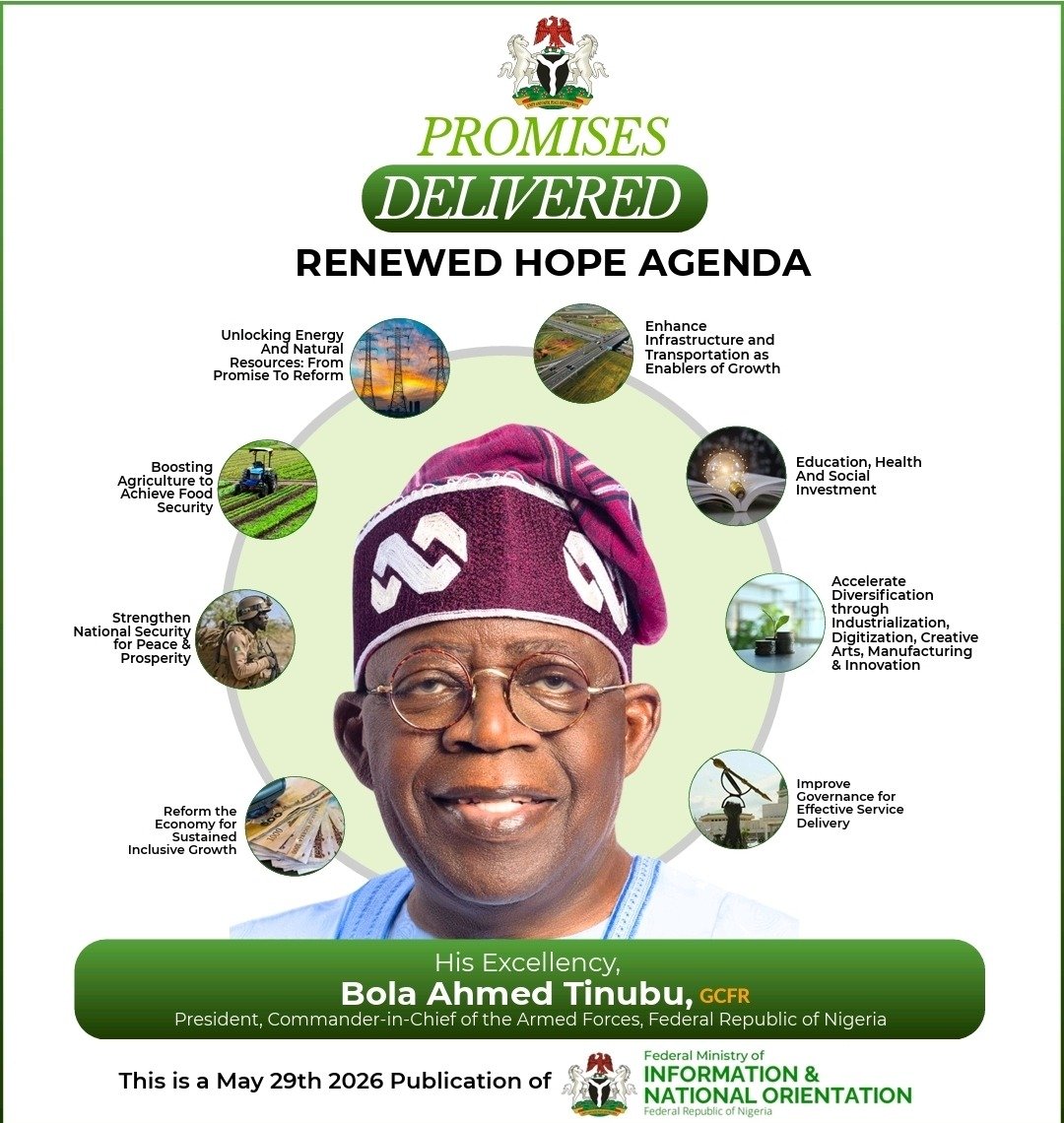
Governor Makinde also seized the opportunity to call on professionals and religious leaders to participate in politics to enhance good governance and promote sanity in the political system.

RelatedPosts

EXPOSED: The Many Lies Of Lawyer-Turned-Blogger, Boluwatife, Against MFM

Igbo Residents In Ibadan Association: Fayose Should Channel His Energy, Intellect To Ekiti Development •Declares Support For Makinde

Ogun 2027: IPEF Backs Okubadejo For Joint Ticket With Yayi

The governor said the first time he worshipped in the church was on 20 September, 2018, adding, however, that he was back in the church three weeks before the election and that the Reverend Owa prayed with him in the auditorium.

Makinde, in a statement by his Chief Press Secretary, Mr. Taiwo Adisa, said: “We knelt here and prayed and God answered the prayers.

“After I worshipped here, you prayed for me and prophesied that I was going to win the election and I won it, to the glory of God.”

He stated that, even though he has been unable to return to the church two years after his victory, the man of God has never criticised him for failing to do so.

“It is two years but I have not come here to worship, though it has always been on my to-do list to come back and appreciate. For those two years, you did not go on air to announce that, despite contributing to my electoral victory through prayers, I failed to come back and thank the church.

“But some persons have been saying they were the ones who worked for the victory. Some even said I used and dumped them,” the governor added.

Governor Makinde thanked Reverend Owa and people of the state for their continuous support and prayers for his administration in the last two years.

“So, I thank you all, the pastor and the whole church. I am thanking you for the fact that, even though I have not come to this church for two years, you have continued to support my administration with prayers,” he added.

Makinde also declared that only the participation of men and women of faith can give the country a perfect and complete nation.

“Apart from thanksgiving, I want to say one or two things. When the special visitor, Pastor Moji Alawiye, was speaking, she was concerned about those who will build our nation.

“The secret is, you, children of God, have to participate in politics and governance. Yes, it is something very difficult because the political terrain is polluted.

“We don’t want to be yoked with unbelievers but there is no how we can build our nation without dealing with unbelievers. And there is an example of this in the Bible.

“Look at what the son of Eli did in the temple but Samuel was in the same place and God brought him out because of the assignment He wanted him to carry out.

“The same thing with Joseph: He had dreamt and seen that all his elder brothers bowed before him but he was sold as a slave and that journey made him to become the Prime Minister in Egypt.

“So, don’t entertain fears in your mind. We must go out there, participate in politics, and Nigeria will be great again,” the governor declared.

Governor Makinde acknowledged that the road leading to the church was very bad and pledged to instruct the authorities of Ibadan South-East Local Government Area to fix it for easy access of the users.

“When I came in to worship here, I observed that the road leading to this church was terribly bad and it is still not good.

“This church is under the Ibadan South-East Local Government Area and I have brought the chairman of the local council Pastor Alawode, to come see for himself as well,” he said.

Speaking on politics and elections in 2023, the governor said that he would only wish that God’s will be done as he prayed in 2019.

“One of the pastors, while praying, talked about the first and second tenure. Well, I came out in 2019 to tell the people that I wanted to become the governor but I prayed to God that only His will should be done.

“And now, I don’t even know if it is the will of God for me to even seek or push out for second tenure. The only prayer I want you to be praying is that God’s will alone should be done in my life.

“On a final note, let us participate in politics and governance as children of God. It is through our participation that this nation will get what it deserves,” Makinde said.

Earlier, in his sermon, the founder and president of Christ Revival Miracle Church, Reverend P. F. Owa, commended the Governor Makinde-led administration for the tremendous achievements it has recorded in the last two years.

He said the governor is doing a new thing in Oyo State, adding that Nigeria needs prayers and that there is no problem or challenge that cannot be solved with prayers.

The cleric said: “We are indeed proud of the wisdom of God that guides your decision-making in governance that has brought tremendous achievement and joy to Oyo State.

“What our nation needs at this period is prayers. With prayer and living righteous life, God will hear us and salvage this nation from the various problems affecting her.”

author avatar
Newscoven
SendShare14Tweet9

Related Posts

EXPOSED: The Many Lies Of Lawyer Turned Blogger, Boluwatife, Against MFM

EXPOSED: The Many Lies Of Lawyer-Turned-Blogger, Boluwatife, Against MFM

by Newscoven
April 20, 2026
0
0

"Lawyer-turned-blogger Boluwatife Akinbo Maybee, the daughter of Akinbo Olatunji Kazeem, has chosen to make herself an enemy of Dr. DK Olukoya...

Fayose Should Channel His Energy, Intellect To Ekiti Development -Igbo Association •Declares Support For Makinde

Igbo Residents In Ibadan Association: Fayose Should Channel His Energy, Intellect To Ekiti Development •Declares Support For Makinde

by Newscoven
April 18, 2026
0
35

The Igbo Residents In Ibadan Association has admonished former Ekiti State governor, Mr Ayo Fayose, to stop dissipating energy on...

Ogun 2027: IPEF Backs Okubadejo For Joint Ticket With Yayi

Ogun 2027: IPEF Backs Okubadejo For Joint Ticket With Yayi

by Newscoven
April 17, 2026
0
26

The Ijebu Professional Excellence Foundation (IPEF) has declared its support for Otunba Dapo Okubadejo as a suitable running mate in...

ICT | Science | Technology

Compensate Subscribers For Poor Network Service, NCC Tells MNOs

Compensate Subscribers For Poor Network Service, NCC Tells MNOs

March 30, 2026
18
Automotive Industry: A Goldmine Untapped, Under-Reported In Nigeria -Onakoya

Automotive Industry: A Goldmine Untapped, Under-Reported In Nigeria -Onakoya

March 26, 2026
74
NCC Reaffirms Commitment To Expanding Broadband Access To Underserved Communities

NCC Reaffirms Commitment To Expanding Broadband Access To Plateau Underserved Communities

March 25, 2026
9
NCC Reaffirms Commitment To Green Telecoms

NCC Reaffirms Commitment To Green Telecoms

March 21, 2026
18
ITREALMS Media Holds 2026 Internet Governance For Development (IG4D), June 11

NDSF 2026: ITREALMS Media Holds 2026 Internet Governance For Development (IG4D), June 11

February 28, 2026
32
Prev Next

Health

COVID-19: Sanwo-Olu Orders 50% Gathering At Worship Centres As 3rd Wave Hits Lagos

COVID-19: Sanwo-Olu Orders 50% Gathering At Worship Centres As 3rd Wave Hits Lagos

July 11, 2021
347

NDLEA Arrests Church Officials Linked With Fentanyl Cartel

July 9, 2023
117

COVID-19 Still With Us, Oyo Task Force Warns

July 8, 2021
602

How To Make Sperm Thicker, Stronger

September 7, 2022
735

Oyo Partners UNICEF On WASH Policy Document

March 8, 2025
29

Pfizer 2021, 2022 COVID-19 Vaccine Sales To Hit $65bn •US Regulators To Okay Administering Vaccine To 5-Year-Old Children

November 2, 2021
318
Prev Next
Newscoven

NewsCoven.com is an independent and unbiased online news medium determined to take a holistic approach to reportage of events, covering all spheres of human activities, with refreshed zeal and vigour.

Contact: +234-805-732-0978

Categories

  • Achievers | Appointments
  • Agriculture
  • Analysis
  • Arts | Book Review
  • Banking & Finance
  • Business
  • Church
  • Crime | Court | Judiciary | Security
  • Culture | Religion
  • Editorial | Discourse | Opinion
  • Education
  • Energy | Oil & Gas
  • Entertainment | Sports
  • Environment | Community | Eye Report | Metro
  • Feature
  • Health
  • Health Law & Human Dignity
  • Hotels | Travels | Tourism
  • ICT | Science | Technology
  • In The Eyes of the News
  • Interviews
  • Islam
  • Kaleidoscope With Anike
  • News
  • Peoples | Events
  • Politics
  • Reflections With Dapo Falade
  • Science
  • Uncategorized
  • VOXPOPULI
  • Woman's Essence by Motunrayo Busari
  • World

Recent News

EXPOSED: The Many Lies Of Lawyer Turned Blogger, Boluwatife, Against MFM

EXPOSED: The Many Lies Of Lawyer-Turned-Blogger, Boluwatife, Against MFM

April 20, 2026
A Generation Under Siege, As Nigeria’s Drug Crisis Deepens "Across Lagos, Kano, Onitsha, and countless towns in between, drug abuse is no longer hidden. It is visible in motor parks where tramadol is sold as casually as bottled water, in university hostels where “home mixes” circulate as social currency, and in street corners where teenagers inhale toxic concoctions in search of escape." This piece speaks directly to the current consciousness of many Nigerians as some crises erupt with noise, explosions of violence, economic shocks, political upheavals and then some unfold quietly, steadily, almost invisibly, until their consequences become impossible to ignore. Nigeria today is living through the latter. Today, this hardly or rarely dominates the front pages of newspapers with the same sustained urgency. Still, the truth is that it depends on whether it is reshaping communities, distorting futures, and hollowing out the very foundation of the nation’s promise. With the rate at which drug abuse has festered among young Nigerians, it is no longer a social concern. It is a national emergency, silent, systemic, and dangerously underestimated. The big picture of a bright future led by the youth of today and leaders of tomorrow is gradually fading away, thanks to the menace of drugs. Unfortunately, it is a national problem linked to all other criminal activities, but the system does not consider it critical. A generation of people is gradually being wiped out. The implications of these are too dire even to contemplate. It is now alarming, as the numbers alone are staggering. Looking closely at the report by the United Nations Office on Drugs and Crime reveals that 14.4 per cent of Nigerians between the ages of 15 and 64, roughly 14.3 million people, use psychoactive substances, nearly three times the global average. Even more troubling, which calls for public concern, is that one in five of these users suffers from drug-related disorders requiring urgent treatment. The implication is clear since this is not casual use; it is a deepening public health crisis. To many Nigerians, these statistics, as revealed, appear alarming, but the underlying fact is that they are only a scratch on the surface of a much darker reality, which the eyes cannot see. Across Lagos, Kano, Onitsha, and countless towns in between, drug abuse is no longer hidden. It is visible in motor parks where tramadol is sold as casually as bottled water, in university hostels where “home mixes” circulate as social currency, and in street corners where teenagers inhale toxic concoctions in search of escape. Substances that were once tightly regulated, codeine, opioids, and benzodiazepines, are now frighteningly accessible. Others, far more dangerous, are improvised through mixtures of gutter water, chemicals, and pharmaceuticals designed not for healing, but for oblivion. What is emerging is not just a culture of drug use, but an ecosystem of addiction!!! Let us consider the disturbing normalisation of concoctions like “Omi Gutter” (gutter water) or “Jiko”, lethal blends of tramadol, codeine, cannabis, and other substances, just to mention a few. The fear in all of this is that these are not isolated experiments; they are part of a growing subculture among young people seeking relief from pressures they can neither articulate nor escape. Let us see the irony from the point that the deaths incurred from overdoses, seizures, and organ failure are increasingly reported, yet rarely provoke sustained national outrage. This silence is part of the problem and what society has failed to recognize is that they are yet to understand the scale of the crisis; one must go beyond the streets and into the systems that have failed to contain it. What must be known today is that Nigeria’s drug epidemic is deeply intertwined with a mental health crisis that remains largely unaddressed, which appears difficult to deal with because the system’s attention is divided by other trivialities. According to the World Health Organisation (WHO), one in four Nigerians, an estimated 50 million people, suffer from some form of mental illness. This is such a fearful trend, whilst among adolescents, the situation is even more fragile. Today to the trend in Nigeria, globally, is also on record that 14 per cent of young people experience mental health challenges, with suicide ranking among the leading causes of death for those aged 15 to 29. In Nigeria, however, these issues are compounded by stigma, neglect, and systemic absence. A study conducted in a Borstal Institution in North-Central Nigeria found that 82.5 per cent of adolescent boys had psychiatric disorders. The breakdown actually revealed that disruptive behaviour disorders accounted for 40.8 per cent; substance use disorders 15.8 per cent; anxiety disorders 14.2 per cent; psychosis 6.7 per cent; and mood disorders five per cent. These are not marginal figures; they point to a generation grappling with profound psychological distress. Many of these boys, according to the timely warning from Professor Olurotimi Coker of the Lagos State University Teaching Hospital, many of these boys suffer in silence. This, he discloses, is constrained by societal expectations that equate vulnerability with weakness. In a culture where young men are expected to “be strong,” emotional struggles are buried, not addressed. Drugs, in this context, become both refuge and rebellion, a way to cope, to escape, and sometimes, to belong. The tragedy is that what begins as coping often ends in captivity. The clear fact, which the system must not ignore is that the crisis does not exist in isolation, yes! because it feeds into and is fed by Nigeria’s broader challenges of insecurity and alongside economic instability. Research by scholars from Chukwuemeka Odumegwu Ojukwu University highlights a dangerous nexus between substance abuse and national security. Drug trafficking networks do not merely distribute substances; they sustain criminal economies, fund violent groups, and perpetuate cycles of instability. A review of some of the developments will drive us to the activities in the Lake Chad Basin, for instance, an open secret is that insurgent groups such as Boko Haram and Islamic State West Africa Province have been linked to drug trafficking operations. According to regional security analyses, these groups rely on narcotics, from tramadol to cocaine, to finance operations, recruit fighters, and embolden combatants. The use of drugs to suppress fear and heighten aggression among fighters underscores a chilling reality, which obviously shows that Nigeria’s drug crisis is not just a health issue; it is a security threat. To confirm this, only recently, during an interview with Arise TV, General Christopher Musa, the Minister of Defence, concurred that "when many of these terrorists are arrested, they are often found to be under the influence of drugs.” He stated that they use different substances, including injectables, which affect their thinking and reduce their fear or sense of pain. In General Musa’s words: “You are dealing with somebody whose mind is made up that if he dies, he doesn’t care. Most times when we arrest them, they are on drugs, so they don’t care, they don’t even feel it, they have Injectables, you get them with all those drugs. So that is how they operate.” This convergence of addiction and violence creates a vicious cycle. History has shown that drugs fuel crime; crime sustains drug networks and for this reason, young people, caught in the middle, are both victims and instruments, recruited as couriers, enforcers, and, in some cases, political thugs. One recent example that occurred earlier this month is that of a teenager, aged 15, named Tijjani. He was arrested by the Nigerian Army in connection with the Boko Haram deadly attack on military positions in Borno that claimed the life of Brigadier-General Oseni Braimah and other soldiers. In the political space, history offers a warning because this brings to mind the scenario that played out during the 2011 post-election violence in Nigeria, which claimed over 800 lives in just three days, with the same pattern occurring in the 2023 elections. What Nigerians must know is that these trends expose how easily unemployed, disillusioned youths can be mobilised for violence. In most cases, this happens under the influence of substances and of concern is that similar patterns are re-emerging currently, raising urgent questions about the future of Nigeria’s democracy. At the same time, economic realities continue to deepen vulnerability. Youth unemployment and underemployment remain persistently high despite the official rate currently at five per cent, which appears to be low under the newer methodology, while the alternative estimate was around 22 per cent in 2025, leaving millions in limbo today. The fact is that, regrettably, for many, the promise of education has not translated into opportunity. As a matter of fact, in many homes, degrees hang on walls, but jobs remain elusive. And that is why, in this vacuum, drugs offer something the system does not in the case of temporary relief from frustration, anxiety, and stagnation. Even more alarming is how early exposure begins. A quick look at some reports in Nigeria reveals that hardly any month passed in 2021 without any significant cases of vast amounts of drugs seized at the import gateways in Nigeria or a Nigerian caught abroad with a large consignment of drugs being smuggled into another country. These seizures have shed light on how the work of trafficking networks is facilitated by a range of actors, including alleged businesspeople, politicians, celebrities, and students. Nigeria’s porous borders, weak institutions, corrupt practices, political patronage, poverty, and ethnic identities enable traffickers to avoid detection by the formal security apparatus. There are even times when the conventional security apparatus itself provides cover for traffickers, giving rise to legitimate concerns about the ability of criminal networks and illicit drug monies to infiltrate security and government agencies, transform or influence the motivations of its members, reorient objectives towards the spoils of drug trafficking activity, thus undermining the democratic processes. Still on the supply side is the new availability of cheap opioids in the open market under different brands names. In Lagos State alone, a 2024 study by the combined team of the National Drug Law Enforcement Agency (NDLEA) and the Federal Ministry of Education found an alarming fact that 13.6 per cent of secondary school students had experimented with drugs, while 6.9 per cent were active users. Unbeknownst to most Nigerians is the fact that these figures represent not just experimentation, but a pipeline into long-term dependency. This is also confirmed by the Chairman/Chief Executive Officer of the National Drug Law Enforcement Agency (NDLEA), Buba Marwa, who said substance abuse had moved beyond the streets and was now a growing problem within lecture halls and campuses when he spoke on “High Today, Lost Tomorrow: The Real Cost of Drug Abuse on Campus.” Marwa further raised concerns over the increasing use of social media platforms for drug distribution, as well as the involvement of students in trafficking. He stated that the drug scene had evolved from the use of traditional substances, like cannabis, to more dangerous synthetic opioids and designer drugs, such as Colorado, Loud, and Methamphetamine. It is more fearful to know that beyond the university students, children as young as 12 are being introduced to substances not through sophisticated cartels, but through peers, neighbourhood influences, and easy market access. Drugs that require prescriptions are sold openly in markets and motor parks, often cheaper than a soft drink. A sachet of tramadol can cost as little as ₦100. One surprising revelation is that some of the more dangerous substances, such as petrol fumes, glue, sewage mixtures, are used freely because they are costless. It is now understood that this is not merely a matter of accessibility, but a systemic failure. Law enforcement efforts, while significant, remain insufficient relative to the scale of the problem as large-scale numbers of drugs have found their way into society. They can still claim to have succeeded as the NDLEA said to have recorded notable successes, though, with over 57,000 arrests, more than 10,000 convictions, and nearly 10 million kilograms of seized drugs in recent years. Even with these records, it is glaring that society has continued to witness thousands of addicts being rehabilitated, and millions of students have been reached through advocacy campaigns. Yet, as described earlier, these achievements, though commendable, are dwarfed by the magnitude of the crisis, which gives no room for law enforcement to make any holistic claims of sanitizing the system. Seeing the sheer volume of drug inflows, from heroin in Asia, cocaine from South America, cannabis from North Africa, and synthetic drugs from Europe, suggests a system under siege. Enforcement alone cannot outpace demand. And demand, in Nigeria today, is expanding. Nowhere is the human cost more visible than among the homeless youth population. Along the Oshodi rail corridor in Lagos, thousands of young people live in precarious and questionable conditions, sleeping under bridges and railway platforms, exposed daily to drugs, violence, and exploitation, as they carelessly lose their lives, and some have spent years, even decades, in these environments. Sincerely, there must be this understanding that for many, addiction is both a cause and a consequence of their circumstances. Some struggling segments of people in society can be linked to broader socio-economic and systemic failures that are associated with widening inequality, lack of social housing, inadequate education, and the absence of structured rehabilitation programs. Another aspect of this that can’t be left out and should be addressed expediently is that these vulnerable youths are reportedly recruited into political violence, reinforcing a dangerous cycle of neglect and exploitation, and it must be established that it has become a norm in society. This is where the conversation must shift, from individual responsibility to systemic accountability. Drug abuse in Nigeria is not simply about bad choices, as most people perceive it; it is about limited choices if properly looked into. Just as well said, the trend shows that it is about a young man who takes tramadol to endure the physical strain of daily labour, and continues using it long after the pain is gone because addiction has taken hold. Sometimes, it can also be about a teenager who experiments out of curiosity and eventually finds him/herself trapped in dependency. It is about a boy who cannot and is unable to express or confront his emotional pain, so he copes by suppressing or numbing it instead, while also looking at a society that has normalized survival at the expense of well-being. The policy response, however, has yet to match the urgency of the crisis and with this challenge, it will be said that Nigeria lacks a fully integrated national strategy that connects drug prevention, mental health care, education reform, and economic inclusion. The consequence is a reactive system in a crisis that demands prevention. What would a meaningful response look like? First, it would reframe drug abuse as a public health emergency. This means prioritizing treatment, rehabilitation, and prevention alongside enforcement. Addiction must be treated as a medical condition, not merely a criminal offense. Second, it would integrate mental health into primary healthcare. Access to counseling, therapy, and early intervention must be expanded, particularly for young people. Schools, communities, and digital platforms should become entry points for support, not just discipline. Third, it would invest in education reform that goes beyond academics. When this is done, life skills, emotional intelligence, and drug awareness must be embedded in curricula. Students need tools to navigate pressure, not just pass exams. Fourth, it would address economic exclusion. Job creation, vocational training, and entrepreneurship support must be scaled to match the size of Nigeria’s youth population. Opportunity is one of the most powerful antidotes to despair. Fifth, it would strengthen community-based interventions. Families, religious institutions, and local leaders must be empowered to recognize early warning signs and provide support. Addiction is rarely an individual battle; it is a collective one. Finally, it would demand accountability. Data must guide policy, and outcomes must be measured. Good intentions are no substitute for measurable impact. Nigeria stands at a defining moment and must be aware that its youth population remains its greatest asset but also its greatest risk. The fear today that should be in the heart of many and must suffice as a warning is that a generation lost to addiction is not just a social tragedy; it is a national failure. The warning signs are already here in the statistics, in the streets, in the stories that rarely make headlines. The question is whether the country is willing to listen. Because silence, in this case, is not neutrality. It is complicity. And if this silent emergency continues unchecked, Nigeria may soon discover that what it is losing is not just its youth but its future. •Blaise, a journalist and PR professional, writes from Lagos and can be reached via: blaise.udunze@gmail.com

A Generation Under Siege As Nigeria’s Drug Crisis Deepens

April 20, 2026
NDLEA Intercepts Illicit Drugs In Food Flasks, Snacks, Arrests Fashion Designer, Others

NDLEA Intercepts Illicit Drugs In Food Flasks, Snacks, Arrests Fashion Designer, Others

April 19, 2026

© 2024 NewsCoven - Beyond the Surface by DF Global Resources Enterprises.

Welcome Back!

Login to your account below

Forgotten Password? Sign Up

Create New Account!

Fill the forms below to register

All fields are required. Log In

Retrieve your password

Please enter your username or email address to reset your password.

Log In

Add New Playlist

No Result
View All Result
  • About Us
  • Advertisement
  • Breaking News | Latest Nigerian News Today
  • Checkout
  • Contact Us
  • Disclaimer
  • Home
  • Login/Register
  • My account
  • Privacy Policy
  • Terms of Use

© 2024 NewsCoven - Beyond the Surface by DF Global Resources Enterprises.