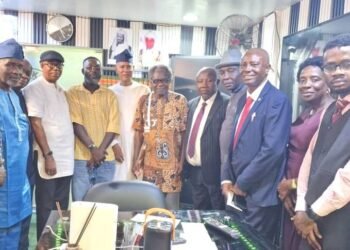













A group, the Ilaje Omuro Community Connect (IOCC), has tasked the Minister of Work, Senator David Umahi, asking for justice and equity over alleged misrepresentation and irregularities surrounding the diversion of the Lagos-Calabar Coastal Highway.
IOCC and its call for justice over Lagos-Calabar Coastal Highway
The group made the call on Saturday in a press release titled “Lagos-Calabar Coastal Highway: A Call for Justice, Equity, Transparency, and Accountability for the Ilaje People.”
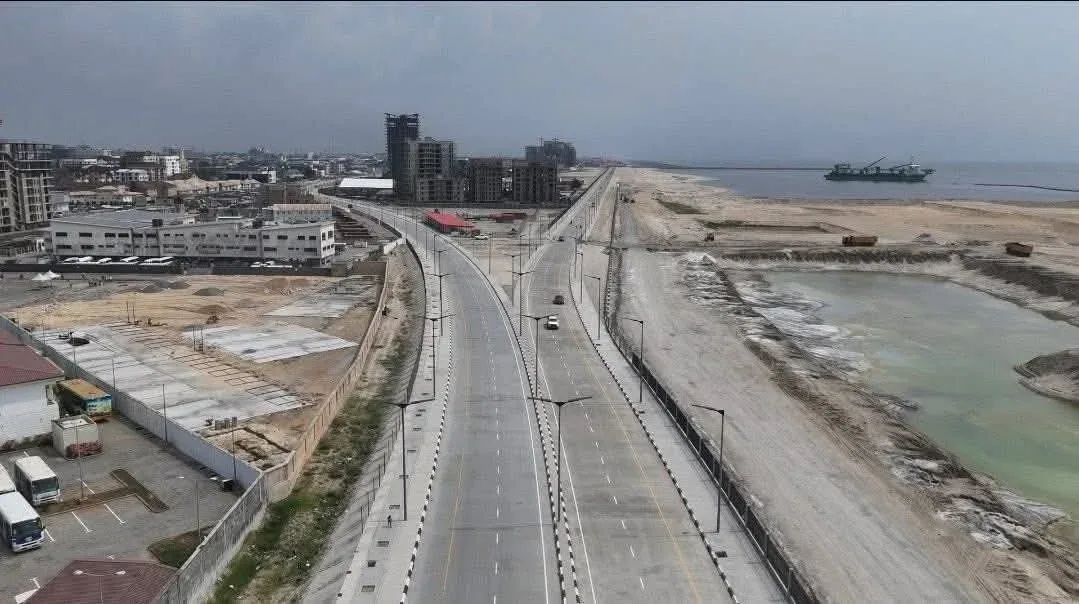
IOCC, a community-based organisation with over 1,000 members of Ilaje extraction, stated that it has been closely monitoring the developments, public statements, and media reports surrounding the alleged diversion of the Lagos–Calabar Coastal Highway from its originally-proposed route through the Ilaje coastline in Ondo State.

The group spokesperson, B. A. Omobone Esq, declared that IOCC stands for justice, equity, transparency, and sustainable development of the Ilaje coastal communities.
It expressed deep concern over the explanations and justifications reportedly emanating from the office of Senator Umahi, regarding the decision to alter the originally proposed route of the critical national infrastructure project.
The group stated that, as an organisation committed to justice, fairness, equity, and the protection of the collective interests of the Ilaje people, it can no longer remain silent in the face of what it consider serious questions that demand clear answers, independent scrutiny, and transparent public accountability.
“The issue at stake is not merely the construction of a road; it is a question of fairness, economic inclusion, environmental protection, and the right of the Ilaje people to benefit equitably from a major national development project.
Why Should Ilaje Be An Exception?
On the question of terrain, IOCC challenged the Minister of Works to explain why the terrain of Ilaje Local Government Area was being presented as a major obstacle to the construction of the coastal highway.
It stated that it was imperative to ask Umahi the question, particularly as road projects have previously been undertaken in the same geographical environment.
“We therefore invite the public to ask the minister a fundamental question:
How was the Ondo State Oil Producing Areas Development Commission (OSOPADEC) able to undertake road construction from Igbokoda to Ugbonla within the same general terrain that is now being cited as a significant challenge to the coastal highway project?”
The group called the attention of the minister to the fact that the Niger Delta Development Commission (NDDC) reportedly awarded a road construction contract in 2010 for the Ugbonla–Awoye axis, also within the Ilaje coastal environment.
“These previous and reported interventions raise legitimate questions about the technical feasibility of road construction in the area.
“If roads can be constructed within the Ilaje coastal environment, what specific engineering, geological, environmental, or financial considerations make the proposed coastal highway route impracticable?
“The Ilaje people deserve answers supported by verifiable technical evidence, not explanations that leave room for speculation and public distrust.
“We therefore call for the publication of relevant feasibility studies, geotechnical assessments, environmental impact assessments, comparative cost estimates, and other technical documents relied upon in determining the final route of the coastal highway,” IOCC stated in the release.
Shielding the presidential vision from questionable decisions
The group also expressed the need to shield “the presidential vision from questionable decisions,” noting: “The Lagos–Calabar Coastal Highway is a major national infrastructure project intended to improve connectivity, stimulate economic growth, and strengthen transportation links across Nigeria’s coastal corridor.”
It added: “It is therefore troubling that concerns have emerged over the exclusion or alteration of the proposed route through the Ilaje coastal axis.”
It urged President Bola Tinubu to ensure that the objectives of the national project were not undermined by decisions that may unfairly disadvantage particular communities or states.
“No individual, regardless of position or proximity to the President, should be above scrutiny when decisions concerning public infrastructure, public expenditure, and national development are involved.
“If the original route through Ilaje was altered, the government should provide a comprehensive explanation of the reasons for that decision.
“The public deserves to know whether the change was driven by legitimate engineering considerations, environmental concerns, financial assessments, or other factors.
“If the alternative route is more expensive than the original proposal, the government should also explain the basis for the additional expenditure and demonstrate that the decision represents the best value for public funds,” it added.
The IOCC declared that it was not asking for preferential treatment, adding: “We are demanding fairness, transparency, and an evidence-based explanation for a decision with significant implications for the economic future of the Ilaje people.”
A call for professional engineering accountability
IOCC equally expressed concern about the technical arguments reportedly advanced to justify the exclusion of the Ilaje coastal axis from the proposed highway route.
It stated that this was an era of significant advances in civil engineering, geotechnical investigation, bridge construction, tunnelling, coastal protection, and other infrastructure technologies.
It therefore submitted that challenging terrain should be subjected to rigorous technical assessment, rather than dismissing it without any transparent evidence.
“We therefore call on relevant professional engineering bodies to independently examine the technical justifications presented for the route diversion.
“Such an assessment should establish whether the Ilaje coastal environment is genuinely unsuitable for the proposed highway or whether viable engineering solutions could make the route feasible.
“Where technical claims have been made, they should be supported by verifiable studies and subjected to independent professional review.
“Public confidence in major infrastructure projects depends on technical integrity, professional competence, and accountability.
“The government must demonstrate that decisions of this magnitude are based on sound engineering principles and the public interest,” it was stated.
Global engineering advancements and proper examination of technical feasibility
IOCC also averred that global engineering advancements have clearly stipulated why technical feasibility must be properly examined.
“Across the world, engineers have continued to develop innovative solutions for constructing roads, bridges, tunnels, and other infrastructure in challenging geographical conditions,” it stated.
The challenging geographical conditions, it added, included mountainous regions, wetlands, coastal environments, and areas beneath the sea.
“China, in particular, has undertaken numerous large-scale infrastructure projects involving complex geological and environmental conditions.
“These developments demonstrate the importance of modern engineering techniques, proper planning, detailed feasibility studies, and appropriate investment in infrastructure.
“However, the existence of successful projects elsewhere does not automatically establish that every proposed route is feasible or cost-effective.
“Each route must be assessed on its own geological, environmental, engineering, and economic merits.
“Our position is simple: the Ilaje coastal route should not be dismissed without a transparent, independent, and technically credible assessment of its feasibility.
“If the route is genuinely unsuitable, the government should publish the evidence. If feasible engineering alternatives exist, they should be properly evaluated and compared with the proposed alternative route.
“The Nigerian people deserve decisions informed by evidence, not conclusions that cannot withstand independent technical scrutiny,” it stated.
The coastal highway must remain a coastal road in affected states
IOCC declared that the coastal highway must not become a coastal road in some states, while the same becomes an inland road in Ondo State without any justification.
The group added that one of its greatest concerns was the apparent inconsistency in the proposed alignment of the coastal highway.
“Why should a project conceived as a coastal highway serve coastal areas in Lagos and Ogun states, yet potentially depart from its proposed coastal alignment in Ondo State, where the Ilaje coastline presents significant economic, environmental, and infrastructural needs?,” it asked.
The group, nevertheless recognised that highway alignments may change for legitimate technical, environmental, safety, or economic reasons.
“However, any such change must be justified by transparent evidence and must not unfairly deprive a vulnerable coastal population of the benefits of national development.
“Ilaje Local Government Area is widely recognised for its extensive coastline and its importance to Ondo State’s coastal economy.
“It is also the only local government area in southwestern Nigeria commonly identified as an oil-producing local government.
“Its coastal communities face persistent challenges involving erosion, sea incursion, inadequate transportation infrastructure, and limited access to economic opportunities.
“These realities make the proposed route through the Ilaje coastal axis particularly significant.
“The people of Ilaje should not be treated as an afterthought in a project whose stated purpose is to improve connectivity along Nigeria’s coastline.
“If the Lagos–Calabar Coastal Highway is a national coastal development project, the people of Ilaje deserve a transparent explanation of why their coastal communities may be excluded from its original alignment,” it was added.
The group made it known that the issue extended beyond road construction, adding that sea incursion has constituted a threat to communities, livelihoods and cultural heritage in Ilaje.
For years, coastal communities in Ilaje Local Government Area have faced the devastating consequences of sea incursion, coastal erosion, and the destruction of homes, livelihoods, and community infrastructure.
It stated that several communities, including Abereke, Orioke, Magbehinwa, Idiogba, Mese, Ayetoro, Awoye Odofado have experienced severe environmental degradation, with parts of affected settlements reportedly destroyed or rendered increasingly vulnerable.
“For the people of Ilaje, these are not abstract environmental concerns. They represent the loss of ancestral homes, fishing grounds, economic opportunities, cultural heritage, and the security of future generations.
“A properly planned coastal highway, supported by appropriate environmental protection and coastal management measures, could potentially improve access to these communities, strengthen economic connectivity, and support wider development interventions.
“However, the precise extent to which the highway could reduce sea incursion would depend on its engineering design and environmental impact.
“A road alone cannot be assumed to stop coastal erosion or protect communities from the sea.
“This is precisely why the government must adopt a comprehensive approach that considers transportation infrastructure alongside coastal protection, environmental management, and community resilience.
“The exclusion of the Ilaje coastal axis, without a clear and convincing public explanation, raises legitimate concerns about whether the particular needs of these vulnerable communities have received adequate consideration.
“The people of Ilaje cannot afford to be overlooked while their ancestral communities continue to face the threat of environmental destruction,” IOCC declared.
Economic consequences of excluding the Ilaje coastal axis
“Beyond the environmental concerns, diverting the proposed highway away from the Ilaje coastal axis could have significant implications for Ondo State’s economic development,” the group stated.
It added that “a highway that adequately connects coastal communities to major commercial centres could create opportunities in fisheries, agriculture, trade, tourism, logistics, and other economic activities.
“It could also improve access to markets, facilitate the movement of goods and people, attract investment, and support the development of local industries.
“For communities that have historically faced transportation difficulties, improved connectivity could make a meaningful difference in their economic prospects.
“Consequently, the route decision should not be assessed solely in terms of immediate construction costs.
“It should also consider long-term economic benefits, regional development, environmental sustainability, and the needs of communities that have historically been underserved.
“If the original Ilaje alignment was rejected in favour of an alternative route, the government should publish a comparative assessment showing the costs, benefits, and developmental implications of both options.
“The people of Ondo State deserve to understand how this decision was reached and whether it represents the most economically beneficial and equitable outcome for the region,” it added.