


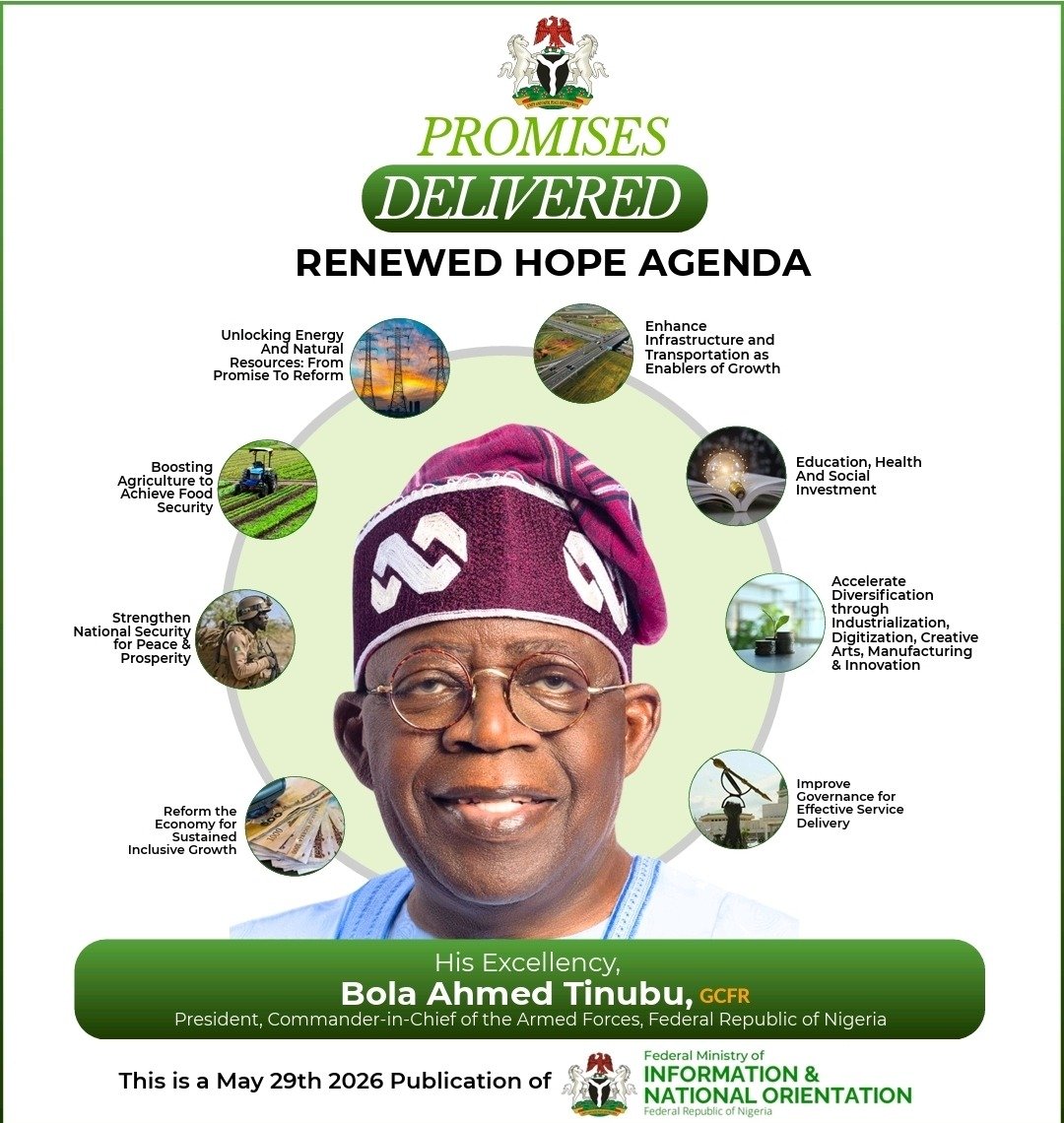
“Hope ’93 was not a slogan; it was a social contract. We declared a covenant with the Nigerian people, farewell to poverty, farewell to neglect, farewell to stagnation. That is precisely why we speak of Renewed Hope.”
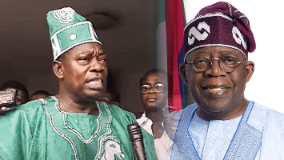
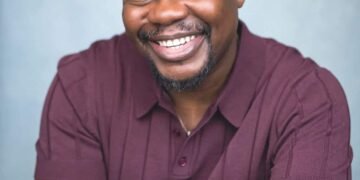
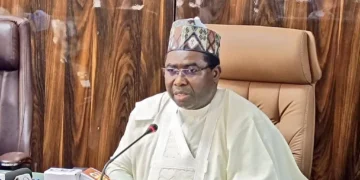
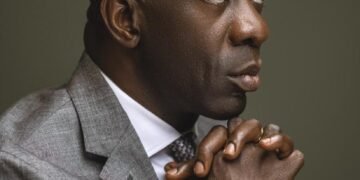
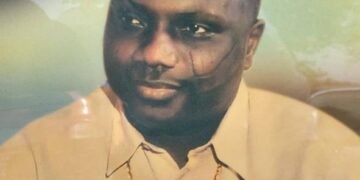
In the quiet symbolic theatre of history where deferred mandate and present governance meet in uneasy dialogue, Chief Moshood Kashimawo Olawale Abiola stands before President Bola Ahmed Tinubu.
It is neither heaven nor earth, but a moral corridor between promise and responsibility, aspiration and delivery. The air is heavy with meaning and silence itself demands accountability.
Abiola and Tinubu: Between Hope ’93 And Renewed Hope
Abiola speaks first, calm yet piercing; the voice of a man whose victory was acknowledged by the people but denied by power. Tinubu listens with composed gravity, aware that history interrogates every generation without exemption.
MKO Abiola: Mr President, I come not as a spectre of grievance, but as a witness to Nigeria’s unfinished promise.
In 1993, Hope was not a slogan; it was a social contract. We declared a covenant with the Nigerian people, farewell to poverty, farewell to neglect, farewell to stagnation. We promised dignity in labour and opportunity in place of despair.
Yet, here we are, more than three decades later, still rehearsing the language of survival. How did a nation so richly endowed become so persistently constrained by its own potential?
There is a Yoruba saying: “When a man borrows firewood daily, he forgets the shape of his own forest.” Nigeria has borrowed so extensively that it risks losing sight of its productive capacity.
Debt is not a vice. But perpetual borrowing without production is postponement and postponement, I once warned, is the cousin of regret.
President Tinubu: Chief MKO Abiola, I acknowledge the moral weight of your words and the history you represent.
Nigeria inherited structural distortions, subsidy regimes that drained public resources, exchange rate inconsistencies that rewarded speculation, and weak revenue systems that constrained development.
We were compelled to act. The removal of fuel subsidy and unification of exchange rates were not acts of cruelty, but of necessity. Delay would have deepened instability.
Reform is painful, but avoidance would have been more damaging. No nation can consume its way out of structural inefficiency.
MKO Abiola: Painful reform may be necessary. Indiscriminate hardship is not.
The masses have tightened their belts for so long that the belts have snapped.
Today, many Nigerians move through life in oversized garments,not from negligence, but because economic pressure has stripped them of basic stability.
As another Yoruba proverb teaches: “When the drummer changes rhythm, the dancer must not lose his footing.” Government has accelerated reform; citizens must not be left to collapse under its weight.
Perception, too, is reality in governance. And perception today is shaped by visible inequality between sacrifice demanded below and comfort perceived above.
Leadership cannot preach restraint while appearing insulated from it.
President Tinubu: Perception is indeed significant.That is why fiscal discipline must be visible across all tiers of governance. However, we must distinguish between transitional hardship and long term correction.
We inherited an economy consuming more than it produces. Reform is the bridge to sustainability. Indicators already show improved revenue performance and renewed investor confidence. But I accept your point; macroeconomic improvement does not immediately translate into household relief.
MKO Abiola: Precisely. A society is not sustained by indicators but by lived experience. As the saying goes: “The man who counts grains of corn may appear rich on paper yet still sleep hungry.”
Economic success must be measured by what it delivers to ordinary citizens and not by statistical comfort. Can the citizen eat figures? Can he school his children with projections? Can he cure illness with charts?
President Tinubu: That is why our agenda extends beyond fiscal reform. We are investing in agriculture, infrastructure, digital innovation and targeted social protection. Transformation is a process, particularly in economies burdened by decades of structural imbalance.
MKO Abiola: Time, Mr President, is a luxury the struggling do not possess and while time passes, insecurity continues to erode national life.
For over 15 years, insurgency, banditry and criminal violence have destabilised communities and undermined livelihoods.
Each administration declares progress. Each inherits escalation. At some point, narrative must yield to reality.
A farmer denied access to his land does not measure security in press briefings. As wisdom reminds us: “The man whose house is on fire does not chase rats.” Security is survival and not theory.
President Tinubu: Security remains central to this administration. We have strengthened defence coordination, intelligence operations and both kinetic and non-kinetic responses.
The threat is asymmetric and evolving. Progress is being made, though not always in visible or immediate form.
MKO Abiola: Adaptation is not resolution and endurance is not victory. Nigeria’s resilience is often mistaken for success when, in fact, it is a necessity without an alternative. But even resilience has limits.
When hope is repeatedly deferred, it mutates into cynicism and cynicism is the quiet death of national ambition.
President Tinubu: That is precisely why we speak of Renewed Hope. We are stabilising macro-economic fundamentals while simultaneously addressing insecurity and unemployment. No administration faces a more complex convergence of challenges.
MKO Abiola: Complexity is not new to Nigeria. What is new is prolonged suffering without resolution. Let me remind you: In 1993, we did not promise management of poverty; we promised its end. Yet, poverty remains entrenched and when an unwelcome condition persists, leadership must question its effectiveness.
President Tinubu: Governance is the continuous negotiation between aspiration and reality. We are repositioning Nigeria for long term growth through tax reform, energy restructuring and infrastructure expansion. The ambition remains a trillion-dollar economy.
MKO Abiola: A trillion dollar economy is meaningless if citizens remain excluded from its benefits. Growth without inclusion is arithmetic without humanity and humanity is the essence of governance.
President Tinubu: That is a fair challenge and one we must continue to address with urgency.
MKO Abiola: Then let us speak of democracy. I fought for a mandate freely given and unjustly denied. Democracy is not merely the absence of military rule; it is the presence of accountability. Yet, concerns persist about institutional trust and political fairness. As another proverb warns: “When two hands wash each other, both must remain clean.” Power must not absolve itself at the expense of fairness.
President Tinubu: Nigeria’s democratic space remains constitutional and competitive. Political tensions often reflect internal party dynamics, rather than systemic suppression. Nevertheless, vigilance is essential to preserve trust.
MKO Abiola: Trust is never declared; it is earned and history does not respond to promises, only to outcomes.
President Tinubu: Those outcomes must define this administration. We accept that responsibility.
MKO Abiola: Nigeria does not lack plans. It lacks execution with urgency and empathy. As wisdom teaches: “The road does not tell the traveller to hurry; hunger does.” Leadership is judged not by intention, but by impact.
In the fading silence of their exchange, neither man claims victory, for this is not a contest of words but a confrontation of eras. Abiola stands as the moral echo of a deferred mandate; Tinubu stands as the steward of a difficult present. Yet one truth remains unshaken: Nigeria is too richly endowed to remain diminished, too hopeful to remain disappointed and too democratic to tolerate democratic failure.
As Abiola’s presence recedes into the folds of history, his final message is not anger, but demand and demand for accountability, urgency and transformation. The dialogue ends not in resolution, but in responsibility.
For in Nigeria, hope has never died… It has only ever waited, for fulfilment.