











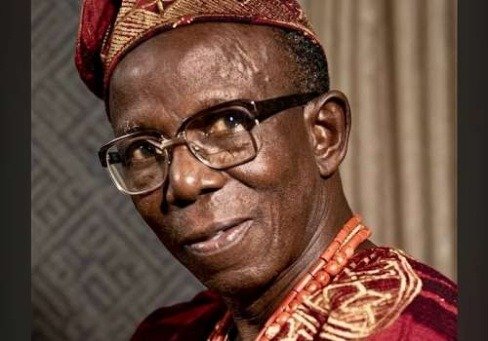
The Estate of the late High Chief Gabriel Akin-Deko, a former minister in the old Western Region, is seeking fair settlement in a dispute involving Solel Boneh Nigeria Limited (SBN).
Solel Boneh dispute and the Akin-Deko link
The decades-old corporate dispute involving the construction company linked to infrastructure development in the former Western Region, has brought minority-shareholder rights, corporate accountability and asset ownership into focus at the Federal High Court, Abuja.
The Estate of late High Chief Gabriel Akin-Deko, reported as 30 per cent shareholder in SBN, was seeking a financial settlement over allegations that the company’s assets, contracts, equipment and goodwill were transferred to Reynolds Construction Company (Nigeria) Limited (RCC), diminishing the value of its investment.
Filed in May 2022 under Suit No. FHC/ABJ/PET/38/2022, the dispute involves RCC, companies associated with the wider Solel Boneh group, including Shikun & Binui and SBI International Holdings AG, as well as Israeli business figures, Shari Arison and Naty Saidoff.
The allegations remained unproven as they have not been established as findings of the court.
The Federal High Court has, however, approved a referral to alternative dispute resolution (ADR), with an initial meeting involving the parties and a mediator expected to take place.
The estate, represented by Sholias LP, was seeking a settlement through the purchase of its shares at fair value, even as several respondents were represented by the Chambers of Akin Onigbinde, SAN.
Distinct corporate histories
A central issue is the historical relationship between SBN and RCC, which the estate maintained followed separate corporate paths.
The petitioners have also questioned the existence of two active corporate registrations bearing the name Reynolds Construction Company, seeking clarification of their respective roles in the alleged commingling of assets.
The answers could help establish the identity of the entities involved, the movement of assets and any obligations owed to SBN’s shareholders.
SBN’s origins date to 1956, when the Action Group Government, led by Chief Obafemi Awolowo and Israeli interests, established Nigersol Construction Company through their respective representative organisations.
The company participated in infrastructure and industrial development in the former Western Region.
Following the military takeover of 1966 and subsequent political restructuring, Nigersol eventually gave way to Solel Boneh Nigeria Limited, established in 1969 by Solel Boneh Overseas and Harbour Works, with operations based in Ibadan.
Akin-Deko, a British-trained building contractor who later entered politics, became the Nigerian partner.
The petitioners stated that Akin-Deko subsequently acquired a reported 30 per cent shareholding, against the background of Nigeria’s indigenisation policies introduced in the 1970s.
RCC, meanwhile, had a separate commercial history associated with the Calabar–Ikom Road contract in the late 1960s, awarded to the American consortium Reynolds, Brezina and Brown.
Its operations later maintained headquarters in Trans-Ekulu, Enugu, under a board that included Chief Samuel Fadahunsi.
The Akin-Deko Estate argued that these historical distinctions were important in determining whether assets belonging to SBN were subsequently transferred to, or placed under the control of, RCC.
Alleged asset transfers
The dispute centres on developments following Akin-Deko’s death in 1987. The petitioners alleged that changes in the ownership and structure of the wider Solel Boneh Goup during the 1980s and 1990s coincided with the progressive use, ownership or control of SBN’s assets by RCC.
They contended that the changes diminished the value of the estate’s investment without adequate regard for shareholder interests or applicable Nigerian law.
The assets in question reportedly include contracts, equipment, business assets and goodwill, all of which can materially affect a construction company’s commercial value and earning capacity.
The transactions, their legal basis and the respondents’ positions remain matters for clarification through mediation or any subsequent judicial proceedings.
A potential route to resolution
Beyond the financial claims, the dispute raised questions about preserving corporate records, protecting minority shareholders and ensuring transparency when businesses undergo restructuring or changes in ownership.
For the estate, the immediate objective is a settlement reflecting the fair value of its shares. Mediation offers the parties an opportunity to examine their respective positions and negotiate an outcome without prolonged litigation.
Whether the matter ends in a negotiated agreement or returns to court, its resolution could clarify aspects of SBN’s corporate history and the relationship between the two construction businesses.
Ultimately, the outcome will depend on the evidence, the parties’ engagement and the terms of any agreement reached.
For the Akin-Deko Estate, the mediation process offers a possible path towards resolving a dispute that has persisted for decades.