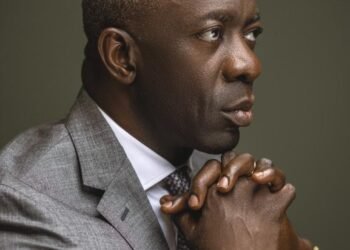
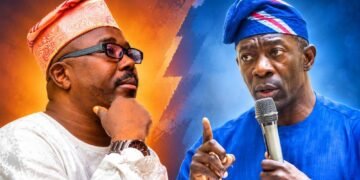






Oyo State governor, ‘Seyi Makinde, has explained why he withdrew his support for President Bola Tinubu, citing economic hardship, governance by excuses, declining national unity and inadequate protection for Nigerians affected by government policies.
Makinde, who supported Tinubu during the 2023 presidential election, said his initial decision was informed by the belief that the president’s political experience and ability to build alliances would help establish a government of national unity and competence.
However, the governor said his assessment of the administration had changed after three years, arguing that its policies had not sufficiently translated into improved living conditions and economic opportunities for ordinary Nigerians.
Makinde made the remarks in a lengthy statement published on his 2027 presidential campaign platform, Reset Nigeria, on Thursday, November 12, 2026.
He explained his political journey, his disagreements with the Tinubu administration and his decision to challenge the president in the 2027 general election.
He noted that his decision was not motivated by a personal disagreement with Tinubu or merely by an ambition to occupy the presidency, but by concerns about Nigeria’s future and the opportunities available to its citizens.
“I supported President Tinubu because I believed he could bring people together to build a government of national unity and competence. I believed his administration would confront our economic challenges while creating opportunities for Nigerians to build better lives.
“Three years later, I no longer believe his administration is taking us in that direction,” he said.
Four Reasons Behind His Disappointment
The Oyo governor identified four major areas of concern that informed his withdrawal of support for Tinubu.
On the economy, Makinde acknowledged improvements in some macroeconomic indicators but argued that such gains would have little meaning to ordinary Nigerians if they did not translate into productive businesses, employment opportunities, better incomes and improved living conditions.
He maintained that economic stability should not be measured solely by government revenue and external reserves but by the extent to which citizens experience improvements in their daily lives.
The governor also accused the administration of relying too heavily on inherited challenges to explain its performance.
“Every government inherits problems, but it is elected to solve them. Over three years into this administration, we are still hearing explanations about inherited poverty, insecurity, electricity problems and other challenges, when Nigerians should be seeing more measurable progress towards resolving them,” he said.
On national unity, Makinde said he initially believed Tinubu’s political relationships and ability to build alliances across political divides would help him assemble capable Nigerians to address the country’s challenges.
However, he alleged that the President’s political alliances had increasingly served his political interests rather than the broader national interest.
He also expressed concern about what he described as the weakening of opposition parties, warning that a functioning democracy required strong political alternatives and meaningful competition.
The fourth issue, according to Makinde, was the implementation of economic reforms without adequate measures to protect Nigerians from their consequences.
Makinde Faults Implementation of Subsidy Removal
While acknowledging the need to reform the petrol subsidy and foreign exchange systems, the governor said he expected the Federal Government to adequately prepare for the consequences of the policies before implementing them.
He argued that millions of Nigerians who were already experiencing economic difficulties were exposed to further hardship because sufficient intervention measures were not put in place ahead of the reforms.
Using the removal of petrol subsidy as an example, Makinde said he would have utilised the presidential transition period to develop a coordinated plan to cushion the impact on citizens.
He also argued that Tinubu was familiar with the potential consequences of abrupt subsidy removal, recalling the President’s opposition to the manner in which former President Goodluck Jonathan attempted to remove the subsidy in 2012.
Makinde said he would have convened the National Economic Council immediately after assuming office to develop a coordinated intervention framework involving the Federal Government and state governors.
According to him, such a meeting would have helped identify necessary interventions, determine their funding sources and establish how the three tiers of government could work together to protect vulnerable Nigerians.
He further advocated transparent reporting to enable citizens to understand how intervention funds were being spent, who was benefiting and the results being achieved.
Defending his approach to managing the economic consequences of subsidy removal, Makinde referenced measures introduced by his administration in Oyo State.
He said the state began consultations with organised labour immediately after the announcement of subsidy removal and introduced interventions aimed at reducing transportation costs.
According to him, within 11 days, his administration announced the deployment of additional Omituntun buses, maintained existing transportation fares and introduced half-price travel for students and senior citizens.
He added that the state subsequently introduced the Sustainable Actions for Economic Recovery (SAfER) programme in August 2023.
The governor said the programme provided food assistance to 200,000 vulnerable households, subsidised public transportation and supported small businesses and farmers through loans and agricultural inputs.
He argued that governments should not only introduce policies intended to improve economic indicators but must also consider how such decisions affect the people they govern.
“Nigerians deserved better preparation and better protection,” he said.
Makinde further explained why he believes Nigeria cannot afford to continue on its present political and economic trajectory until another presidential election cycle.
He expressed concern about young Nigerians who have acquired educational qualifications and professional skills but are unable to secure meaningful employment.
He also highlighted the difficulties confronting businesses, particularly the rising costs of electricity and transportation, which he said make it increasingly difficult for enterprises to grow.
The governor said he was worried that another four years of what he described as the current direction could worsen the country’s economic and institutional challenges and reduce opportunities for future generations.
He added that decisions taken at the federal level could undermine development efforts by state governments.
Makinde, who was elected governor of Oyo State in 2019 and secured a second term in 2023, said his experience in public office had strengthened his belief that government could create opportunities, build institutions and improve citizens’ lives through deliberate policies.