













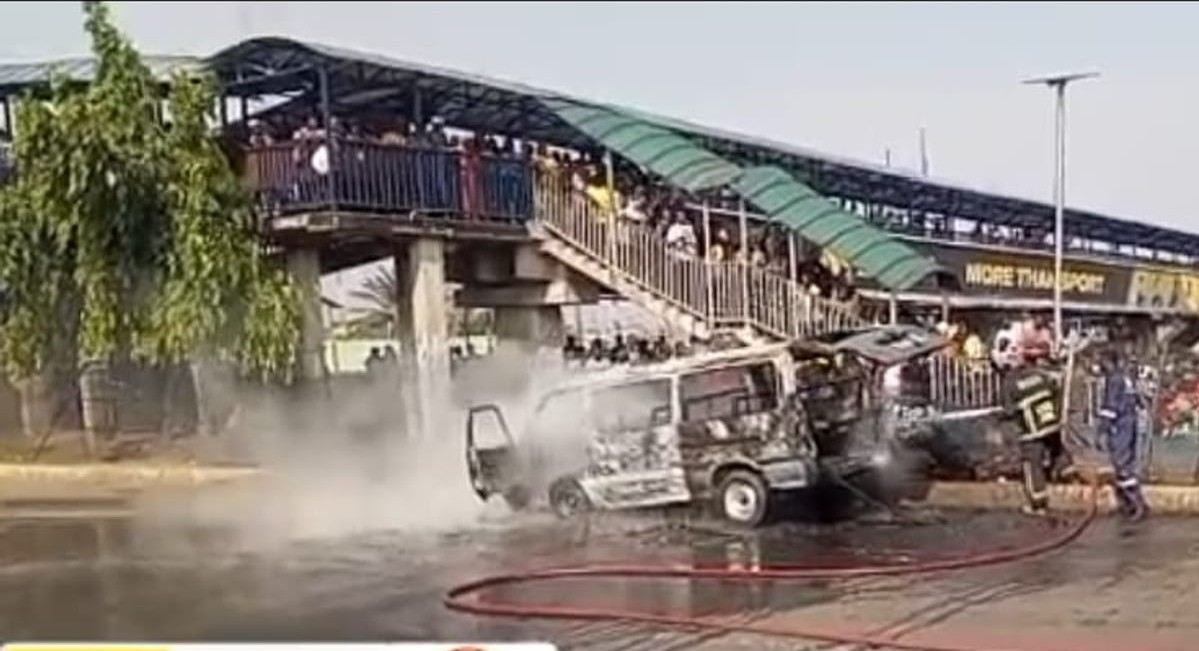
Seventeen passengers were rescued while one person sustained severe injuries after a Compressed Natural Gas (CNG)-powered commercial bus caught fire at Berger Bus Stop, along the Lagos-Ibadan Expressway.
How CNG-powered bus caught fire in Lagos
The incident reportedly occurred when the commercial vehicle suddenly burst into flames, triggering an emergency response to rescue passengers trapped inside the bus.
The incident involved a fully loaded Toyota Hiace bus with registration number EKY 798 YK, which was travelling from the Mowe-Ibafo axis towards Lagos with 18 occupants, including the driver.

According to the Lagos State Traffic Management Authority (LASTMA), the vehicle reportedly caught fire following a gas explosion, causing panic among passengers and other motorists on the busy expressway.
LASTMA personnel swiftly mobilised to the scene and successfully rescued 17 occupants, including the driver, without injuries.
However, one male passenger, seated at the rear section of the vehicle, sustained severe burn injuries during the incident.
He was immediately evacuated by LASTMA officials and taken to the Lagos State Trauma and Emergency Centre, Toll Gate, for urgent medical attention.
The Lagos State Fire and Rescue Service also responded to the incident, deploying firefighting equipment to extinguish the flames and prevent the fire from spreading further.
Meanwhile, personnel of the Ojodu Police Division provided security support, maintained order and secured the scene throughout the rescue and firefighting operations.
Commending the emergency responders, LASTMA General Manager, Olalekan Bakare-Oki, praised the agency’s personnel for their courage, professionalism and prompt intervention, which helped prevent further casualties.
He also acknowledged the contributions of the Lagos State Fire and Rescue Service and the Nigeria Police Force, noting the importance of collaboration among emergency response agencies in managing road-related incidents.
Bakare-Oki urged commercial transport operators, particularly those using CNG-powered vehicles, to prioritise regular professional inspections, comply with prescribed safety standards and ensure proper maintenance of their vehicles’ gas storage and delivery systems.
He stressed that adherence to safety regulations and routine technical checks were essential to preventing incidents capable of endangering passengers and other road users.
The incident has renewed attention on the importance of vehicle safety inspections and proper maintenance as the use of CNG-powered vehicles continues to feature in Nigeria’s public transportation system.