












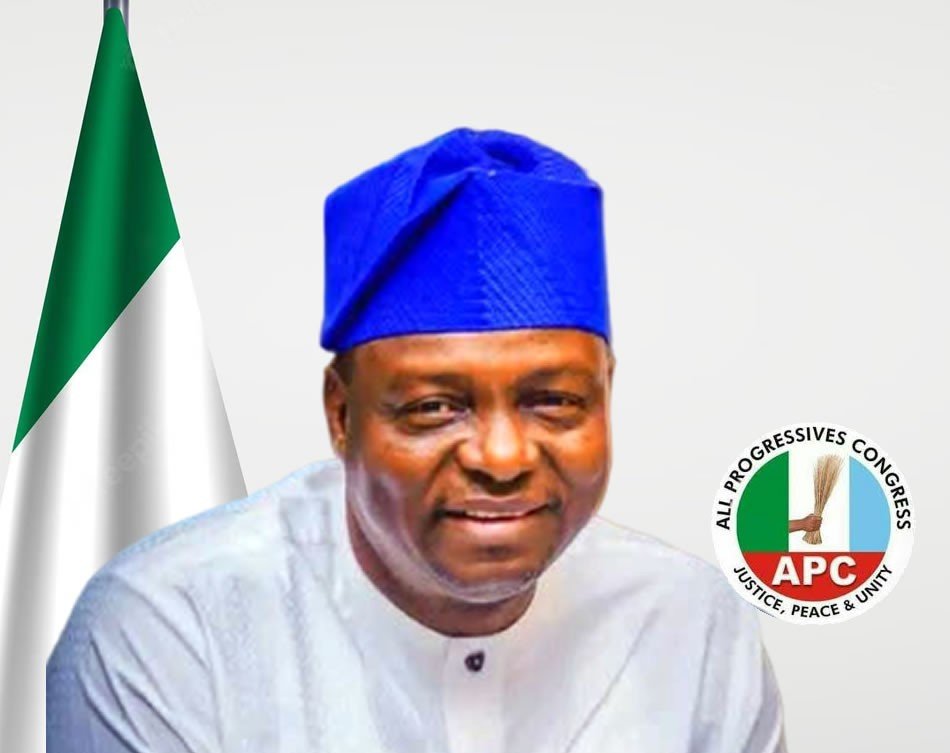
The National Chairman of the All Progressives Congress (APC), Professor Nentawe Yilwatda, has described the fuel subsidy reversal proposed by former Vice President Atiku Abubakar as a desperation for power.
He described the proposal as a deeply troubling policy U-turn that raised serious questions about the opposition’s preparedness to govern Nigeria.
Professor Yilwatda, stated in a release by his Special Adviser (Media and Strategy), Abimbola Tooki, on Sunday, that Nigerians deserved more than election-season declarations.
According to him, any proposal to restore a costly subsidy regime must be subjected to rigorous scrutiny, particularly given the enormous fiscal burden subsidies placed on public finances and the distortions they created in the economy.
The APC National Chairman stated these during a visit to the City Boy Movement Headquarters in Abuja, where he inspected the organisation’s facilities and interacted with its leadership.
Picking holes in Atiku’s proposed fuel subsidy reversal
He noted that the opposition had been challenged repeatedly over the past three years to tell Nigerians what it would do differently if entrusted with power, noting that no serious, coherent and convincing alternative had emerged.
He said it was therefore suspicious that, after more than three years of silence on a comprehensive governing agenda, and about four months before the 2027 general election, the former vice president was only now presenting a policy that could reverse a “hard-won economic adjustments and set the country’s development trajectory back several years.”
According to the APC National Chairman, “Economic policy cannot be reduced to election-season promises.
“Nigerians deserve to know precisely where the money will come from, what sectors will bear the cost and whether such a policy can be sustained without reopening the fiscal pressures that necessitated reform in the first place.”
He maintained that the removal of subsidy was a difficult but necessary policy decision whose consequences required complementary measures to cushion its impact, expand social intervention and strengthen productive sectors of the economy.
He further stated that the real test of leadership was not the ability to promise immediate relief for electoral advantage, but the courage to take difficult decisions, explain them honestly to citizens and remain committed to policies capable of producing sustainable growth.
He added that Nigerians were too discerning to hand over the nation to politicians who were yet to demonstrate what they would do with presidential power beyond reversing difficult but necessary reforms.
He urged Nigerians to carefully examine competing economic programmes ahead of the 2027 elections and distinguish between policies designed to address structural problems and promises that may provide short-term political appeal while creating longer-term fiscal difficulties.
Yilwatda also criticised what he noted was the lack of ideological and organisational consistency within the opposition.
According to him, politicians who continually move from one political platform to another cannot credibly claim to offer the stability and clarity required to govern a complex country.
The situation he contrasted with President Bola Tinubu, whom he said has remained within the progressive political tradition throughout his political career, apart from periods of political mergers.
He added that Vice President Kashim Shettima has similarly maintained a consistent political trajectory, adding that key APC stakeholders had remained committed to the party and its progressive platform.
He stated that the APC-led administration, under President Tinubu, had taken difficult economic decisions and was implementing measures intended to reposition the economy, attract investment, strengthen domestic production and reduce dependence on unsustainable government interventions.
He warned that reversing such reforms without a credible alternative could undermine investor confidence, worsen fiscal pressures and jeopardise the gains being pursued under the current administration.
Yilwatda therefore urged Nigerians to be wary of political promises that appear designed primarily to secure votes, rather than solve structural problems.
He also advised them to scrutinise the records and policy positions of those seeking the presidency, including the history of disputes involving Atiku Abubakar and former President Olusegun Obasanjo.
He particularly called the attention of Nigerians to allegations surrounding corruption in the privatisation exercise undertaken during the Obasanjo administration.
He stressed that questions of accountability and economic governance must not be swept aside in the rush toward another election.
He said the 2027 elections should be a contest of ideas, competence and credible policy alternatives, and not a competition in which difficult economic realities were glossed over for political convenience.
He also added that the elections must be a contest between competing visions for Nigeria’s future, not a referendum on who can make the most attractive promises at the last minute.
Yilwatda restated that the APC would continue to defend policies aimed at building a more productive, investment-friendly and economically sustainable Nigeria, while remaining open to constructive criticism and credible alternatives.