









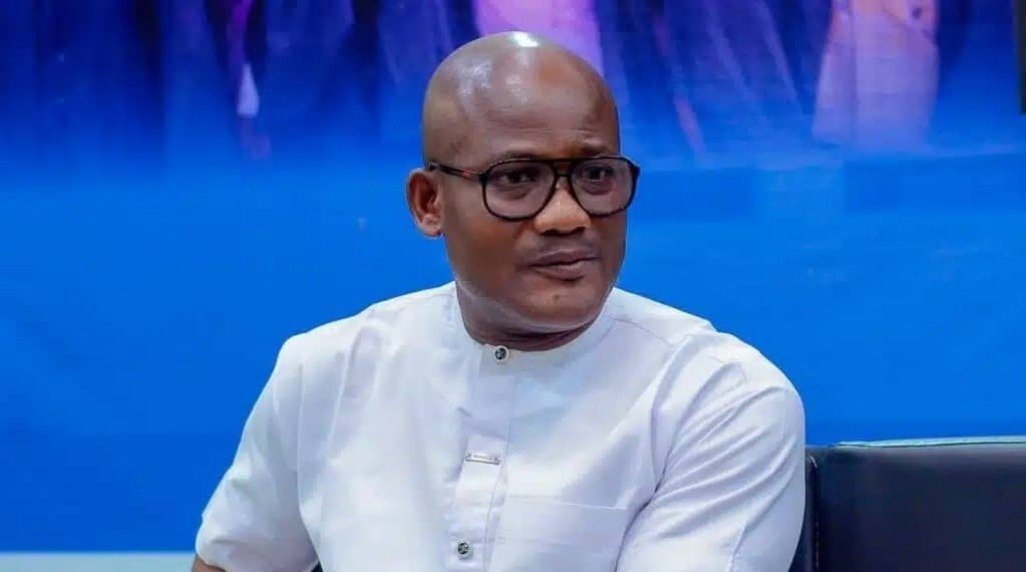
Higher education and journalism practice do not always intersect seamlessly. In many cases, the newsroom and the lecture room operate as separate worlds, with practitioners focused on the immediacy of news and academics immersed in theory, research and scholarship.
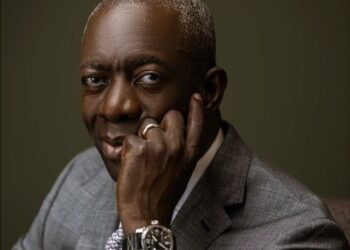
Professor Olumuyiwa Popoola represents a striking departure from that divide.
Across Nigeria’s evolving journalism and academic landscape, Popoola has built a career that connects newsroom experience with communication research, journalism education, editorial leadership, international engagement and university administration.
Recent international evaluation has drawn renewed attention to the breadth of his professional and academic profile, with an analytical assessment by a foreign university reportedly placing his overall profile at 9.1 out of 10.
The assessment portrays him as a scholar-practitioner whose influence extends beyond the traditional boundaries of the university classroom. His career has been shaped by academic scholarship, editorial governance, international collaboration, professional journalism and senior-level university administration.
An Editorial Career Built on Trust and Scholarship
One of the defining features of Professor Popoola’s career is his sustained involvement in editorial leadership across academic and professional publications.
Effective October 1, 2026, he assumed his latest role as a member of the Editorial Advisory Board of the Journal of Communication and Media Research (JCMR).
The appointment adds to a long record of editorial responsibilities. His previous engagements include serving as Editorial Consultant to the Nigerian Journal of Communication Review; Editorial Adviser to the Journal of Communication and Media Technology; Consulting Editor of the ESUT Journal of Media Studies; Editorial Consultant to the CRUTECH Journal of Communication; and Editorial Board member of the Nigerian Tribune.
Such positions are not merely ceremonial.
Editorial boards sit at an important intersection of scholarship and public knowledge. Members participate in the evaluation of research, contribute to peer-review processes, promote research integrity and help determine the quality of scholarship that enters the public and academic domain.
The continuity of Professor Popoola’s involvement with several publications therefore reflects sustained engagement with knowledge production, research evaluation and editorial governance.
The analytical assessment cited earlier places his editorial and scholarly service at 9.4 out of 10, the highest among the areas examined. His expertise in journalism, communication and media studies received a 9.3 rating, while university leadership and professional journalism engagement were rated 9.2.
His academic scholarship and international engagement were each rated 9.0, contributing to the overall assessment of 9.1 out of 10.
Where the Newsroom Meets the Lecture Room
Perhaps the most significant dimension of Professor Popoola’s career is the combination of practical journalism and academic inquiry.
For him, journalism is not simply a subject to be studied from a theoretical distance. It is a profession with direct implications for public discourse, democratic accountability, social development and the quality of information available to citizens.
That experience gives the practitioner-scholar perspective particular relevance in journalism education.
Students entering journalism today are preparing for a media environment dramatically different from the one that existed a generation ago. Traditional reporting now operates alongside digital platforms, social media, citizen journalism, artificial intelligence, data-driven communication and rapidly changing patterns of information consumption.
A journalism educator with practical professional experience can therefore bring newsroom realities into the classroom while helping students understand the theories, ethics and responsibilities underpinning the profession.
Popoola’s career reflects this intersection, combining media practice with teaching, research and engagement with contemporary issues in journalism and communication.
Connecting Nigerian Scholarship to the Global Media Conversation
His professional footprint also extends beyond Nigeria.
Professor Popoola has been involved in collaborative initiatives associated with the Konrad-Adenauer-Stiftung Sub-Saharan Africa Media Programme, UNESCO-aligned media initiatives, the International Press Centre and preparatory frameworks for the World Journalism Education Conference.
Such engagements provide opportunities for Nigerian journalism scholarship and professional practice to participate in wider international conversations about press freedom, media development, professional capacity-building and the digital transformation of journalism.
For African journalism educators, the challenge is no longer simply how to train reporters for newspapers, radio or television. It is how to prepare media professionals to operate responsibly in an environment where technology is constantly redefining the production, distribution and consumption of information.
That makes the connection between local experience and international media discourse increasingly important.
From the Classroom to University Governance
Professor Popoola’s contribution is not limited to journalism and communication scholarship.
His service as the immediate past Deputy Vice-Chancellor of Ajayi Crowther University (ACU), Oyo, represents another significant chapter in his career.
University administration requires a different set of responsibilities from classroom teaching or editorial work. It involves institutional planning, policy implementation, governance, coordination, resource management and strategic decision-making.
Serving at the level of Deputy Vice-Chancellor therefore places an academic within the broader machinery of university leadership.
In Popoola’s case, the administrative experience adds another dimension to an already diverse professional profile—one that spans journalism practice, education, scholarship, editorial responsibility and institutional governance.
A Career Built Across Multiple Dimensions
Taken together, the trajectory of Professor Olumuyiwa Popoola can be viewed as a continuum rather than a collection of unrelated professional appointments.
Journalism Practice: Providing practical understanding of newsroom operations and the responsibilities of professional journalism.
Pedagogy and Education: Training emerging media professionals and introducing students to the relationship between theory and practice.
Scholarly Publishing: Contributing research and intellectual perspectives to communication and media studies.
Editorial Leadership: Participating in the evaluation, development and dissemination of scholarly research through academic and professional publications.
International Engagement: Connecting Nigerian and African media scholarship with wider global conversations around journalism, development and media transformation.
University Governance: Applying academic and administrative experience to institutional leadership at the university level.
A Model of the Scholar-Practitioner
The significance of Professor Olumuyiwa Popoola’s career ultimately lies in the intersection of these different roles.
Journalism needs scholarship to continually interrogate its practices, assumptions and impact. Academia, in turn, benefits from practitioners who can test theories against the realities of professional life.
The strongest connection between the two is not simply about moving from the newsroom into the university or from the university into the newsroom. It is about allowing experience in one sphere to enrich contribution in the other.
That is where Popoola’s career becomes particularly instructive.
As journalism continues to confront technological disruption, questions of credibility, professional ethics, artificial intelligence, digital communication and changing audience behaviour, Africa needs media scholars who understand both the theory and the terrain.
Professor Olumuyiwa Popoola’s professional journey demonstrates one pathway through which that bridge can be constructed—linking journalism practice, academic inquiry, editorial stewardship, international collaboration and university governance.
His story is, therefore, not merely that of an academic who understands journalism or a journalist who entered academia. It is the story of a career increasingly defined by the productive intersection of both worlds.