



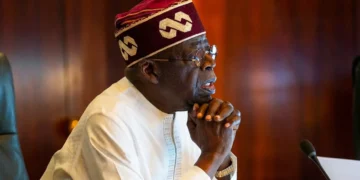




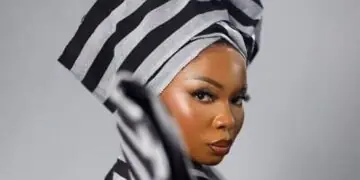






“In Yoruba Language, Ọ̀gà is the chameleon…Like the Ọ̀gà, some social media celebrities appear to change colours depending on the environment they occupy.”
In Yoruba Language, Ọ̀gà is the chameleon. That fascinating little creature capable of changing its colour to suit its surroundings. Green among leaves, brown against earth, and whatever shade helps it disappear into its environment.

There is something instructive about the chameleon. It does not necessarily change because it has become something else. It changes because its environment demands it. Its ability to adapt is, in many ways, tied to its survival.
Juxtaposing ọ̀gà and social media celebrities
Like the Ọ̀gà, some social media celebrities appear to change colours depending on the environment they occupy. Recent stories involving prominent online personalities accused of fraud, false representation and financial impropriety have brought this phenomenon into sharp focus.
The allegations against specific individuals remain allegations until properly investigated and, where necessary, established through due process. But beyond the personalities involved is a question worth asking:
How does someone acquire enough public trust to convince thousands of people to part with their money?
Sometimes, the answer lies in the borrowed robes.
The First Business Is Visibility
Social media has created a new kind of celebrity, one whose principal qualification may simply be visibility. A large following creates influence; influence creates perceived authority; and perceived authority creates trust.
Before long, someone who became famous for controversial opinions, entertaining videos or online quarrels is suddenly being treated as a business expert, financial adviser, philanthropist and social authority.
The robe has changed. And the audience often does not notice.
Next Is Trust
Every successful scam requires trust before it requires money. The person seeking to deceive you rarely begins by asking for your money. First, they sell you themselves.
They show you the lifestyle: expensive clothes, cars, holidays, restaurants, business meetings and photographs with influential people.
Then Comes Generosity
Someone’s rent is paid. Another person receives school fees or medical assistance. There are giveaways and public displays of benevolence.
The audience watches and concludes: This person is genuine.
That perception is valuable. The celebrity has built social capital, and social capital can eventually be converted into financial trust.
Controversy Is Part Of The Costume
The celebrity takes on everybody. Strong opinions are expressed about marriage, relationships, gender, money, politics and other people’s lives. Critics are attacked. Online battles are fought.
The result? Traffic. Comments. Shares. Followers.
The algorithm rewards outrage, and visibility grows. Eventually, followers develop what psychologists call a para-social relationship. They feel they know the celebrity because they have watched them for years.
But here is the uncomfortable truth.
You do not necessarily know a person because you have watched them online. You know what they have chosen to show you.
That distinction can be expensive.
Then Comes Opportunity
Once trust has been established, the money-making opportunity appears. Perhaps, it is an investment, business venture, product or supposedly lucrative scheme.
And it rarely arrives looking like a scam.
There are testimonials, screenshots of transfers and photographs of happy beneficiaries. Stories circulate about people who supposedly invested and cashed out.
And, most importantly, the celebrity is standing behind it.
People may not necessarily be investing in the business. They are investing in the person.
That is where the danger lies.
The borrowed robes may be wealth, influence, philanthropy, business success or even moral authority. Follower count becomes a borrowed robe. A verification badge becomes another. Celebrity friendships become another.
But robes can create an illusion of substance.
A person can look wealthy without being wealthy. They can appear successful without having a sustainable business. They can look powerful because millions follow them.
But visibility is not accountability. Popularity is not competence. And a large following is certainly not a financial licence.
“But People Testified”
This is, perhaps, the most dangerous part.
Testimonials are powerful because we instinctively trust other people’s experiences. But a testimonial is not due diligence.
A screenshot is not an audited account. A photograph of money does not establish its source. One person’s profit does not guarantee another person’s success.
Before committing money to an opportunity promoted online, ask:
What exactly is the business? Who owns it? Is it properly registered and regulated where regulation applies? Where is the documentation? What are the risks? Where does the money go? What happens if the venture fails?
And, perhaps, the most important question:
Would I still invest if this person were not famous?
If the answer is no, perhaps, you are not investing in the business at all.
You are investing in the robe.
The irony of social media fame is that the same audience that creates the celebrity can eventually demystify the celebrity.
When trouble comes, followers become investigators.
The lifestyle that once impressed everyone suddenly becomes evidence requiring explanation.
The colours begin to change.
And the Ọ̀gà, having changed colours so many times to suit different environments, eventually encounters something it cannot adapt to: the mirror.
The lesson is not that every social media celebrity is fraudulent. There are genuine entrepreneurs, philanthropists and influencers doing meaningful work online.
The lesson is simply that admiration must never replace verification.
Therefore, do well to examine the substance.
Ask the questions and do your own due diligence.
Because at the end of the day, your favourite celebrities may be dancing in borrowed robes and when they strip you off your hard-earned money, you are the one left holding unto a mirage.