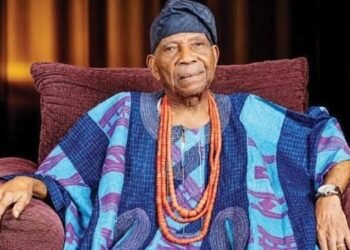














Senator Dayo Adeyeye, Chairman, Board of Directors of the Nigerian Ports Authority (NPA), has expressed regrets over the death of a foremost Yoruba leader, Pa Reuben Fasoranti, CFR.
Adeyeye: Pa Fasoranti was my moral compass
Adeyeye stated in a condolence message that he and his family commiserated with family of the deceased with a heavy heart on the passing of late leader and patriarch at the glorious age of 100.
“Baba was more than a leader to me; he was a father, a mentor, and a moral compass.

“I knew him closely as a fellow Afenifere leader, having served the organisation as its National Publicity Secretary (spokesperson) from 2001 to 2004 under our late leader, Chief Abraham Adesanya.
“In those years, I saw firsthand the respect, discipline and principled character Baba Fasoranti embodied as one of the pillars of the group.
“When he later took over the leadership of Afenifere, he led with grace, firmness and uncommon integrity. He never wavered on principle.
“He taught us to speak truth to power, to defend the Yoruba race and Nigeria with dignity, and to place service above self. His commitment to justice, true federalism and democracy was total.
“Pa Fasoranti held the progressive family together through difficult times. His life was a lesson in humility, sacrifice and faith in God and in the future of Nigeria,” he wrote.
Reflecting on his passing, the Chairman of the NPA Board of Directors wrote: “I do not remember him merely as Afenifere’s National Leader, but as a father whose wise counsel, gentle guidance and exemplary life profoundly shaped my own journey in public service.”
Senator Adeyeye pleaded with the entire Fasoranti Family to accept his deepest condolences.
“May the Almighty God comfort you, give you strength, and grant Baba eternal rest in His bosom. His legacy will live forever in our hearts and in the history of our nation,” he added.
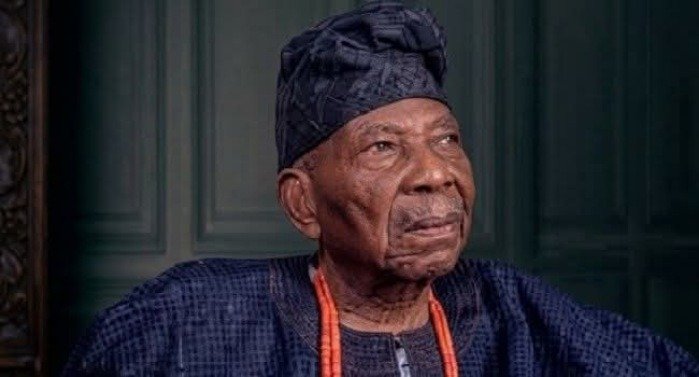
Pa Reuben Famuyide Fasoranti, the respected leader of the pan-Yoruba socio-political organisation, Afenifere, died on Tuesday, at the age of 100.
His death was announced by the Ondo State governor, Lucky Aiyedatiwa, who described him as a patriot whose life was marked by wisdom, integrity and selfless service.
The life of the late elder statesman revolved education, politics and development of Nigeria, especially the South-West Region.
Fasoranti, who hailed from Akure in Ondo State, celebrated his 100th birthday last May, having been born on 11 May, 1926
His lifetime spanned Nigeria’s colonial era, independence, the Civil War, successive military regimes and the return to democratic rule.
His political and educational contributions made him one of the most prominent figures in the state and a respected voice in Yoruba affairs.
He attended Ondo Boys’ High School, Yaba Higher College in Lagos and the University College, Ibadan, now the University of Ibadan, where he studied English and Geography.
He also pursued further studies in education in the United Kingdom and Australia.
Beyond his work in the classroom, Fasoranti established educational institutions, including Omolere Nursery and Primary School, Akure High School and St. Frances’ Academy in Igoba, Akure. His contributions to education remained a significant part of his legacy.
Fasoranti was a committed follower of the late Chief Obafemi Awolowo and his progressive political philosophy. He belonged to the Action Group (AG) during the First Republic and later aligned with the Unity Party of Nigeria (UPN), which Awolowo founded.
Between 1979 and 1983, Fasoranti was the Commissioner for Finance under the administration of the late Governor Michael Adekunle Ajasin in the old Ondo State.
His appointment reflected the confidence placed in him by the progressive political leadership of the period.
Fasoranti rose to become the leader of Afenifere, a pan-Yoruba socio-political organisation associated with Awolowo’s political ideals.
He assumed the leadership following the death of Pa Abraham Adesanya and became a prominent voice on Yoruba interests and Nigeria’s political future.
Throughout his public life, Fasoranti advocated restructuring and a more equitable federal arrangement for Nigeria.
He maintained that constitutional and political reforms were necessary to promote fairness, accountability and balanced development among the country’s constituent parts.
Fasoranti was involved in pro-democracy advocacy during Nigeria’s years of military rule.
His opposition to authoritarian government and support for democratic governance strengthened his reputation as an elder statesman committed to constitutional rule.
Fasoranti’s political activism came with personal risks. President Tinubu recalled in his centenary tribute that the elder statesman survived an assassination attempt attributed to agents of the regime of the late General Sani Abacha.
In July 2019, Fasoranti’s daughter, Funke Olakunrin, was killed in an attack along the Ondo-Ore Expressway.
Her death triggered widespread condemnation and renewed concerns about insecurity on Nigerian highways. The tragedy was one of the most painful episodes of his later years.
Fasoranti’s life was defined by his involvement in education, politics, democratic activism and advocacy for Yoruba interests.
In his 100th birthday message, he reflected on the different eras he had witnessed, saying: “I have seen colonial rule. I have seen independence. I have seen war and peace. I have seen military rule and democracy.”